
Galería RGR plays a key role in San Miguel Chapultepec and in the international circulation of Latin American abstract art. Founded in Mexico City by Ricardo González Ramos, it connects the legacies of Carlos Cruz-Diez, Gego, Jesús Rafael Soto, and Oswaldo Vigas with artists such as Elias Crespin, Magali Lara, Julio Le Parc, Felipe Pantone, Ding Yi, Hilma’s Ghost, Galia Eibenschutz, Francisco Muñoz, Magdalena Fernández, and Wang Yi.
Gallery Profile
The Gallery RGR was established in Mexico City in 2018 by Ricardo González Ramos, the gallery’s founder, director, and public face. His background, spanning Mexico and Venezuela, shapes the foundation of the gallery’s program: abstraction, kinetic art, Latin American modernism, and direct relationships with artists and estates. Some specialized publications place him at the forefront of a generation of gallery owners who combine historical rigor and international ambition, with RGR serving as a bridge between postwar Venezuelan movements and the contemporary global art scene. This position has given the gallery a recognizable identity since its early years in Mexico.
The gallery was not built around a single generation. Its initial focus lies in the great names of Venezuelan abstraction and kinetic art. But its recent development incorporates contemporary artists from diverse backgrounds. This structure allows the gallery to engage with both historical memory and a dynamic program. At art fairs, exhibitions, and curatorial projects, RGR emphasizes the continuity between modern masters, current practices, and new international audiences. The selection of artists does not respond to shared questions about perception, structure, color, movement, and space.
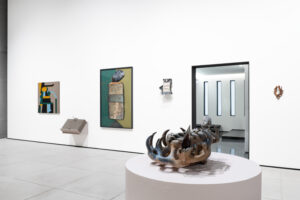
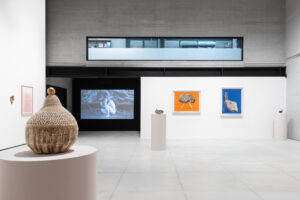
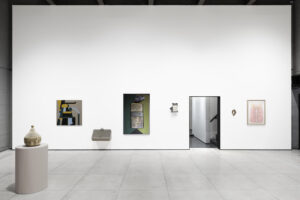
The connection to Venezuela was the first focus of the program. Carlos Cruz-Diez (Caracas, 1923; Paris, 2019), Jesús Rafael Soto (Ciudad Bolívar, 1923; Paris, 2005), Gego —Gertrud Goldschmidt— (Hamburg, 1912; Caracas, 1994), and Oswaldo Vigas (Valencia, Venezuela, 1923; Caracas, 2014) form a foundation of immense significance for understanding Latin American visual modernity. In Cruz-Diez’s work, color ceases to be an attribute and becomes a perceptual event. In Soto’s work, space is activated by movement, vibration, and participation. In Gego’s work, the line breaks free from the plane and constructs open structures. In Vigas’s work, abstraction coexists with a mythical and material dimension.
The current stage has become broader. Elias Crespin translates the kinetic tradition into motors, software, and suspended movements. Magdalena Fernández connects abstraction, nature, sound, and installation. Felipe Pantone works within a visual language marked by screens, speed, and gradients. Ding Yi emphasizes the repeated sign as a form of mental architecture. Patrick Hamilton intertwines geometry, labor, the city, and politics. This diversity allows abstraction to emerge as a flexible tool for thinking about structure, time, and experience, without severing the link to the history that underpins the gallery.
The presence of Magali Lara, Galia Eibenschutz, Hilma’s Ghost, Karina Aguilera Skvirsky, and Francisco Muñoz has broadened the gallery’s artistic vocabulary. Lara introduces writing, the body, feminism, and emotional memory; Eibenschutz explores movement as a physical record; Hilma’s Ghost takes abstraction toward spirituality, collaboration, and feminist reexamination; Aguilera Skvirsky intersects photography, video, performance, identity, nation, and coloniality; Muñoz works with materials and languages where surface, object, and installation converge. RGR has integrated these strands without losing a recognizable direction or the weight of its abstract lineage.
The San Miguel Chapultepec location reinforces that identity with concrete details: 260 m² at General Antonio León 48, with architecture and interior design by Edmundo Salinas’s studio. The spaciousness of the venue lends itself to works that require distance, movement, and an interplay with light. In a gallery focused on color, movement, grid patterns, and installation art, the size of the rooms shapes the way viewers experience the art. The space accommodates large-scale works and pieces that require visitors to change their position to grasp their rhythm.
“The presence of historical masters is not separate from the contemporary program. It forms the backbone of the program.” — Ricardo González Ramos, Observer, 2026
The quote sums up a working position. At RGR, abstraction does not appear as a market label or as modern nostalgia. It is a language that connects Venezuela, Mexico, China, Europe, and the United States; historical kinetic art and programming; line and form; color and politics; the exhibition space and the international art fair. This breadth explains the gallery’s place within Mexico City: it maintains a strong genealogy and compels it to continue producing the present, with a structure capable of engaging in dialogue with museums, collections, and diverse audiences.
Why Go
It’s worth visiting because RGR brings together a scene that is usually seen in fragments: the international market for Latin American abstraction, the museum presence of its leading figures, and a generation of artists based in Mexico with a global reach. The visit helps one understand how a relatively young gallery has established itself as an authority by representing these artists, producing curated exhibitions, and maintaining a constant presence at art fairs and shows.
The exhibition is noteworthy for the precision of its program. Each exhibition presents a thesis on image, perception, or matter. In *A Body Is a House, an Organism, a Temple, a Container, a World*, the starting point is the body rather than geometric history. The concepts of refuge, organism, skin, and memory—and their interrelationships—are explored in a series that also elucidates the gallery’s curatorial program.
RGR is located in a venue associated with Edmundo Salinas and Salinas Lasheras. The connection with the other nearby galleries in the San Miguel Chapultepec area allows for a journey through very different styles and concepts, but at the end of the day, what we want to take away are the questions. Because the artists’ works serve as the starting point for the visitor who wants to understand the conversations driving the art world today.
What to Expect
The tour begins in San Miguel Chapultepec, on a quiet street where galleries are scattered among houses, converted workshops, and low-rise buildings. RGR occupies a spacious venue. The space provides ample room for large-scale works, structures, paintings, and pieces that need to be viewed from more than one angle. The entrance places the visitor on a neighborhood scale, rather than in a monumental setting.
The first impression is usually a physical one. In a gallery dedicated to color, line, movement, and abstraction, your perspective shifts as you walk through it. Some works are activated by light; others rely on an optical vibration, a minimal repetition, or a structure that alters the atmosphere around them. The visit calls for less speed and more attention: moving forward, stepping back, looking from the side, letting a surface reveal its rhythm, and recognizing how a piece responds to the position of the body.
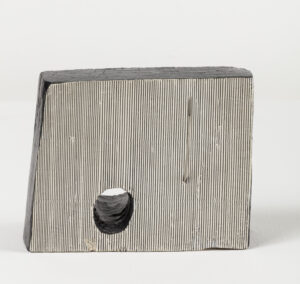
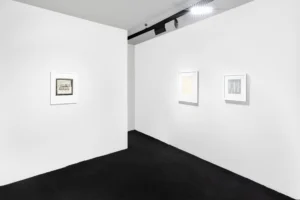
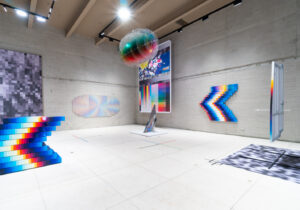
The program can range from Cruz-Diez, Gego, Soto, or Le Parc to contemporary artists who work with technology, the body, spirituality, or matter. In the current exhibition, *A Body Is a House, an Organism, a Temple, a Container, a World*, the gallery shifts the focus of abstraction toward questions of refuge, organism, memory, and coexistence. The body appears as sensitive architecture, not merely as a figure. The exhibition brings together works that explore the connection between matter, emotion, and the living world.
RGR is best experienced without turning the visit into a name-checking exercise. Historic artists lend weight to the program, but the gallery focuses on the present: motors, signs, textiles, gestures, objects, bodies, and surfaces that expand the idea of abstraction. The experience reveals a gallery of international stature and a precise perspective from Mexico City. It’s worth paying attention to both the technical details and the way each work finds its place within a broader conversation.
Represented Artists
What to Do Nearby
After leaving RGR, San Miguel Chapultepec offers a cultural neighborhood tour featuring art, architecture, and food—without sticking to the most obvious itinerary. The first stop could be LABOR, at Francisco Ramírez 5, a gallery focused on research, archiving, politics, and conceptual practices. From there, you can walk to kurimanzutto, at 94 Gobernador Rafael Rebollar, one of the key venues for Mexican contemporary art since its nomadic early days. In the same area, the Galería de Arte Mexicano, at 43 Gobernador Rafael Rebollar, adds an essential historical layer: founded in 1935 by Carolina Amor and Inés Amor, it was the first gallery established in Mexico City.
The route brings together two forms of modernity. RGR works with abstraction, kinetic art, and Latin American legacies; the Galería de Arte Mexicano refers to the development of the modern Mexican art system and to a history of artists, collectors, and gallery owners who shaped much of the 20th century. Between the two, San Miguel Chapultepec emerges as a neighborhood of transitions: private homes, studios, galleries, quiet streets, former industrial sites, and a constant proximity to the forest. There are endless possibilities for extending the visit without making the route feel too polished.
For a midday break, Café Papagayo, at 51B Gobernador Ignacio Esteva, offers a welcoming neighborhood atmosphere after a gallery visit: coffee, a bakery, simple tables, locals, gallery visitors, and a vibe that’s less contrived than in the city’s more obvious hotspots. For a leisurely meal, El Bar El Bosque, at 29 13 de Septiembre, offers the history of a traditional cantina and the pleasure of lingering over a meal; its origins date back to Casa Vigueras, which opened in 1939, and today it still serves fish baked in salt, has a bar, and maintains a direct connection to neighborhood life.
For lodging, I’d stay in Condesa or Roma—close to, but not within, San Miguel Chapultepec. Hotel San Fernando offers a stay with neighborhood-scale architecture, well-connected to galleries, Chapultepec Forest, and restaurants. Octavia Casa offers a quieter option, with a design aesthetic well-suited to an itinerary focused on art, architecture, and walking. RGR makes the most sense as part of a day that combines art, the city, food, and leisurely exploration.


