
Travesía Cuatro operates as a bridge between Madrid, Guadalajara and Mexico City. It is an internationally minded gallery that has turned the conversation between Europe and Latin America into more than a line of presentation.
Gallery Profile
Travesía Cuatro was founded in Madrid in 2003, but its story cannot be fully understood if it is seen only from Spain. From the beginning, Silvia Ortiz and Inés López-Quesada built a gallery with a very specific international vocation: to open a conversation between Europe and Latin America, first from a Madrid scene that wanted to broaden its interlocutors and later from Mexico, where the gallery found a second working geography.
The opening in Guadalajara in 2013 was more than a territorial move. To settle in Casa Franco, designed by Luis Barragán in 1929, meant entering a city with a particular art scene: less saturated than the capital, but with its own density around workshops, ceramics, architecture, design, collecting and artists who have worked from there with international reach. The arrival in Mexico City in 2019 completed another piece of the map: a space in Roma Norte, within one of the most visible circuits of Mexican contemporary art.
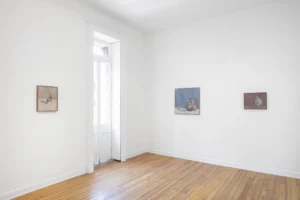
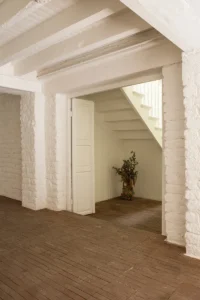
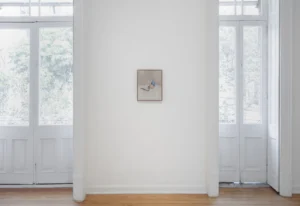
Its program has moved among Mexican, Latin American and European artists, as well as figures working from zones of exchange. Within that constellation, very different practices appear: the relationship between literature, archive and space in Jorge Méndez Blake; the material and architectural drifts of Gonzalo Lebrija or Álvaro Urbano; the bodily intensity of La Chola Poblete; the expanded painting of Manuela Solano; the object-based and domestic dimension of Milena Muzquiz; and investigations in which voice, body and sculpture become language.
What makes Travesía Cuatro interesting is the way its internationalism articulates discourses in which identity, global economy, memory, body, territory and cultural circulation appear as living questions. In that sense, its project Bajo el Sol works as a key to reading the gallery: a platform that expands it toward critical conversations, alternative social models and voices from the Global South.
Mexico has allowed us to differentiate ourselves and develop our own identity within the international circuit.— Silvia Ortiz, founder of Travesía Cuatro
Within the Art Weekends map, Travesía Cuatro is a gallery that helps explain how Mexico has become a decisive node for international projects that can no longer be imagined from a single center.
To keep exploring this thread, visit contemporary Latin American art; you can also continue through contemporary art galleries in Latin America.
Program
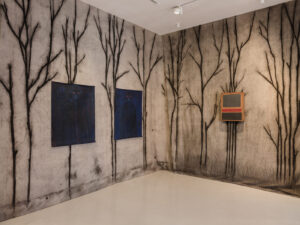
Aloges by Laia Estruch – Travesía Cuatro
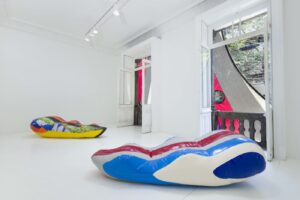
El teatro de Miria by Miriam Inez da Silva – Travesía Cuatro Guadalajara (January – May 2026)

El teatro de Miria by Miriam Inez da Silva – Travesía Cuatro Guadalajara (January – May 2026)
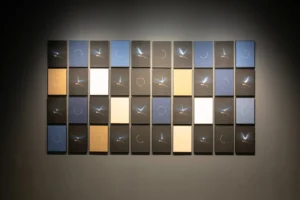
FINISTERRE by Gonzalo Lebrija and Jorge Méndez Blake
Why Go
Travesía Cuatro is worth visiting because it did not arrive in Mexico as the decorative satellite of a European gallery. Its presence first in Guadalajara and later in Mexico City speaks of a sustained relationship with the Mexican scene: artists, fairs, collectors, institutions and a conversation that crosses the Atlantic without erasing local frictions.
The Roma Norte space condenses that position well. The gallery does not rely only on the weight of its international names; its interest also lies in how it articulates practices in which painting, sculpture, architecture, performance, materiality and cultural history contaminate one another. Its program can move from an investigation into voice and body to a seemingly silent painting, from Latin American artists to figures with European circulation, from younger works to trajectories that call for a rereading.
It is worth including in a route because it helps explain an important part of the current circuit: galleries that can no longer be understood from a single city, but from networks. Travesía Cuatro occupies Roma Norte as a point of connection between scenes that look at one another, negotiate with one another and rewrite themselves from different places.
What to Expect
The visit has the rhythm of a neighborhood gallery, but with an ambitious international program. From Valladolid street, the experience does not feel monumental or intimidating; it belongs instead to the walkable scale of Roma Norte, where an exhibition can coexist with old houses, traffic, cafes, discreet facades and the cosmopolitan, sometimes unruly life of the neighborhood.
Travesía Cuatro often presents projects that unfold between the room, the facade, the patio, light, emptiness or the movement of the body, and that can become part of the experience itself. That tension appears both in its gallery exhibitions and in its presence at fairs: works that activate space and require a certain pause in order to be understood.
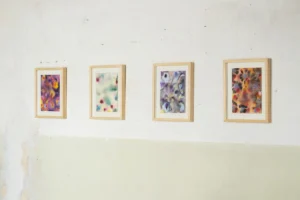
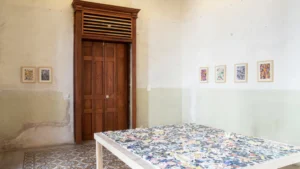
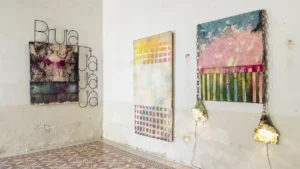
Do not expect a quick-consumption visit. It is better to enter without hurry, read the installation, look again and allow the exhibition to reveal its own reading.
Represented Artists
What to Do Nearby
After leaving Travesía Cuatro, I would not rush away from Valladolid street, because it has a rare advantage within Roma Norte. It allows you to move almost immediately from a contemporary exhibition to a house museum. A few steps away is Casa Guillermo Tovar de Teresa, at Valladolid 52, a brief but valuable stop that takes you back to an earlier period of domestic memory, collecting and Porfirian Mexico City.
Then I would walk toward Álvaro Obregón. Casa del Poeta Ramón López Velarde and Casa Lamm help explain another side of Roma: its literary vein, patios, bookstores and exhibitions, and that mixture of cultural institution and neighborhood life. If the plan calls for something lighter, MODO is nearby and opens the door to objects, design and material culture.
To close the route, the area lets you choose according to your mood: coffee, a long meal or a lingering sobremesa. Rosetta is at Colima 166 and asks for a more considered pause. If you prefer to walk without a reservation, Roma still allows the route to decide itself among facades, bookstores, bakeries, cafes and corners where the city slows down a little, even if it is moving faster every day.


