
Galería Hilario Galguera is housed in a grand mansion in San Rafael, where contemporary art is interwoven with architecture, history, and an international outlook. Its program brings together Mexican and international artists in exhibitions that often explore conceptual, political, and institutional themes.
Gallery Profile
The Hilario Galguera Gallery was founded in 2006 by Hilario Galguera and Rosa María Ortega as a space for the production, promotion, documentation, and discussion of international contemporary art. Its opening featured a high-profile event: a solo exhibition by Damien Hirst, the no-longer-so-rebellious artist of the Young British Artists. But to reduce the gallery to that beginning would be to focus solely on the anecdote.
What is significant is how, over the years, the gallery has developed a program that brings together artists from diverse backgrounds, generations, and artistic approaches.The current list of represented artists includes names such as David Bailey, Willem Boel, Jannis Kounellis, John Copeland, Daniel Buren, Bosco Sodi, Daniel Lezama, Enrique Ježik, Perla Krauze, Stijn Cole, and Athina Ioannou, among others. This list speaks to a gallery interested in building genealogies—from Arte Povera to Mexican painting, from photography to installation, from expanded sculpture to practices that question the political or the visual.
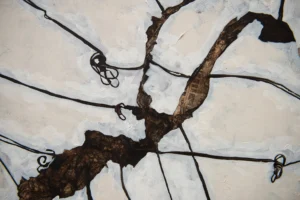
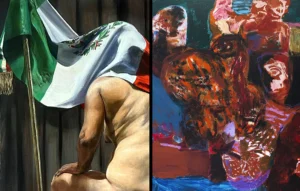
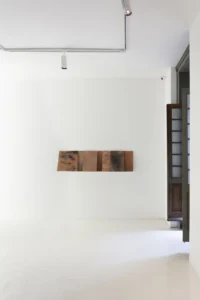
The setting of San Rafael is essential to understanding its character. The mansion shapes the experience. In a city full of white-walled galleries, Hilario Galguera allows the architecture to retain its symbolic weight. The work is not suspended in a neutral void, but rather confronts a house with memories, a neighborhood with history, and a cultural circuit.
Its 2026 program confirms an approach that looks both to the Mexican context and to its international reach. This dual perspective can be delicate, but they have managed to avoid the risk of turning “the Mexican” into a mere cultural spectacle. Yet as the program unfolds, the gallery opens a space to reflect on how national imaginaries are constructed through contemporary art, without reducing them to folklore or market labels.
Its history spans both internationally renowned figures and artists who work with less conventional materials, as well as archives, memory, violence, landscape, and the body; the gallery makes no attempt to smooth over the tensions between the market, the institution, and experimentation. At this intersection, Hilario Galguera allows the exhibition to engage with the space without taming the work, as if each room were reminding us that contemporary art also requires spatial tension, silence, and resistance to the rapid consumption of images.
To keep exploring this thread, visit our contemporary art coverage; you can also continue through the galleries setting the agenda.
Program
INDEX VII: XX – Group Exhibition (February–June 2026)
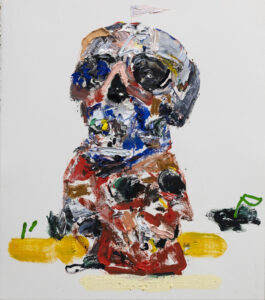
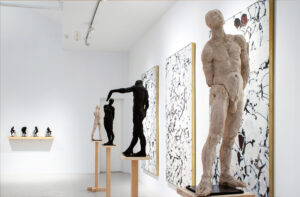
Deus ex machina – Javier Marín (March–June 2026) Madrid
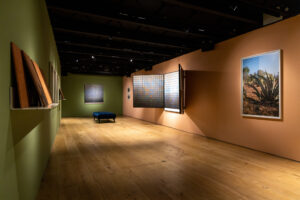
Mexican Horizons – Stijn Cole (March–June 2026) Casa Hotbook
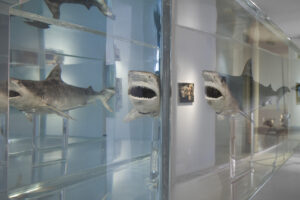
The Death of God – Damien Hirst
Why Go
The headquarters has a distinct character of its own: a grand early 20th-century mansion in San Rafael, a neighborhood that still retains a touch of old-world charm, Porfirian architecture, hidden restaurants, workshops, the bustle of the avenue, and a certain urban melancholy that hasn’t been tamed by trends.
Since its founding in 2006, it has sought to serve as a space for the production, promotion, documentation, and discussion of international contemporary art. That word—“discussion”—is key. Its exhibitions often raise questions about image, history, violence, territory, the body, abstraction, or memory without relying solely on visual impact.
It is also worth visiting for the kind of dialogue it fosters between Mexico and Europe. Its Madrid location expands that reach, but the San Rafael space remains the place where the project truly comes into its own. In a scene where many galleries seem interchangeable, Hilario Galguera maintains a strong spatial identity. It cannot be separated from the building, the neighborhood, or the idea that an exhibition is also shaped by the space that houses it.
What to Expect
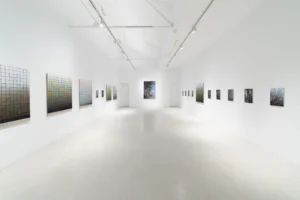
First impressions have a lot to do with the space. It’s not just any old white box. It has a scale that is both intimate and monumental. Wide walls, spaces that open up in sections, details reminiscent of an old mansion, and an architectural presence that changes the way the artworks are viewed.
Visitors can expect a wealth of exhibits. Some works are straightforward, while others are more cryptic; some are paintings or sculptures, while others are installations, archives, or broader curatorial projects. This isn’t the kind of gallery you can walk in and out of in five minutes.
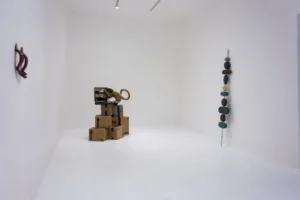
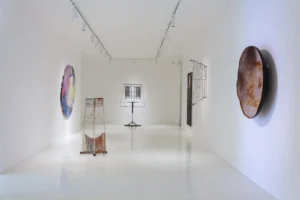
San Rafael adds another dimension. Unlike Roma or Condesa, the atmosphere here doesn’t yet feel completely curated for cultural consumption. There are weathered facades, theaters like the Ópera cinema with its Art Deco facade, traditional restaurants, new cafés, striking buildings like the El Eco experimental museum designed by Mathias Goeritz, and streets where the city reveals its real life. This mix makes for a visit where you can appreciate contemporary art while also understanding the kind of city that can host it.
Represented Artists
What to Do Nearby
After Hilario Galguera, I would walk along San Rafael. The route can start at the El Eco Experimental Museum. From there, it’s best to just wander through the neighborhood, with its hidden courtyards and the small restaurants and cafés that pop up without the hustle and bustle of the neighborhoods most affected by gentrification.
Mimbre works really well as a spot because it’s the kind of place that helps you understand why San Rafael is becoming an interesting destination without completely losing its identity. If you’re looking for something more traditional, you should check out a local restaurant or cantina and don’t be put off by the noise during the lunch rush.
That contrast suits Hilario Galguera well. After an intense exhibition, the walk grounds the experience in a city that feels more real, less polished, and more alive. San Rafael isn’t always comfortable, but that’s precisely why it offers a route with more texture. Contemporary art, experimental architecture, fresh-baked bread, a courtyard with plants and neighbors, and streets where the city still shows its vitality.


