
OMR is one of the key galleries for understanding how Mexican contemporary art moved beyond a local context and began to engage directly with the international art scene. Its location in Roma Norte brings together history, architecture, an artistic program, and a strong focus on the intersections between art, materials, technology, the built environment, and urban connections.
Gallery Profile
Founded in 1983 by Patricia Ortiz Monasterio and Jaime Riestra, OMR is part of the history of contemporary art in Mexico not only because of its longevity, but also because of the way it understood the role of a gallery before the internationalization of the local art scene became a common area of exploration. For decades, the space has helped build a network where artists, collectors, curators, art fairs, and institutions began to speak a common language without entirely erasing the particularities of the Mexican context.
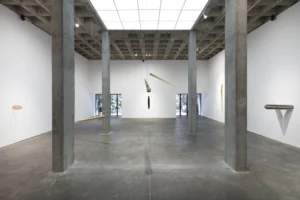
Its move to Córdoba 100 in 2015 marked a visible transformation. The gallery has become one of the most recognizable cultural buildings in the Roma neighborhood, and its architecture defines the type of exhibitions it can host and creates a space for conversation. OMR seems to have specialized in providing space for works that demand distance, volume, and an almost choreographic relationship with the visitor.
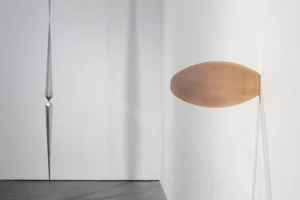
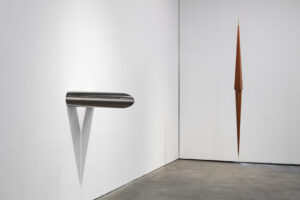
The program has featured artists such as Pia Camil, Jose Dávila, Alicja Kwade, Artur Lescher, Jorge Méndez Blake, Maruch Sántiz Gómez, Gabriel Rico, SUPERFLEX, and Troika, among many others. It is a gallery whose program has sought to explore relationships between matter, language, landscape, ecology, fiction, architecture, and institutional critique.
In Art Weekends, OMR’s presence at Frieze New York 2026, alongside kurimanzutto, is seen as a sign of the international circulation of Mexican art.
OMR matters today because its history reads like a series of shifts: from a more intimate Rome to a globalized Rome; from a family-run gallery to a platform with an international presence; from the white cube to projects where architecture, landscape, and public life also matter. The creation of LagoAlgo expanded that interpretation: art, gastronomy, architecture, and Chapultepec appear as part of the same cultural ecosystem without being a restaurant with artworks or a gallery with certainly appetizing food overlooking the lake. Along this journey, OMR has come to understand that a gallery can be a marketplace, an archive, a conversation, and an urban device without losing its critical edge.
“Art is a catalyst for positive change.”
— Cristóbal Riestra, owner of OMR, in an interview with Gatopardo magazine
To keep exploring this thread, visit contemporary art from Latin America; you can also continue through the galleries setting the agenda.
Program
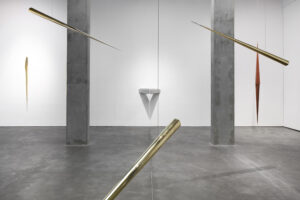
“Vibrating Body,” by Artur Lescher, explores sculpture that transcends mere form.
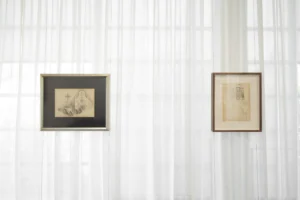
ETHIOPS – Leonora Carrington (February 2026)
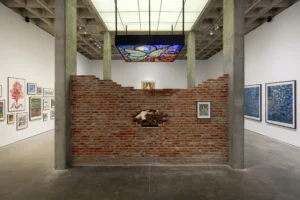
I Am The Sun, I Am The New Year – Marcel Dzama (February – April 2026)
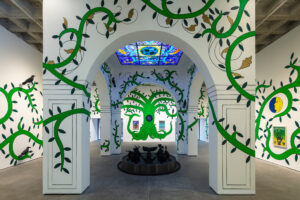
Four Minutes of Darkness – Eduardo Sarabia
Why Go
OMR’s significance lies in having accompanied, for more than four decades, the growth of a scene that evolved from having few global partners to carving out its own place in art fairs, collections, and institutions. Visiting it allows you to step into one of the galleries that helped professionalize contemporary art in Mexico without losing the ability to produce exhibitions with formal tension.
The location of Córdoba 100 matters, too. In a North Rome increasingly consumed by restaurants, boutique hotels, and an exportable city aesthetic, OMR maintains an architectural presence that isn’t diluted by mere prettiness. Its galleries possess scale and silence. It is a space where artworks can acquire physical weight and begin to become a chapter in a discussion.
It’s worth a visit because the gallery offers insights into various facets of the art scene: Mexican artists who have established international careers, Latin American and global figures, and practices centered on sculpture, installation, the visual image, public space, and material research. It’s not a casual visit, but it is one of the clearest ways to understand why Mexico City continues to occupy a central place on the map of contemporary art.
What to Expect
A visit to OMR has a different rhythm than other galleries in the Roma neighborhood. The building compels you to pause. You enter from a street where the city moves quickly, but inside, the scale forces you to adjust your body: to walk more slowly, gauge distances, and observe how a work relates to the walls, the floor, the light, and the empty space.
In exhibitions such as *Vibrating Body* by Artur Lescher, this relationship with space becomes particularly important. Lescher’s work demands a physical interpretation: lines, weights, surfaces, reflections, and structures that seem suspended between industrial precision and organic breath. At OMR, this type of work finds an architecture capable of sustaining that tension.
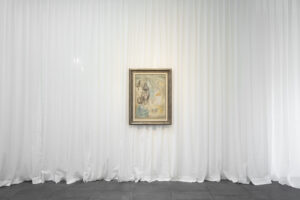
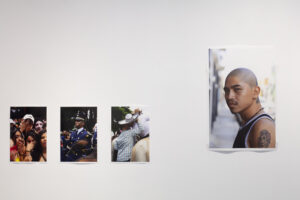
You can also expect a gallery with an international focus, but without the impersonal feel of some globalized spaces. OMR retains an identity deeply rooted in Mexico City: its density, its blend of decay and design, and the energy of a neighborhood transformed into a cultural hub. The experience works best when you set aside the anxiety of “discovering” Roma and treat the visit as a main destination, not just a stop between cafés.
Represented Artists
What to Do Nearby
Once you leave OMR, the Roma Norte neighborhood offers so many options. The hard part is not letting yourself go on autopilot. I’d head first to Casa Bosques because it lets you continue the visual conversation from a different perspective: publications, design, chocolate, objects—a more leisurely approach to cultural consumption.
Later, I’d slow down with coffee or a meal, depending on the time of day. Madre Café is the place to go if you’re looking for a spacious table, a large house with a patio, a late breakfast, or a meal that can be stretched out without feeling too formal. Amanda Manda has a different vibe: more home-style cooking, with a kind of hospitality that feels less calculated and more like a home where someone is actually tending to the table. If the outing calls for something longer, Campobaja shifts the scene to the sea, wine, toasts, and fresh produce without getting too stuffy.
La Roma still works when you walk with a purpose. OMR, Casa Bosques, a leisurely meal, and a stroll through Colima or Orizaba make for a well-rounded itinerary: art, books, cuisine, and that mix of old houses, studios, bicycles, dogs, tourists, locals, and people pretending to work from a specialty coffee shop.


