Mexico City is an urban complex made up of iconic and monumental buildings that have defined its skyline for nearly a century.
But in Mexico City there are also many abandoned buildings, many of them legendary, that are still standing. Their glory days are long gone.
In AW Magazine, we highlight five of these classic properties whose future remains uncertain.
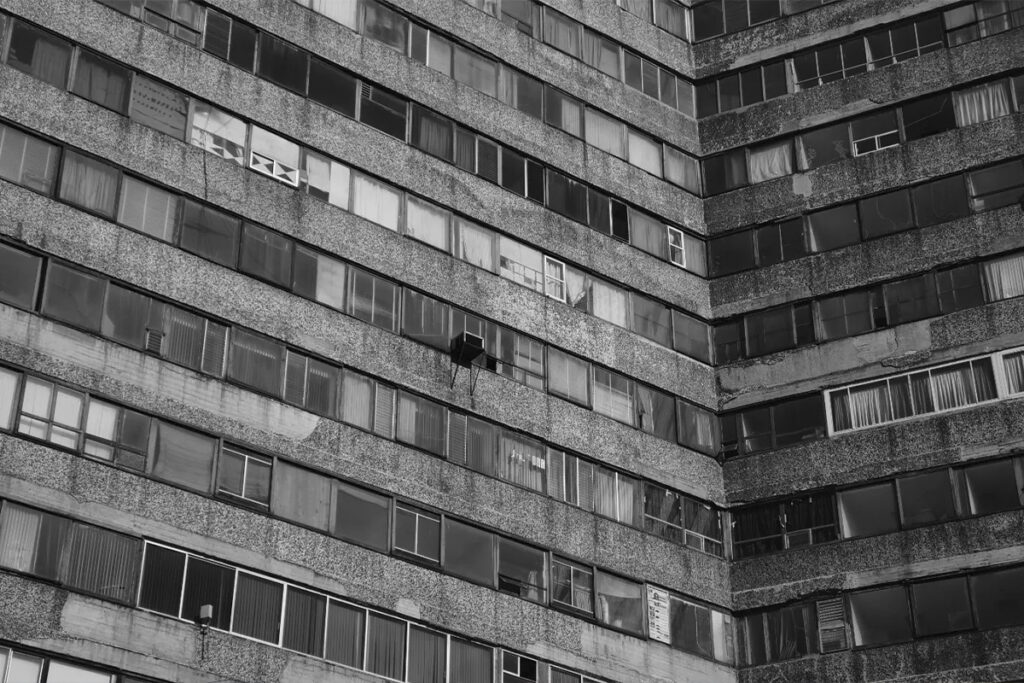
Insurgentes 300: The Canada Building
The massive Insurgentes 300 building, also known as the Edificio Canadá, was conceived as one of Mexico City’s first major urban skyscrapers. Construction began in the mid-20th century, but the 1957 earthquake forced work to be halted. Project managers had to reevaluate the structural aspects before its completion.
It opened in 1958. From the very beginning, it became a symbol of urban aspiration: its walls housed modern offices, apartments with panoramic views, and a strategic location. For years, it was a benchmark of modernity and cosmopolitanism. Silvia Pinal herself had her own space there.
The 1985 earthquake marked a turning point. The building did not collapse, but it sustained damage that led to evacuations and structural inspections. The modern behemoth was wounded.
In 1995, a violent incident occurred inside the building that attracted national media attention. A high-ranking justice official was found murdered in one of the offices. The incident reinforced the perception that the Canada Building was vulnerable.
Since then, Insurgentes 300 has been inhabited only sporadically by a handful of people. Yet it still stands, dominating the skyline with its open-book shape.
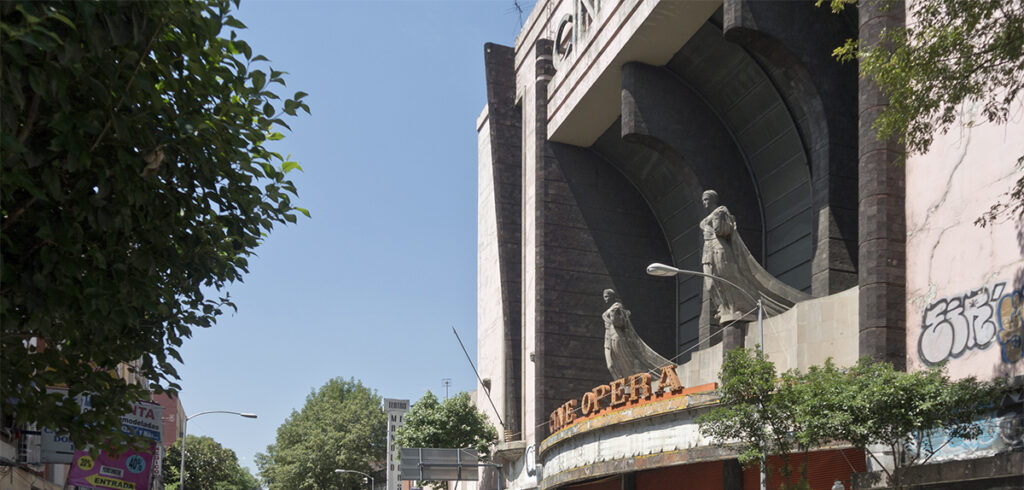
Opera Cinema: From María Félix to the Old-Timers
It is located in the San Rafael neighborhood. The Cine Ópera opened in 1949 as one of the most important movie theaters of its time. It is characterized by its Art Deco and its grand lobby. It was a key venue for the Golden Age of Mexican cinema. Within its walls, going to the movies meant not just watching a film, but attending an event of elegance and exclusivity.
After the 1985 earthquake, the building closed its doors. As the years went by, the building fell into disrepair.
Ten years later, the cinema hosted concerts by rock by major bands. In 1998, the band Bauhaus performed there. The huge crowd, the people left outside, the torrential rain, and many other factors led to a disaster. The Opera Theater was still beautiful, but it was already very fragile. It was shut down.
That’s how it remains.
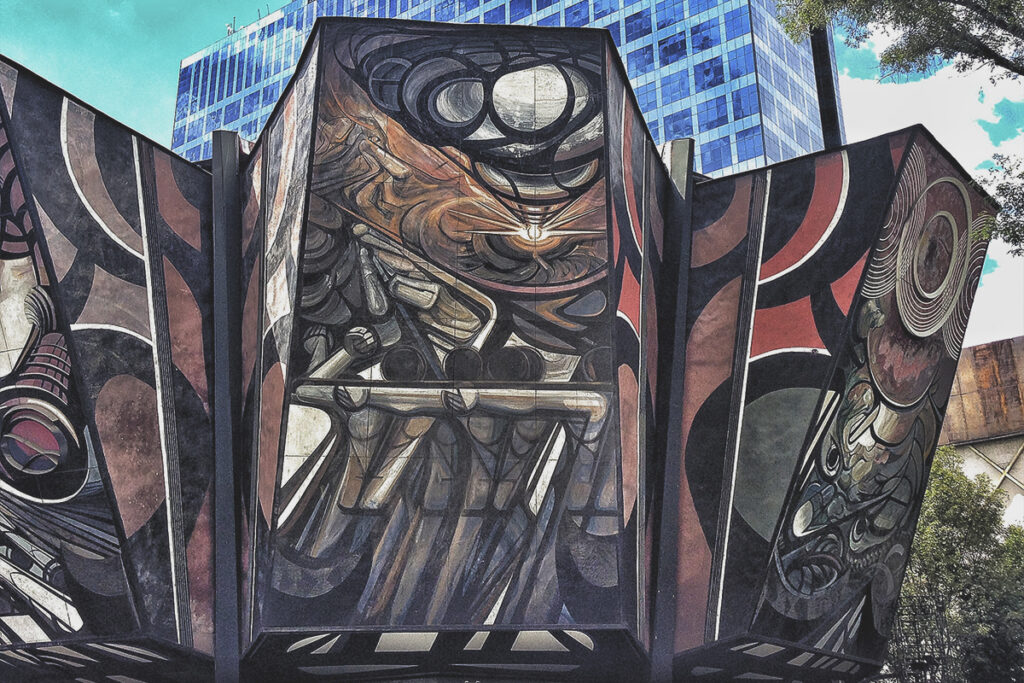
Polyforum Siqueiros
The Siqueiros Cultural Polyforum was inaugurated in 1971 as a multidisciplinary cultural complex. It was designed by muralist David Alfaro Siqueiros and architect Manuel Suárez y Suárez. They sought to create a cultural space that would serve a variety of needs and accommodate diverse events.
It is located in the Nápoles neighborhood, next to the World Trade Center in Mexico City. This neighborhood highlights its geometrically unique character.
The Polyforum became an iconic cultural landmark within an expanding business and urban corridor. Its architectural design sought to integrate art, public space, and live performances within a single venue.
The building features a steel-and-concrete structure that allowed for a versatile interior space. However, the venue closed in 2017. In recent years, there has been talk of converting it into a luxury private complex.
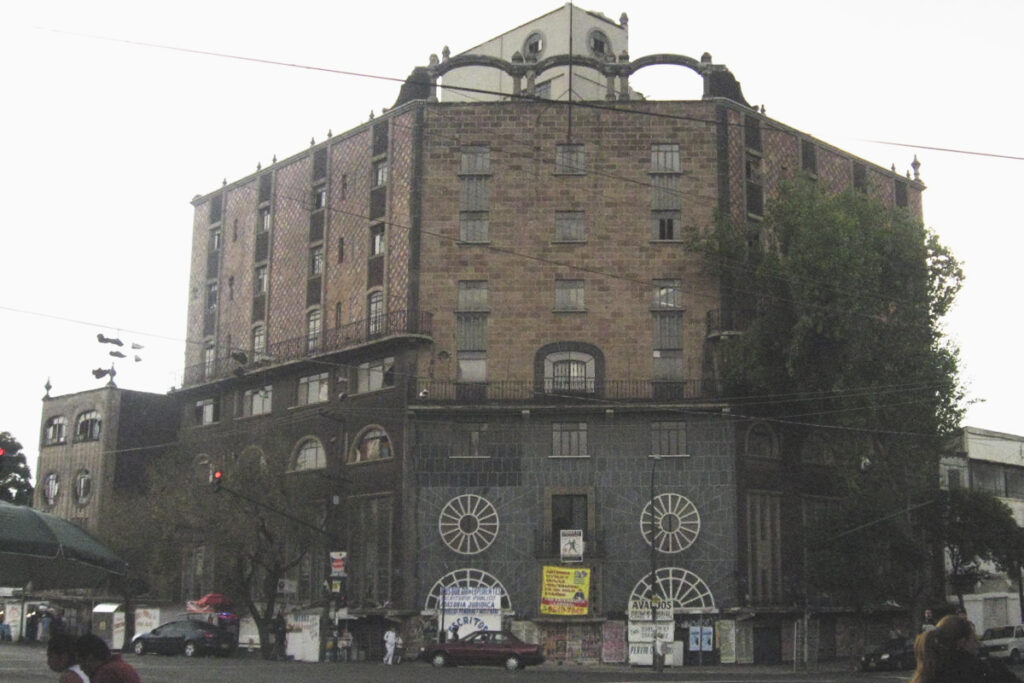
Hotel Posada del Sol: The Ghost Building Among the Lawyers
The Hotel Posada del Sol is located in the Doctores neighborhood, right in the area with the highest concentration of Mexico City’s judicial offices. It was originally designed as a large-scale hotel. Today, it stands out for its sheer size and its obvious state of neglect.
The project was ambitious from the start. It featured courtyards and several buildings. However, it never fully established itself as a hotel in continuous operation.
Over time, the building fell out of commercial use and became part of the area’s institutional landscape, situated near courthouses and law offices. Its presence is unmistakable to anyone passing through the area.
It has also served as a location for film and television productions. Its sheer size still dominates the surrounding area.
Blanquita Theater
The Blanquita Theater opened in 1960. It is located on Eje Central Lázaro Cárdenas, which runs through nearly the entire city, very close to the Palace of Fine Arts. For more than half a century, it served as the venue for popular shows that defined the nightlife of the Historic Center.
Iconic figures from the national entertainment scene have graced its stage, and it has established itself as an iconic and accessible venue. From the very beginning and for decades, it has been a must-see destination for the city’s entertainment scene.
On October 31, 2015, the curtain fell following the end of its management structure. It has remained closed ever since, awaiting a possible revival that will breathe new life into it.
Modernity and the Ghost
Mexico City is a place where layers of time overlap. The buildings of the early modern era coexist with a future whose direction we do not yet know.
Urban cycles change, but the horizons—at least for now—remain the same.