
It is one of the most impressive archaeological sites in Mexico and Latin America, both because of the scale of its ancient settlement and the symbolic complexity of its architecture.
Today, Chichén Itzá is also one of the country’s most popular tourist destinations. In 2025 alone, it welcomed more than two million visitors. Part of its appeal stems from the equinox phenomenon, an event in which the architecture merges with the cosmos to create a breathtaking spectacle of light, shadow, and time.
Chichén Itzá: Architecture, Blood, and the Sun
Founded by Mayan groups between the 4th and 6th centuries CE, Chichén Itzá established itself as an important regional center with the arrival of the Itzá people in the 9th century CE. At the end of the 10th century, the city was invaded by the Toltecs, leading to a cultural fusion evident in its iconography and architecture.
After reaching its peak in the early 12th century, the city was abandoned around 1250 AD. Centuries later, it was recognized as an archaeological site and designated a UNESCO World Heritage Site in 1988.
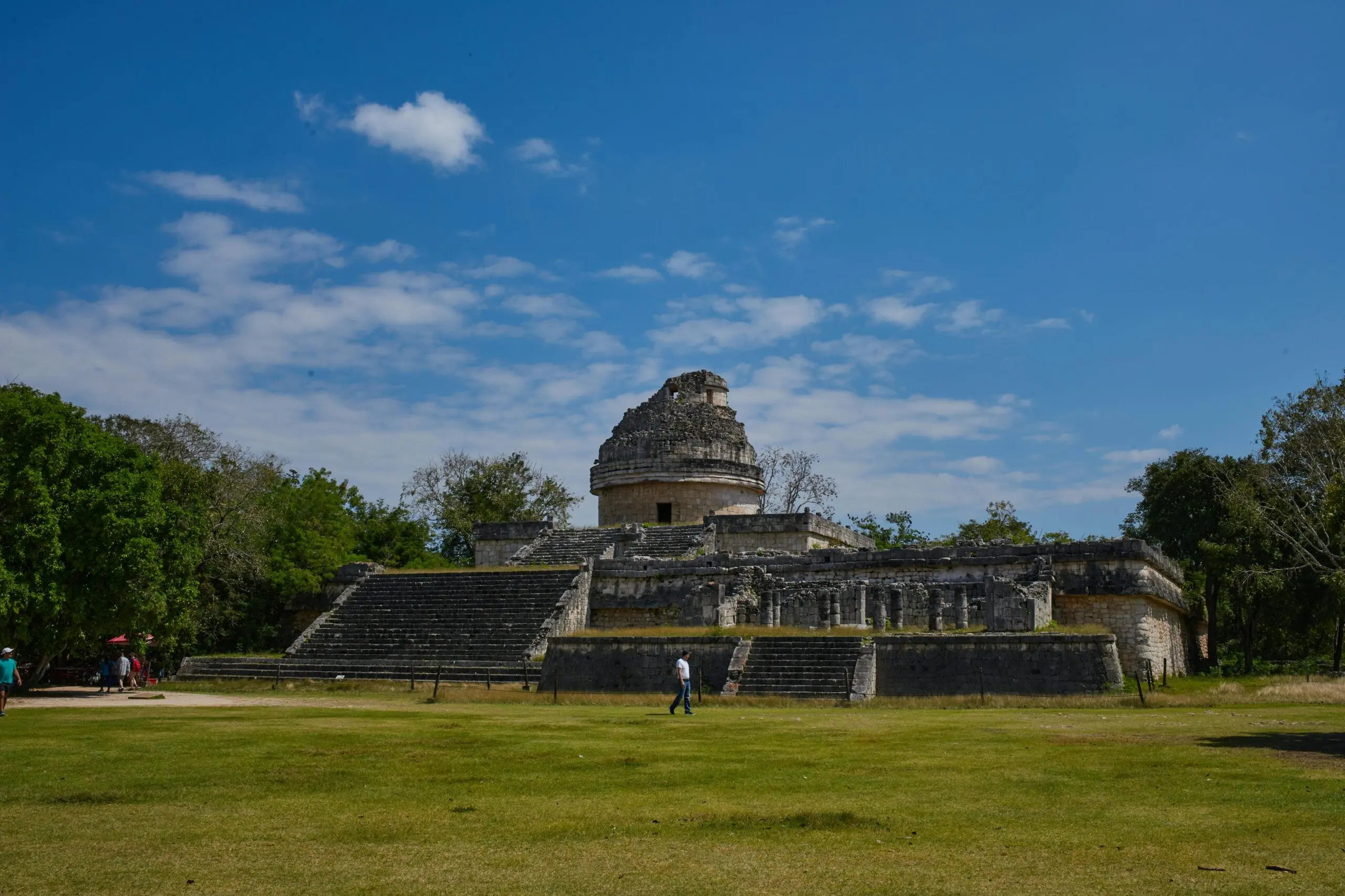
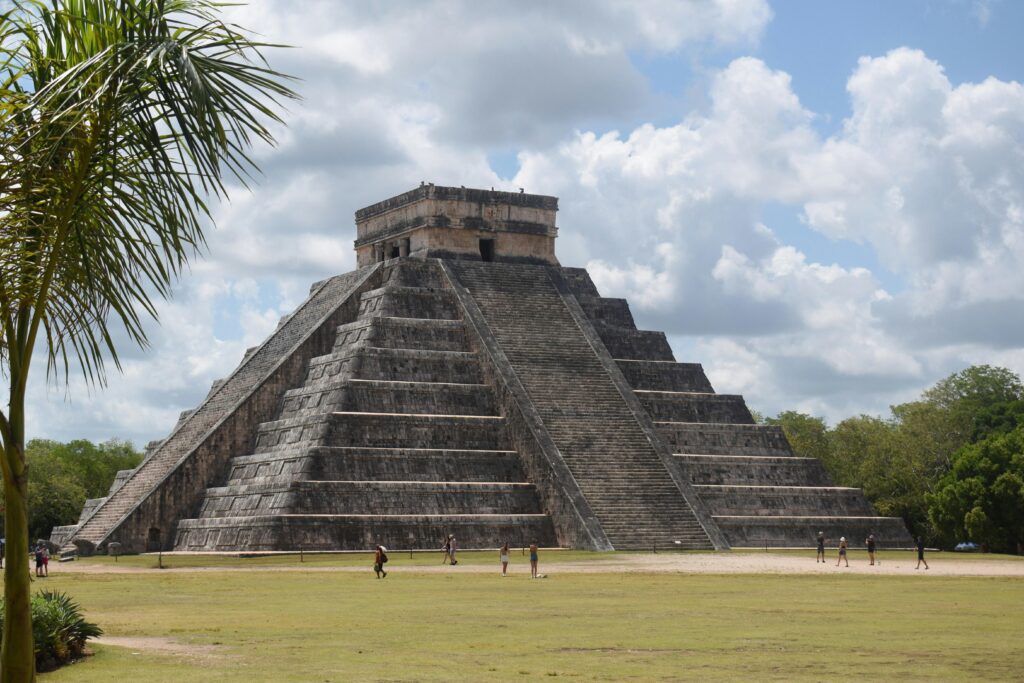
The city once covered approximately 25 square kilometers, with a ceremonial, administrative, and cultural core spanning about 6 kilometers. The main architectural complexes are located in this center, such as El Castillo or the Pyramid of Kukulcán, the Ball Court, the Temple of the Warriors, the Group of a Thousand Columns, and the observatory known as El Caracol.

These structures were not conceived merely as functional or monumental spaces, but as architecture deeply connected to day, night, and the movements of the heavens. The orientation of the buildings, the layout of the plazas and stairways, as well as the interplay between solid and void spaces, reveal a profound understanding of astronomy.
Chichén Itzá stands out as one of the most complex examples of pre-Hispanic architecture, designed in harmony with the stars and natural cycles.
The Equinox: Cosmic Architecture
The solar equinox is a natural phenomenon that occurs when the Sun shines equally on the Earth’s northern and southern hemispheres. In Chichén Itzá, this event takes on an almost magical architectural dimension on March 21 and September 22.
At sunset, seven triangles of light are projected onto the north staircase of the Pyramid of Kukulkán, formed by the shadows of the building’s platforms, creating the image of a serpent that appears to be slowly descending toward the carved heads at the base. This phenomenon lasts approximately 45 minutes and draws hundreds of people.

The projection is not a coincidence, but the result of a precise calculation that takes into account orientation, proportion, volume, and the sun’s path. The pyramid functions as a device that triggers a symbolic image associated with the god Kukulcán. The equinox at Chichen Itzá demonstrates an unprecedented mastery of urban planning and astronomy.
This delicate balance between grandeur, symbolism, and science contributed to Chichén Itzá being recognized in 2007 as one of the New 7 Wonders of the World. Beyond its value as a tourist destination, this recognition underscores the city’s enduring significance as a global benchmark for engineering, urban planning, and cosmic thought.
Beyond Stone: The Land and the Table
After exploring and admiring the architecture of Chichén Itzá, visitors can enjoy the local cuisine, an essential part of the region’s culture. Dishes such as cochinita pibil, panuchos, or papadzules are the perfect way to round out the visit.
Architecture, landscape, the cosmos, and cuisine weave together into a single narrative and cultural fabric that transforms the visit into a circular experience. Chichén Itzá is observed, walked through, waited for, contemplated, and absorbed.
Discover other archaeological sites in AW Magazine.

To keep exploring this thread, visit contemporary and heritage architecture; you can also continue through heritage architecture with memory.