
Corvus Blanc is the name of a new contemporary art gallery located in Madrid’s Barrio de las Letras neighborhood, in a 17th-century space within an active cloistered convent.
Corvus Blanclo: The Unusual and the Exceptional
The venue reinterprets its past to embrace modernity, bringing together emerging and mid-career artists who explore different perspectives. Its name, “white raven,” alludes to the unusual and exceptional: that which stands out for being different.

Recently, the gallery exhibited EKDYSIS, an exhibition focused on the body, identity, and transformation. The exhibition presented the work of Cecilia Villaverde ( Mexico City, 1991) and Natacha Voliakovsky ( Buenos Aires, 1988) for the first time in Spain. We spoke with the Argentina-born, Spain-based artists Sofía Festa, director, and Yair Chevalier, director and founder of Corvus Blanc and also a visual artist.
How representative has EKDYSIS been for you?
Sofía: A lot, since it was a glimpse of the direction we want to take our mission at the gallery.
Yair: We had already held an exhibition last November, but that was a collaboration with a gallery owner from Madrid and an Argentine artist. This is the first exhibition that reflects our identity—one that sets the direction for where we want to go, what we want to showcase, and the kind of artists we want to feature.

I imagine the first exhibition is difficult or challenging
Sofía: Exactly. That’s why we wanted to open this way—to make a statement. After that, like any gallery, we’ll have to engage with different audiences. The next exhibition will feature an Argentine painter named Juan Becú, in collaboration with the Argentine Embassy.
Yair: We knew this exhibition wasn’t a sure thing. But it was what we wanted. We could have started with something more accessible or conservative, but that wouldn’t have been true to our mission.
The gallery is located in a convent, which gives it a certain unique character
Yair: Yes, we’re in a convent of cloistered nuns. They rent us a tower that, to be honest, took us quite a bit of work to remodel and get ready to function as a gallery so we could exhibit work there. The space was originally founded as the Monastery of San Ildefonso and San Mateo. It is now known as the convent of the Discalced Trinitarian nuns.

Sofía: It’s a building designated as a historic landmark in Spain; Cervantes is buried here! The ground floor still has its original walls from 1612, when the convent was founded. Yair found the contrast between the building’s history and contemporary art very interesting.
Yair: Given everything a place like that represents—religion, conservative ideas, tradition—and then hanging contemporary art and open-minded concepts there is, in a way, like rewriting the history of the place.
It is symbolic, and in a way, they have taken over a space where repression once took place.
Yair: Absolutely. This place has a lot of history; a lot happened here during the Spanish Civil War. Some of its rooms were used as dungeons during the Franco era. The place is still in use. We pay rent to the cloistered nuns, but little by little we’ve been asking them about the history of the place.
And what do the nuns think about seeing works like Natacha’s, which are provocative?
Sofía: They haven’t seen them. They’re in seclusion; they can’t go out to see the gallery. Honestly, I don’t think it’s a matter of whether they approve of it or not; in fact, they probably don’t even understand it based on their own frame of reference.
Yair: Their frame of reference is different. They’ve had completely different life experiences. From a very young age, they’ve been devoted to religious life within the convent. I don’t think they see the world the way we do now, nor do they share our current experience as women. If they saw Natacha’s work—her performance as a woman—I don’t know how they would interpret it.

How do these artists fit in with the gallery’s identity?
Sofía: The curatorial text was based on the concept of ekdysis, which is the process by which some animals shed their skin and transform themselves. In this idea of change and reinvention, there is a clear point of connection between the two artists and the gallery.
Yair: Natacha works with her body and her skin, constantly trying to repair it. Cecilia works with the trans and non-binary community, exploring the processes and experiences of those who are striving to become who they want to be. The common thread is acceptance. That’s why Natacha’s exhibition is called Repair Until Deformed. It shows the extent to which one tries to fix their physical traumas, to the point of no longer recognizing oneself.
Do you think provocation is an essential part of this exhibition?
Sofía: I wouldn’t say the intention is to provoke. Maybe a little, but the gallery’s mission is to shed light on all these issues. We feel that these topics aren’t explored as much in the Spanish art scene.
Yair: The idea is that, after you visit the gallery, you won’t be left feeling indifferent; you’ll leave feeling something, thinking about something—not just saying , “What a beautiful painting I saw.”

How do you view the current art scene in Madrid?
Sofía: Madrid is going through a very international phase right now; many Latin Americans are coming here to settle down. It’s remarkable just how rich Latin American culture is.
Yair: For example, the muxes. I absolutely love telling their stories. It’s such a rich culture that bringing it here and talking about it is essential for us.
What does 2026 have in store for the gallery?
Sofía: In June, we may hold a group exhibition featuring young painters. Beyond painting, some of them explore contemporary themes in contrast to the fast-paced, digital world. We’re also finalizing a collaboration with a more established artist to help solidify the gallery’s identity.
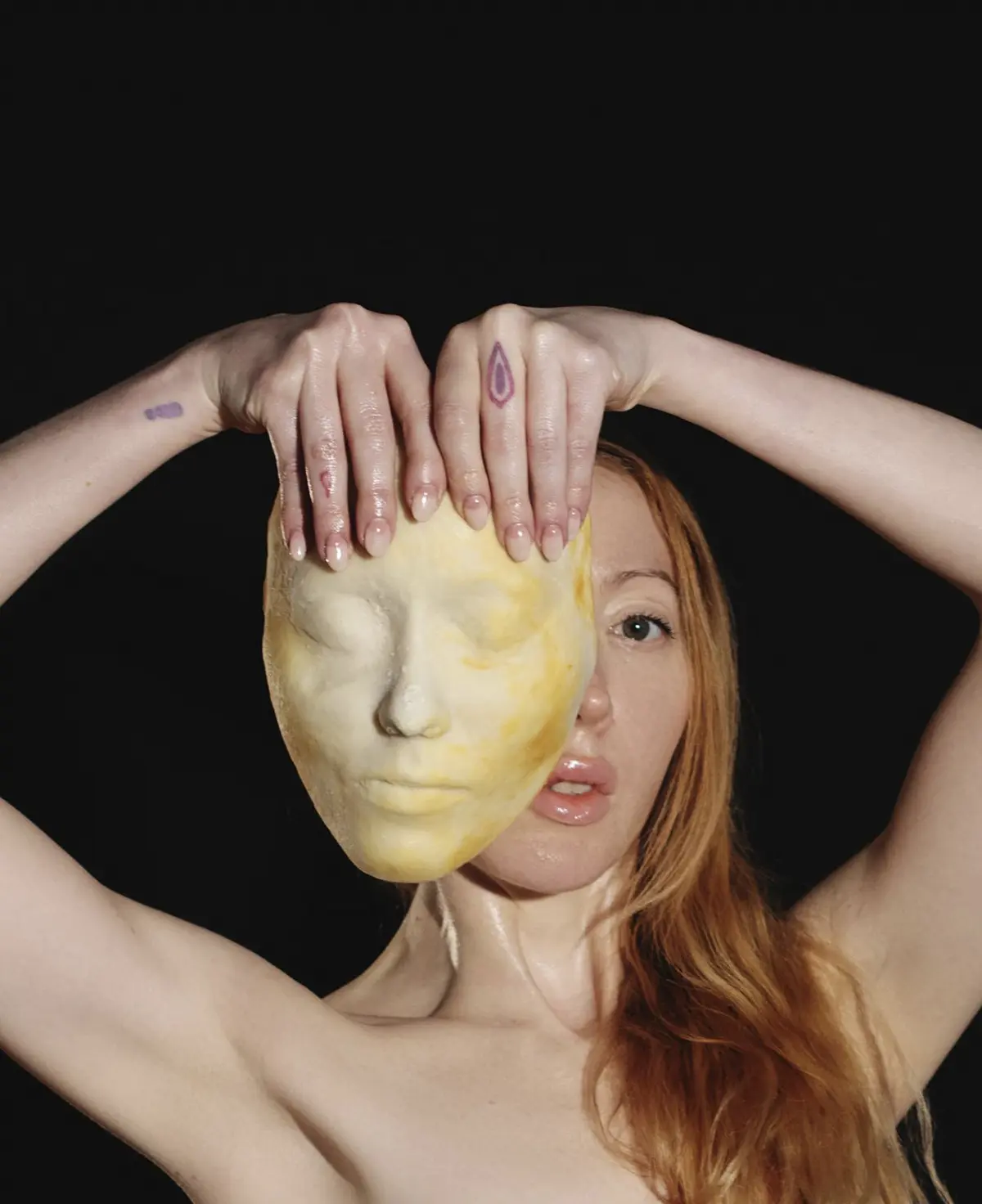
The cover photograph is *Interface of the Flesh*, part of Natacha Voliakovsky’s *Interface of the Flesh* series (2025). Courtesy of the artist.
Discover more galleries and venues in Latin America and Spain in AW Magazine.
To keep exploring this thread, visit contemporary Latin American art; you can also continue through the galleries setting the agenda.