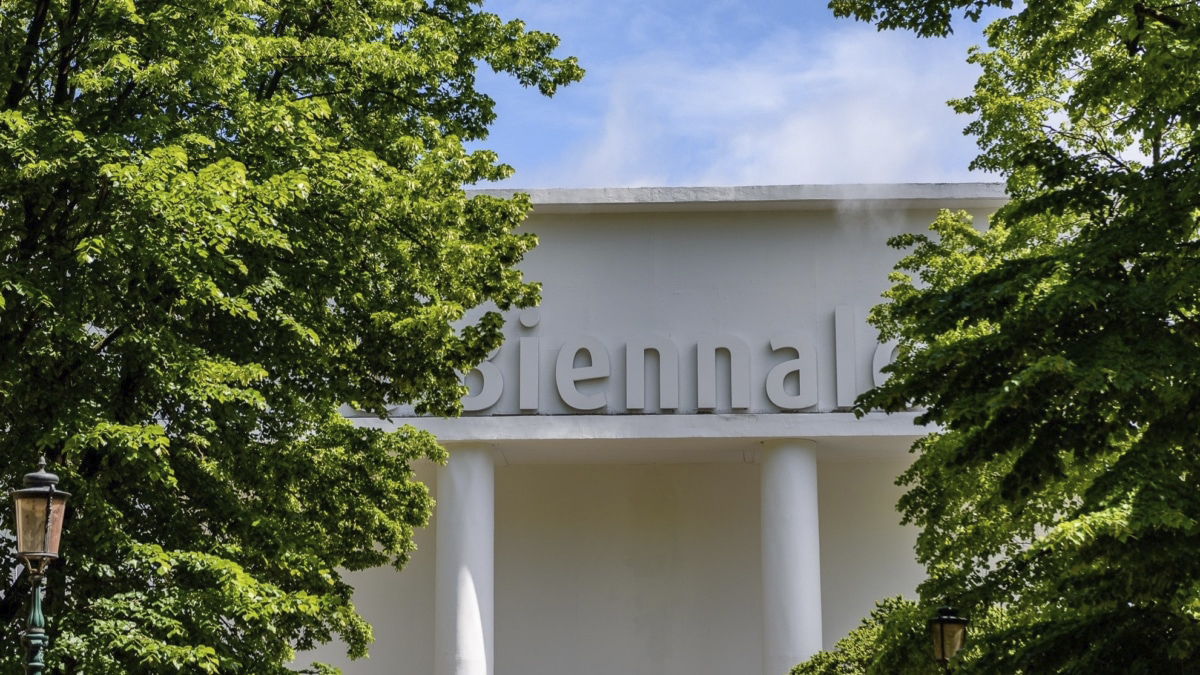

“Art should not exclude anyone,” said Pietrangelo Buttafuoco, president of the Venice Art Biennale Foundation. His words set a clear stance in the complicated situation created by the resignation of the international jury, which decided to turn its back on the mission of evaluating the works of the event’s participants starting on May 9.
Reactions following the resignation of the jury for the Venice Art Biennale in Venice
The crisis began after the organization decided to allow Russia and Israel to participate. Russia had been barred from participating since 2022. This move sparked a debate about censorship and whether art should engage with political issues or remain separate from them.
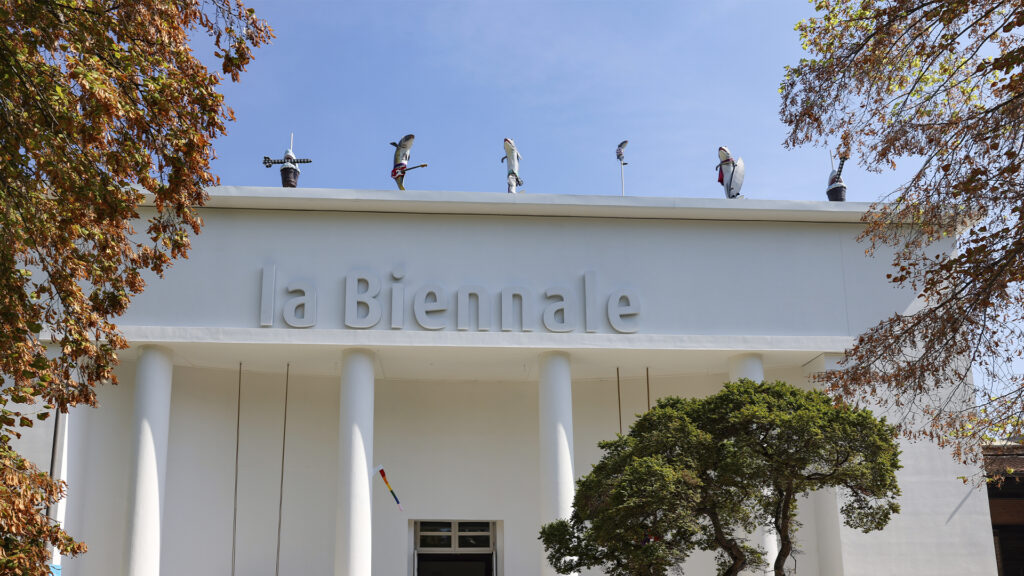
The Biennial confirmed the jury’s resignation in a brief statement. The chair, Solange Farkas, along with Zoe Butt, Elvira Dyangani Ose, Marta Kuzma, and Giovanna Zapperi, stepped down collectively. Days earlier, the group had already made its position clear. They announced that they would not award prizes to Russia or Israel.
Politics and Art
This situation was compounded by political reactions. Italian Prime Minister Giorgia Meloni reiterated that her government did not agree with the decision to allow Russian participation. That said, she acknowledged the Biennale’s autonomy. She also noted that she did not know whether the jury members’ resignations were related to the Ministry of Culture’s decision to send inspectors to Venice.
For his part, Minister Matteo Salvini endorsed the Biennale’s new approach, calling it a “great idea” for the attending public to decide the Biennale’s final winner. “It will be an autonomous and democratic Biennale. You can’t beat that,” he said. So far, it is unclear how the voting process will work.
Recently, the European Union cut a €2 million grant to the Biennial due to Russia’s participation in the exhibition—the country’s first return since the invasion of Ukraine in 2022. It is worth noting that Russian artists withdrew their participation that same year and that the country did not present an exhibition in 2024, when its space was ceded to Bolivia. Its last formal participation had been in 2019.
The Biennial Organizing Committee’s Position
The Biennale, however, fiercely defended its position. In a statement, it emphasized that it had no authority to prevent the participation of a country recognized by the Italian Republic. In the case of Russia, which has owned a historic pavilion in the Giardini since 1914, a simple notification of its intention to participate was sufficient for it to be accepted without objection.
“The Venice Biennale rejects any form of censorship of culture and art. The Biennale, like the city of Venice, remains a place of dialogue, openness, and artistic freedom, fostering connections between peoples and cultures, with the constant hope that conflicts will come to an end ”– Venice Art Biennale Foundation
The 61st Venice Biennale, one of the world’s most important art forums, will open its doors from May 9 to November 22, but it will do so without an official jury. In light of this situation, the organizers made an emergency decision: the awards will be decided by the visitors themselves. The announcement of the winners will be delayed until the event’s closing. This exceptional measure echoes a previous edition marked by the COVID-19 pandemic, when it was also necessary to change the rules of the game. It was also confirmed that “all entries” will be retained.
The background to the controversy at the Venice Art Biennale in Venice
To provide some background, tensions related to the Biennale had already arisen in Latin America. The curatorial team leading artist Patrick Hamilton’s project—which had been submitted to the competition to represent Chile at the landmark 60th edition—withdrew from the open call process. The artist cited organizational problems, unforeseen changes, and a lack of transparency in the selection process for the Chilean pavilion.
Other international cultural events have faced similar tensions between art and politics. At the 2022 Cannes Film Festival, the organizers banned the participation of official Russian delegations, which sparked mixed reactions: some filmmakers criticized the decision, while others supported it as an ethical stance in light of the war. Unlike the current situation in Venice, there was no mass resignation of the jury, although political tension was evident.
Earlier, the Cannes Film Festival itself witnessed one of the most iconic episodes of political intervention in the arts. In 1968, amid the May social protests in France, the festival was interrupted and ultimately canceled. Filmmakers such as Jean-Luc Godard and François Truffaut led efforts to halt screenings in solidarity with the social movement of the time, demonstrating how artists can directly influence the development of these cultural spaces.
The episode revealed how art can directly influence politics. Today, the Venice Biennale is once again facing a similar situation.
To keep exploring this thread, visit contemporary artists and galleries; you can also continue through the art fair and biennial calendar.