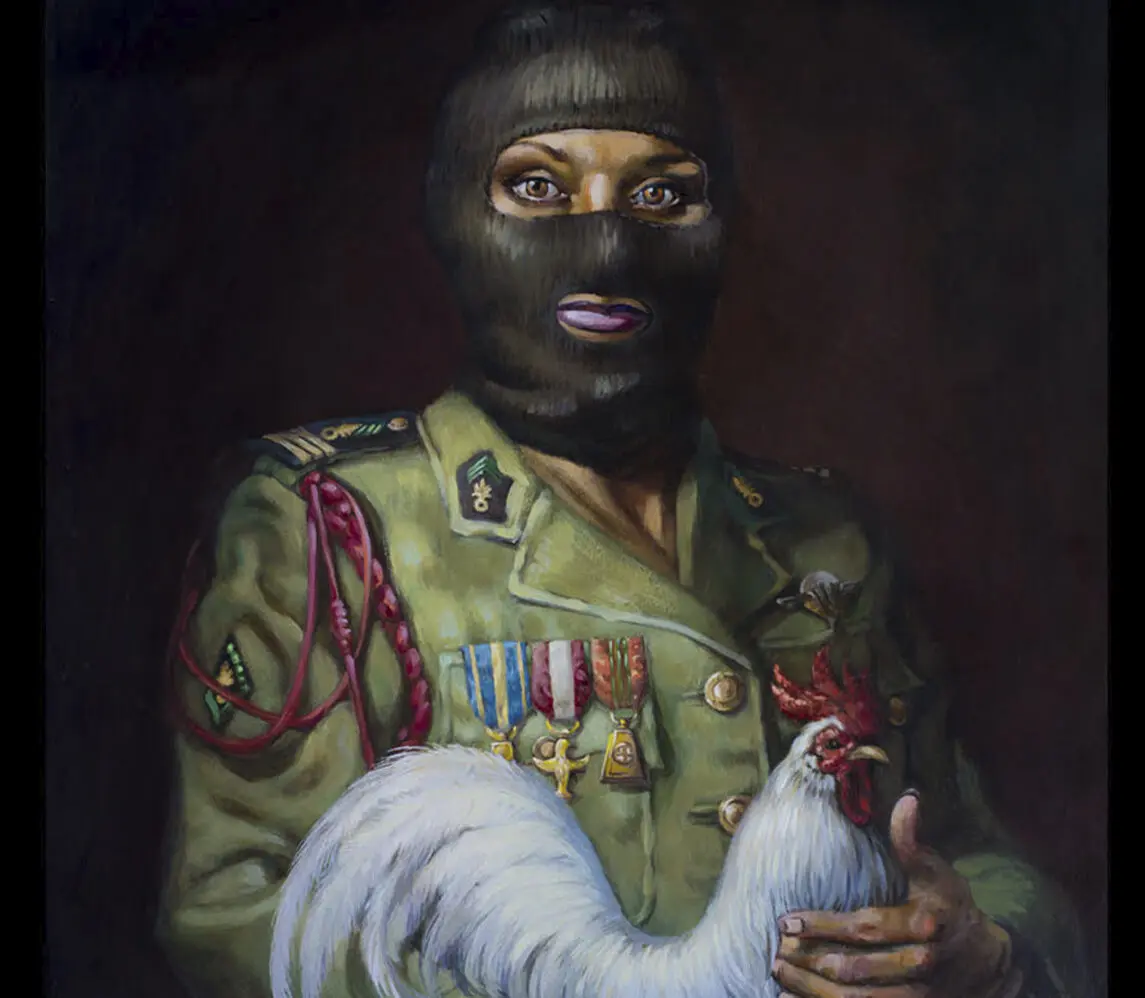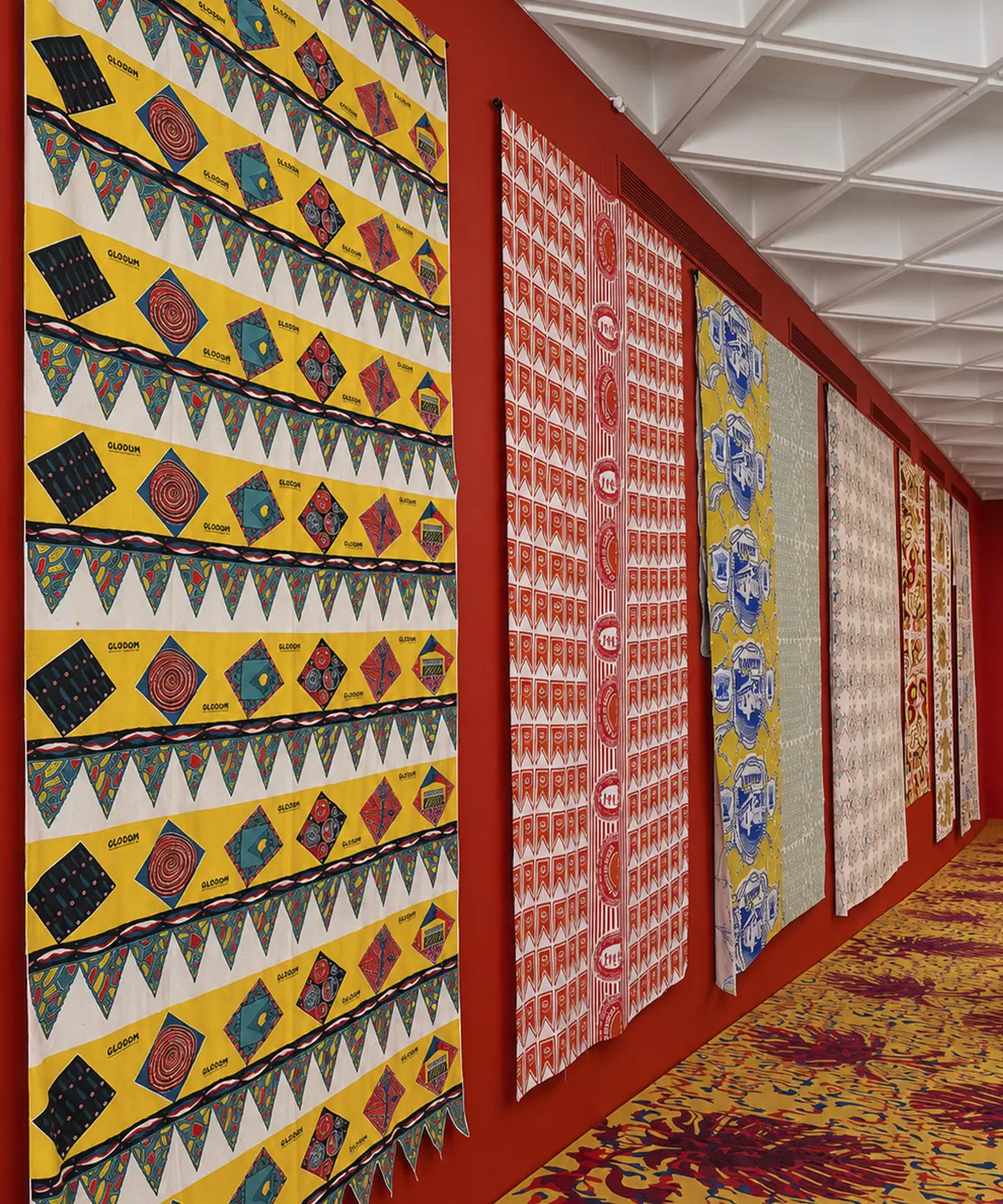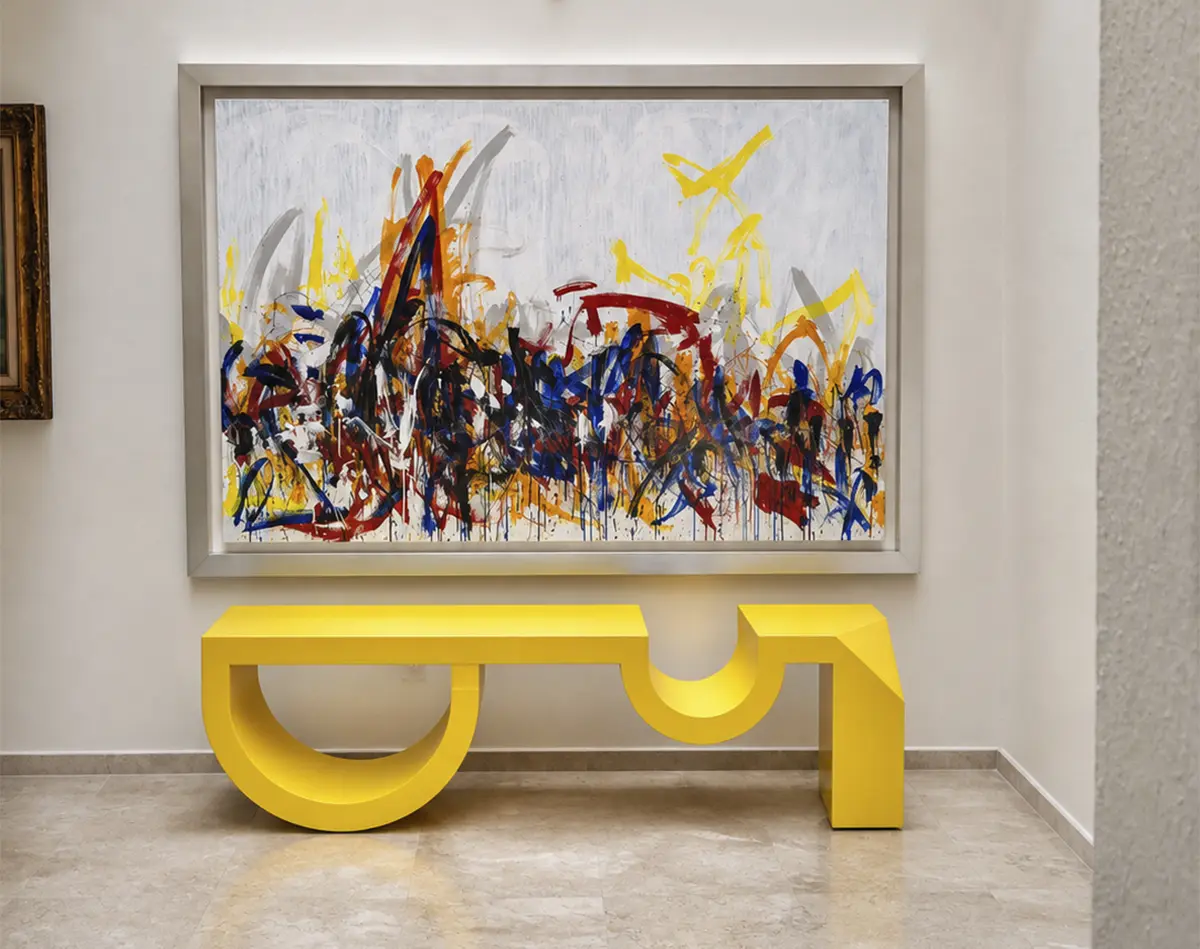

Few artists can boast of having two solo exhibitions at different venues, each representing a different stage of their career, taking place simultaneously.
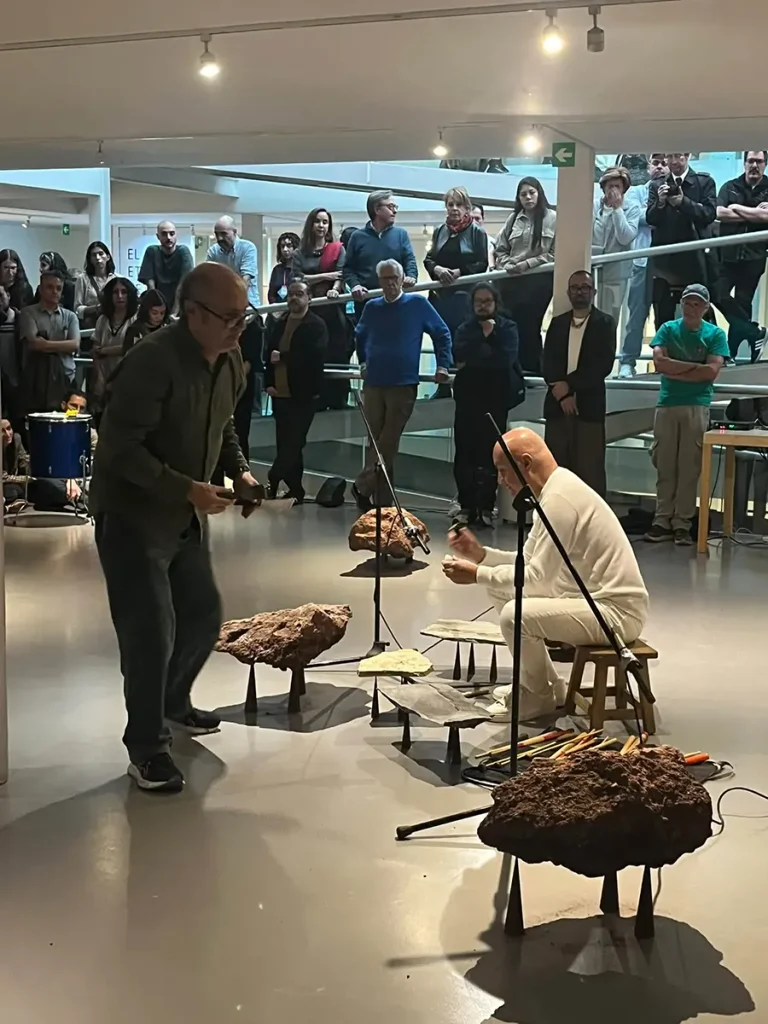
Such is the case with Manuel Rocha Iturbide, one of the most important pioneers of sound art and electroacoustic music in Mexico and Latin America, who is currently presenting *El eterno retorno* (1987–2023), a retrospective exhibition at the Carrillo Gil Art Museum (MACG) in Mexico City, running from October 24, 2026, to March 28, 2027.
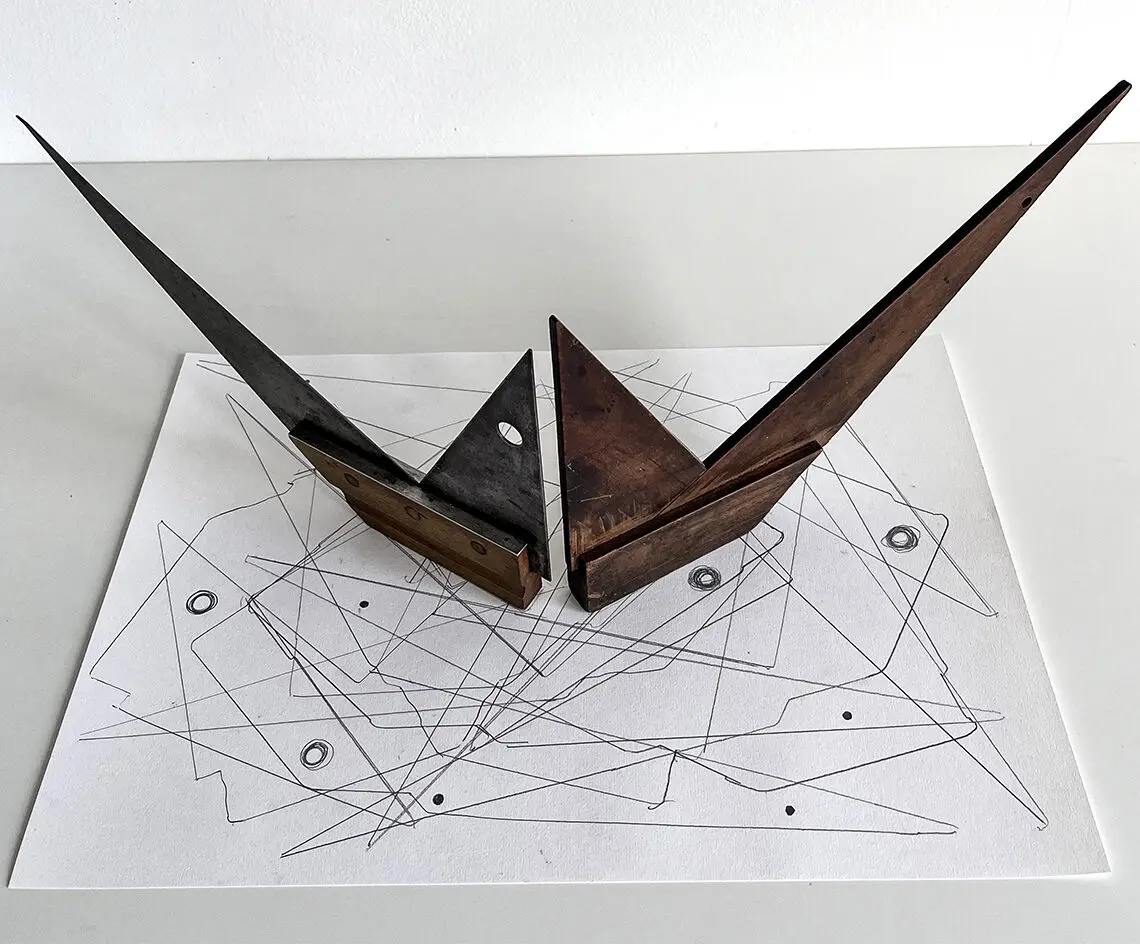
At the same time, the Le Laboratoire gallery is presenting *Le système des objets*, her fifth solo exhibition at this venue, the result of Rocha Iturbide’s artist residency at the Cité Internationale des Arts in Paris during 2024. The exhibition invites us to reflect on our relationship with objects, their meanings, and the possibilities of reinterpreting them through contemporary art. It also joins the celebrations marking the bicentennial of diplomatic relations between Mexico and France.

Amid this exhibition, we spoke with Manuel Rocha Iturbide from his studio to gain insight into the processes, ideas, and concerns that underpin his artistic practice, as well as the various ways in which sound, objects, and experimentation have shaped his career.
What would be the best way for viewers—both newcomers and those familiar with his work—to appreciate this retrospective?
No one is really familiar with the entire body of work; that’s precisely what makes it interesting: it’s a large exhibition, a space where works from different periods engage in dialogue, and in that sense, it’s the first time I’ve done an exhibition like this. In fact, even Iván Abreu—an artist who works with media and has known me for a long time—told Bárbara Pérez, one of the curators who has supported me, that he was surprised to see many things he had no idea I was doing.
On Dialogue and Objects
So the idea is for your past and your present to engage in a dialogue?
So, in the end, that’s the whole point of an exhibition like this, on that scale—that word I never use: it is an exercise in creating a dialogue between works—in this case, about 70% from the last 15 or 16 years—that is, there are more works from recent years than from earlier ones—but, in any case, when it comes to reinstalling them in a larger space and creating that dialogue, it works.
Can you see that the dialogue we’re talking about—between objects, technology, and art—has changed? The dynamic is different now; I don’t know what you think about it.
A dialogue will always be new; what will change is the space. Even if I were to exhibit all these works in a different space, the museum layout would surely change, but it will always be a new and different dialogue, even though the works are the same.
But has what attracts you to studying certain themes changed?
Obsessions are always there, and there are obsessions that don’t go away—that will always be there—such as cyclicality, for example: the idea of cyclicality or the return of the circle, of coming back to a certain point. There are several themes there that one comes across. Yes, of course: themes that span years.
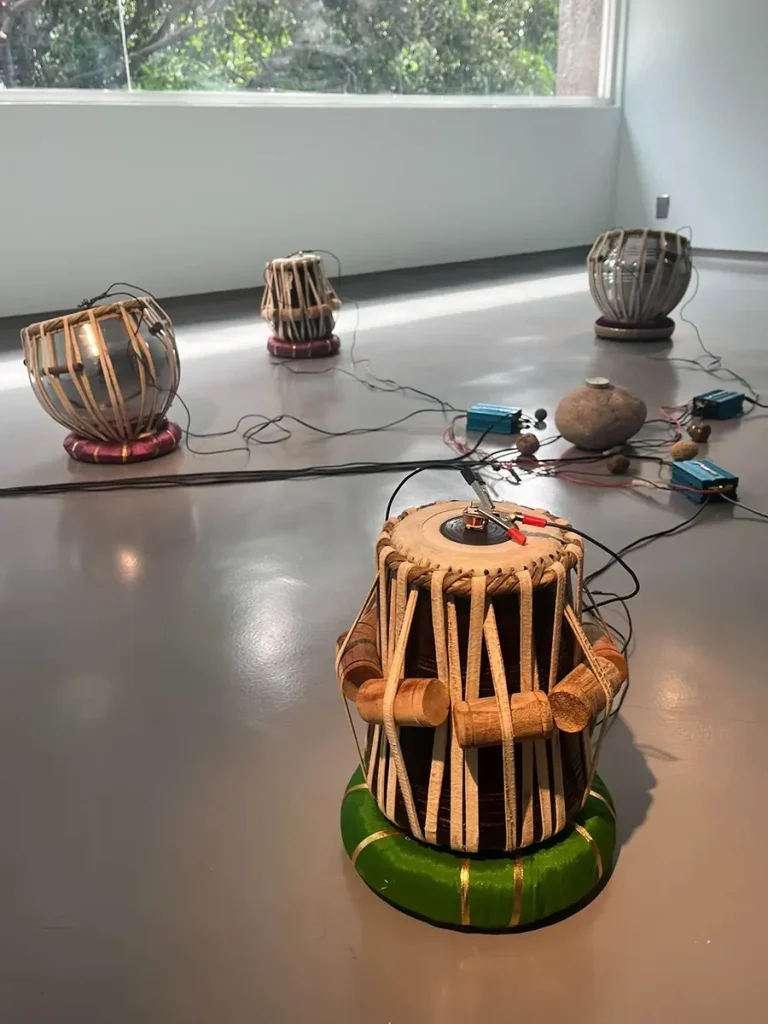
When an object from the past is recovered, it is often a device that is no longer in use or has lost its original function. However, in art, these objects can take on a meaning different from their everyday use.
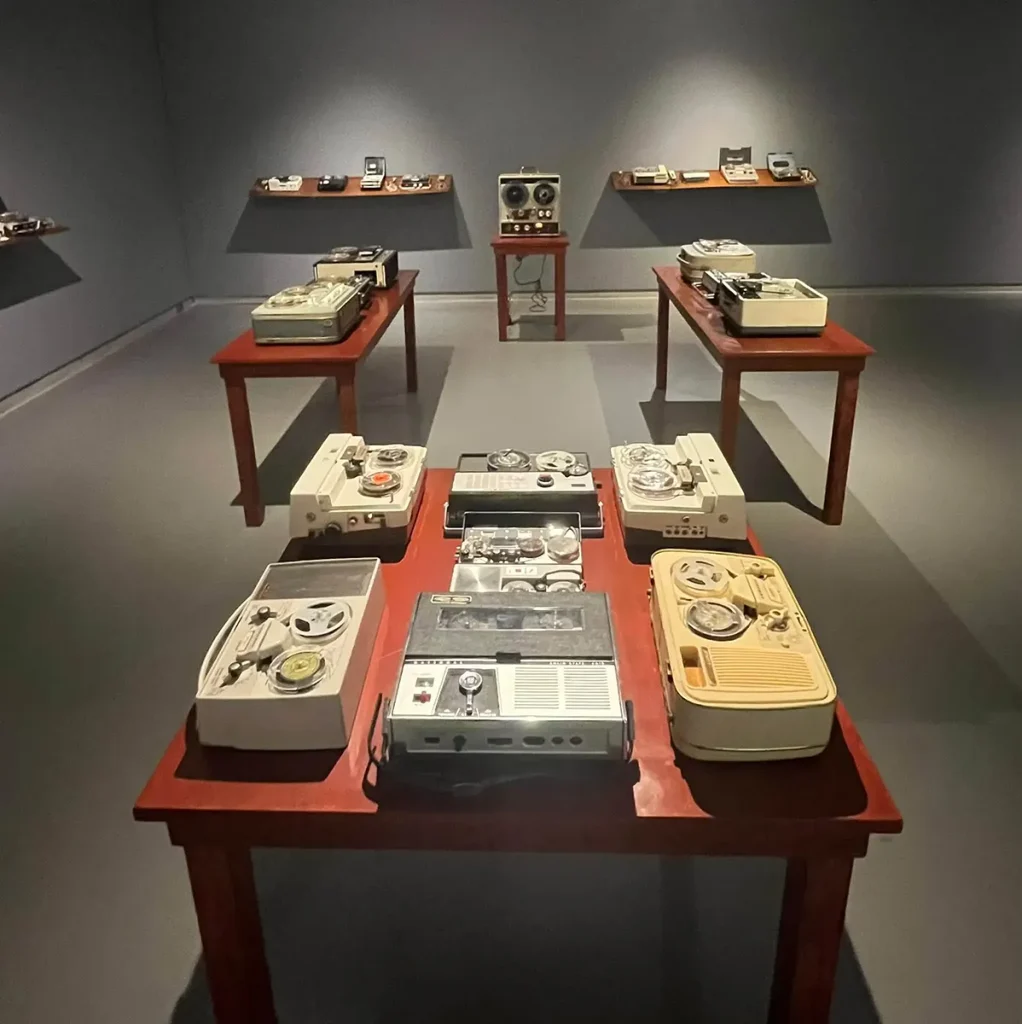
I don’t understand what you mean by “functional.” For example, take a cassette player. I have several here, and they’re functional.
What I mean is that, beyond their functionality, these objects can take on artistic, aesthetic, or even nostalgic value. What happens when they cease to be part of our daily lives and become objects that we reclaim through art?
To me, it’s completely valid and anthropological. And contextual. In other words, it’s tied to a historical, social, and anthropological context that’s very different from today’s. Rediscovering the past is always interesting…
How does the disappearance of tangible objects in favor of the digital world affect art and the conception of a physical piece?
Since we’re immersed in the present, it’s hard to know how we’ll view these objects in the future. For example, old television or studio monitors are very beautiful and very attractive. Now they’re just horrible flat-screen TVs. I actually presented a video from 1987, but not because it’s from 1987; I wanted it to be shown on a monitor, but I like the object-based concept of the monitor itself. It makes sense—or rather, the sculptural quality I attributed to video monitors. But I’ve always worked with technology that’s also of the moment. For example, the cassette recorder piece: yes, Walkmans were still around when I made it.
What about the one titled *In vitro*?
Yeah, in ’90, the first one. I have an In Vitro. I made it in ’97, and it wasn’t the ’80s anymore, but those tape recorders were still around. Discmans were already out; by ’98, that’s what everyone was listening to. Discmans were already around, but then I made one with several jars, and that’s when I used the technology of the time. They were peas, and they were made with MP3 players—that is, those USB players that you now have to order on Amazon if you want them because they’re no longer available in record stores.
Tell me about *Le système des objets*, your new exhibition.
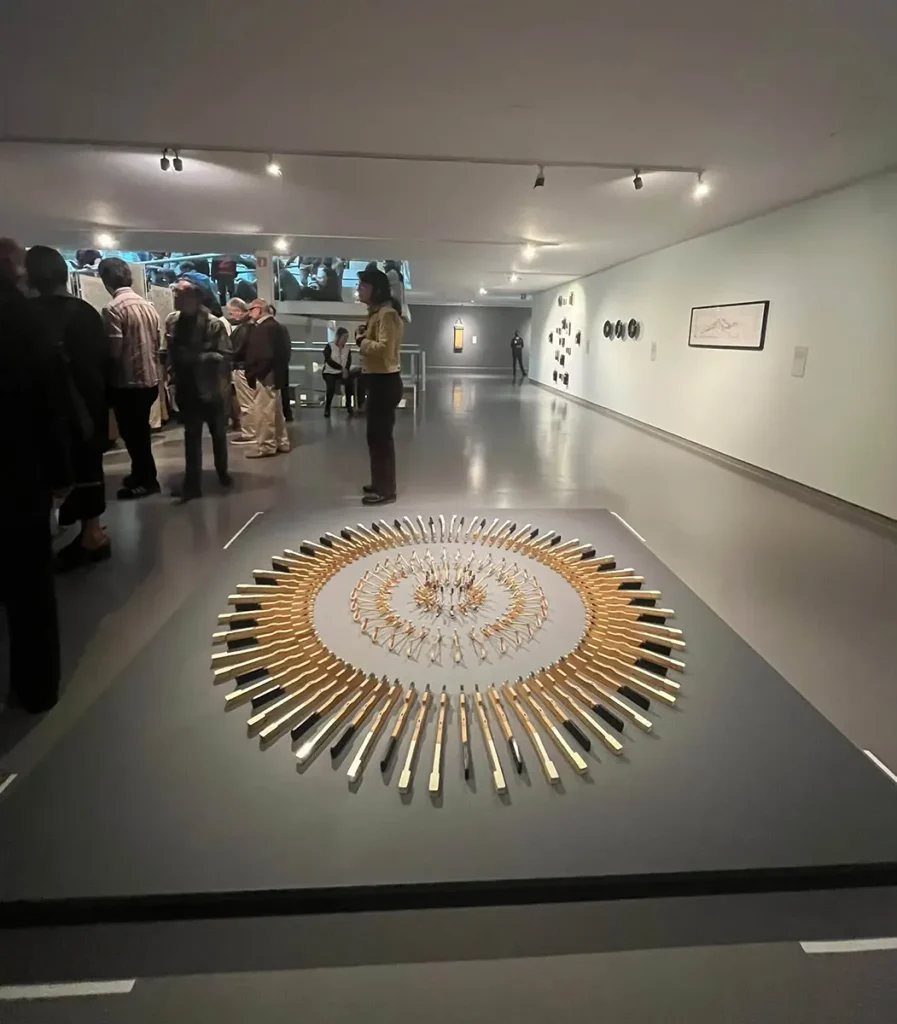
This approach of moving from photography toward abstract painting is significant, and it has also allowed me to further explore the concept of objects. I’m happy with it. It’s very similar to the exhibition I had in my studio in Paris a while back, but now everything is very well produced and in a larger space. It’s an impressive leap in terms of production, plus I already had many more tools here than I brought from Paris. There were very few here.
So the process was just walking around and suddenly coming across things?
No, you don’t find interesting objects on the streets. Although in Madrid I did an exhibition called *La Papelería* that same year, and for that one I did pick up objects from the street, bring them into the gallery, and then smash them on opening day. I did find some incredible things there—all of which ended up in the trash—but I did take all of that from the street, in addition to the photos of the objects I took while I was finding all those things. In Madrid, I did do that; in fact, I definitely did. But not in Paris—those were flea markets. On the streets, I took photos of objects.
I was reading in the curatorial text that part of the task—or one of the ideas—was to restore an aura to each of the pieces. More than anything else, yes. What does that mean?
Give them a new lease on life: take a beautiful, vintage object that’s no longer useful for anything other than a collector’s collection. And yes, you can put it in your home—the hammer is pretty, and whatever else you want—but we have to go further: we have to display it as a work of art, because then whoever buys it as a work of art won’t throw it away since it has a different value.
“If a person collected an object like this and then their descendants throw it away or sell it back on the street market, it takes on a new life.”
And this exhibition is probably the result of various influences…
The act of assembling them together is something else entirely. Assemblage is a very old practice in art: take Duchamp’s bicycle wheel, for example, which can be placed on a bench. They call it a readymade, but in reality, it’s not a readymade—it’s two objects assembled together. It’s no longer a readymade. Or the iron—well, yes, it is a readymade, but I’d say it’s already an assemblage. Man Ray’s iron with nails is a combination of the iron and the nails; that’s already more surrealist.

“Le système des objets” is on view at Le Laboratoire in Mexico City from November 14, 2026, to January 30, 2027. This is Manuel Rocha Iturbide’s fifth solo exhibition at the gallery and is part of a research project he developed during his residency at the Cité Internationale des Arts in Paris in 2024.
Adding to this picture is the release of his book *Desde la escucha: Creación, investigación e intermedia*(From Listening: Creation, Research, and Intermedia), which brings together essays written between 1992 and 2015 on listening as an aesthetic axis, transdisciplinary creation, and intermediality, divided into three chapters dedicated to his career and connections to science, active listening and the soundscape, and the thought of Schaeffer, Ligeti, and Cage.
The exhibition is on view at the venue located at 56 General Antonio León Street, San Miguel Chapultepec II Section, Miguel Hidalgo borough, Mexico City.
Discover more interviews about sound art and avant-garde music in AW Magazine