For a moment, the writer became a comic-book character. He appeared in a Mexican comic strip featuring Fantomas, the masked hero who originated in the French tradition and found new life in Mexico.
It was no small matter. Inspired by that gesture, Julio Cortázar embarked on one of his most intriguing experiments: transforming a popular comic strip into a literary and political artifact.
This is the story of how *Fantomas vs. the Multinational Vampires* came to be .

Julio Cortázar sees himself in a drawing
In 1975, Cortázar received a copy of Fantomas, the Elegant Menace. A friend sent it to him as a joke: “Look, when a writer appears as a character in a comic book, that’s world fame right there.” Upon opening it, he found himself portrayed with remarkable physical accuracy. He wasn’t alone.
Those pages also featured authors such as Octavio Paz, Alberto Moravia, and Susan Sontag. They all called Fantomas to warn him: something was happening to the world’s books. Some madman was burning entire libraries. He was also threatening writers.

There was something Cortázarian about the scene: real-life writers turned into fictional characters, culture in peril, the blurred line between the serious and the playful. But no one had asked Julio Cortázar for permission to include him in the story.
“If these people have used me as a character in a comic book without asking my permission, why shouldn’t I use a part of this comic book without asking their permission? I think I’ve earned that moral right”— Julio Cortázar
Fantomas: From Paris to Mexico
Fantômas was born in France in 1911. He was created by Marcel Allain and Pierre Souvestre. He was a sophisticated villain, a greedy and ruthless thief. Over time, the character became a classic.

In the mid-20th century, he was reimagined in Mexico by Editorial Novaro as a modern vigilante, surrounded by technology and charming sidekicks. The tone was deliberately changed: he was no longer a shadowy criminal, but an elegant character who took on international conspiracies.

But the publishing house registered the character as its own and paid the original creators a one-time fee, with no royalties. Guillermo Mendizábal, who came up with the idea of adapting Fantomas in Mexico, was cut out by the publishing house. With success assured, the scripts passed into other hands. Among those who wrote them was Gonzalo Martré, who for years enriched the series with new narrative elements.
One of those scripts was “Intelligence in Flames.” In it, a cult set fire to libraries and threatened authors in various cities around the world. Fantomas consulted real-life intellectuals to solve the mystery. There appeared Cortázar, transformed into a comic-book character.

The prank and the twist
Instead of ignoring the situation, Cortázar did something more interesting. He figured that if the comic had used his work without asking for permission, he could use it too. He took some images from the comic, removed what he didn’t need, and wrote a new text around them.
The result was *Fantomas vs. the Multinational Vampires*, a serial published in 1975 by the newspaper *Excélsior* with a wide circulation and sold at newsstands. It wasn’t exactly a comic book, nor was it a novel. It was a prose story interspersed with the original comic strips.
For much of the book, the reader follows an adventure that blends fiction and political commentary. But the ending shifts gears. Suddenly, the game and the adventure give way to a legal document.
What was this ” Russell II Court” whose ruling appeared at the end of a Fantomas story?
The document at the end of the game
The Russell II Tribunal was an international body that, in the 1970s, investigated human rights violations in Latin America. Cortázar participated in its sessions and was struck by the lack of media coverage of its findings.
In this version of *Fantomas*, book burning is no longer the work of isolated fanatics. It is a symptom of a system that imposes a cultural and economic model, as well as a way of life. The enemy is a widespread structure.
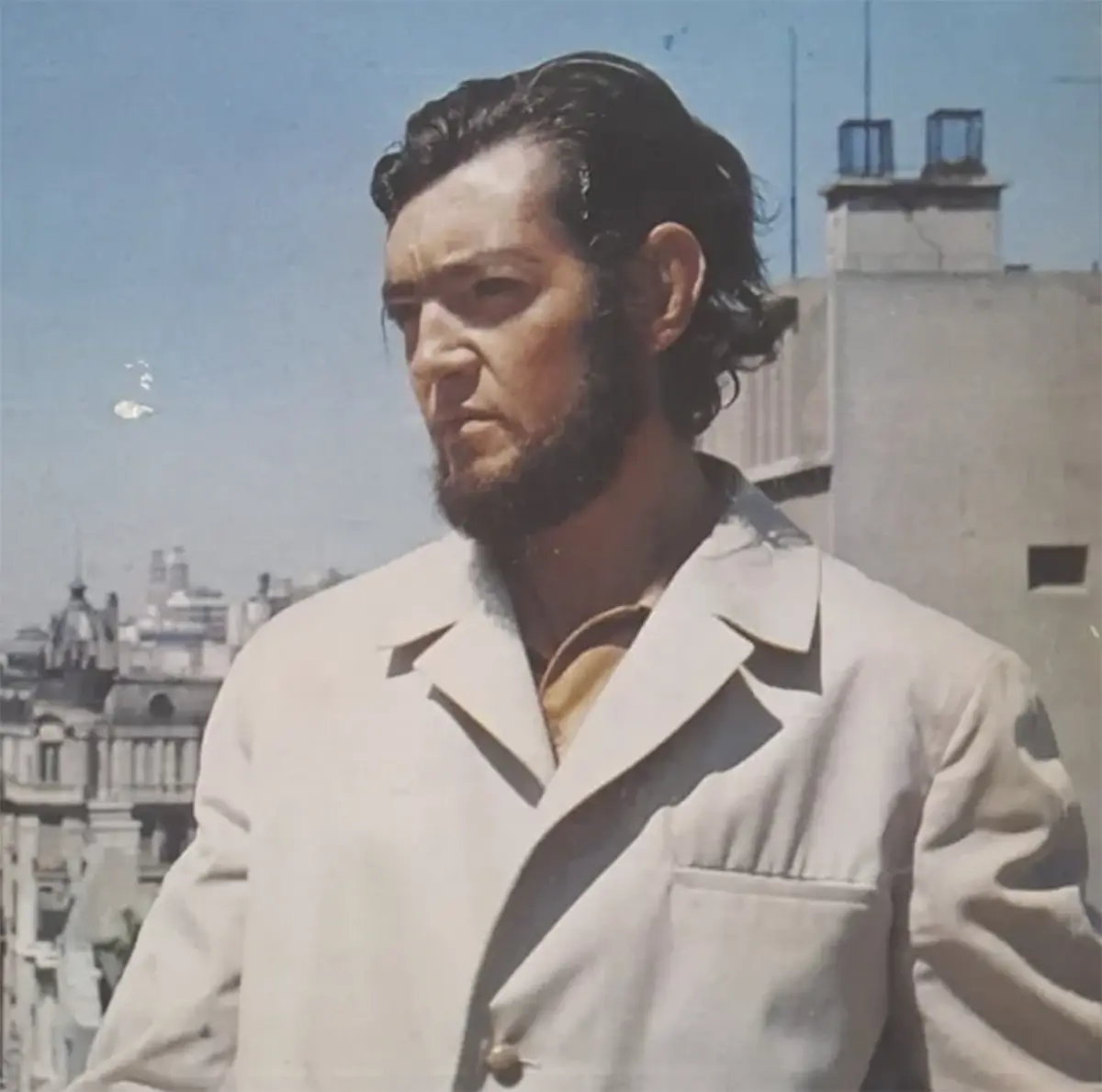
The book thus combines three elements: Cortázar’s reflective prose, the images of a popular comic strip, and a real legal document. The montage is deliberate and conscious. The adventure serves as a gateway; the document, as a sudden crash landing into reality. The playful writer does not abandon the game, but leads it toward a document of reality and violence. He uses a newsstand hero to talk about international politics.
Cortázar, Fantomas, the game
“Fantomas vs. the Multinational Vampires ” is no minor oddity in Cortázar’s body of work. It demonstrates his willingness to experiment with forms and media, and to take literature beyond the confines of the traditional book.
The blend of comic strips and legal documents creates a specific effect: the reader is drawn in by curiosity and ends up confronted with a disturbing and painful scenario. Fantomas, an elegant figure in the world of entertainment, becomes a vehicle for discussing power, culture, and violence.
This gesture encapsulates a recurring theme in Cortázar’s work: playing is not an escape from reality, but rather a way of seeing it differently.
To keep exploring this thread, visit Latin American culture; you can also continue through first-person essays and interviews.