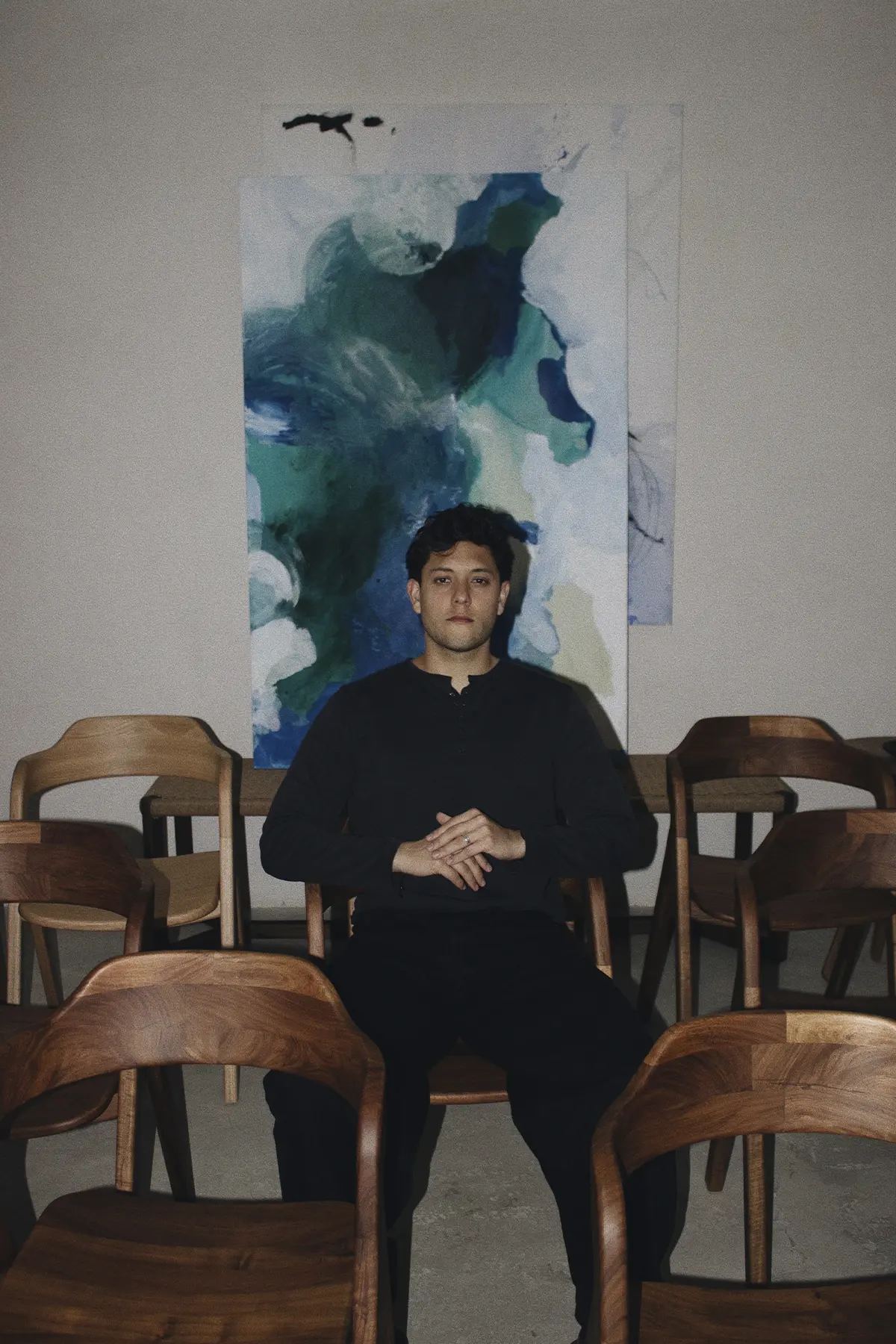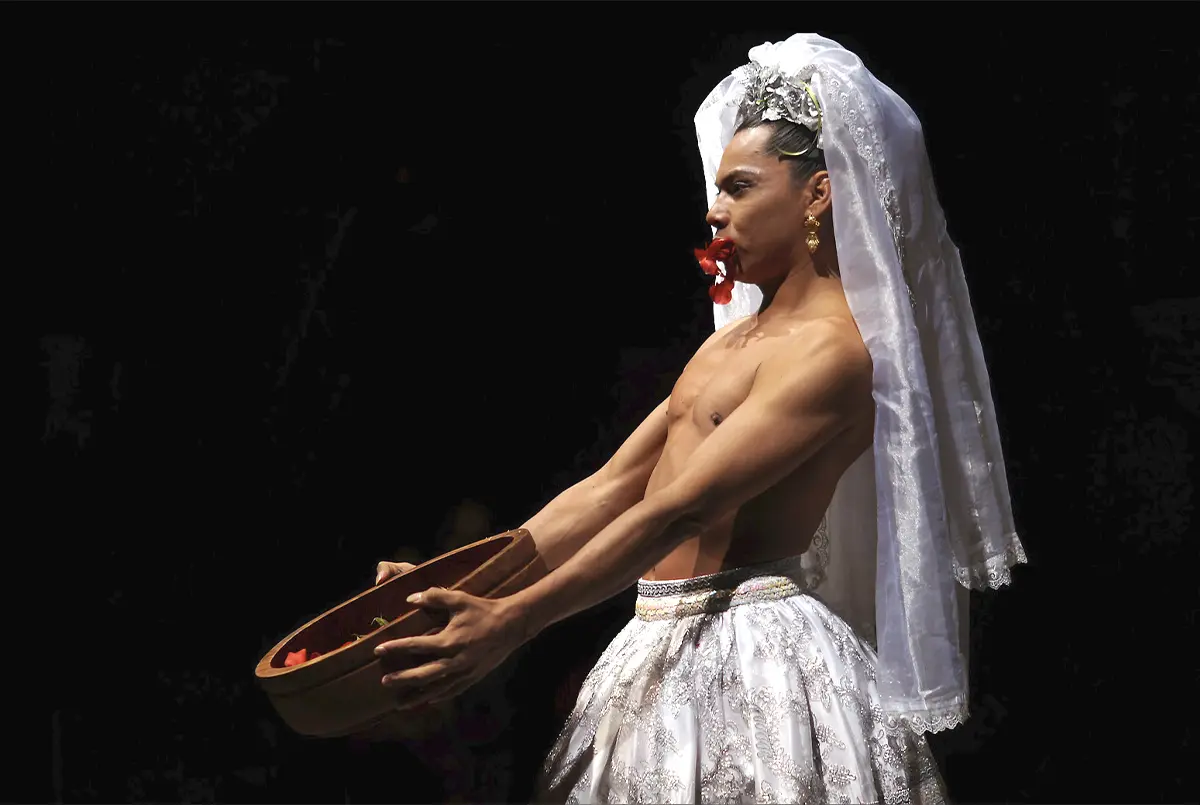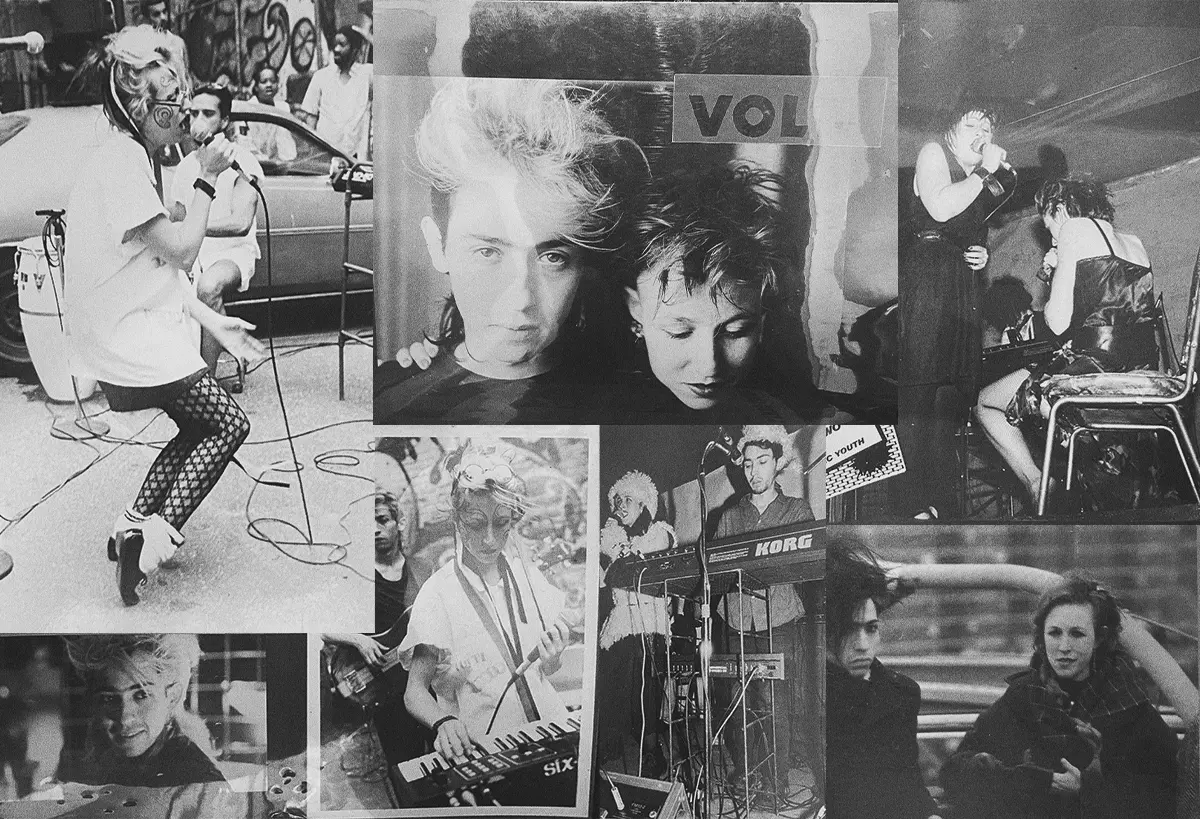

Volti, the synth-pop band, was one of the rising stars of the New Mexican Wave. The project, led by Lyndell Brookhouse-Gil and Eddie Rubello, released a single album in 1986. Four decades later, the singer and artist shares her story and discusses her current work as a visual artist.

Lyndell’s Years in New York
“In New York in the early 1980s, everyone was—or felt like—an artist. Everyone was a painter, a sculptor, or at least trying to create something,” recalls Lyndell Brookhouse-Gil. The young American lived right at the epicenter of New York’s independent art scene, in the midst of a movement that was about to flourish and turn many of its members—those who didn’t wither away prematurely—into recognized figures.
Lyndell had completed his studies at the Art Institute of Chicago and studied independently with the tonalist painter Alexander Chidichimo, but at that time, he just wanted to have fun and work on what he loved: music.
“Jim Jarmusch was part of my group of friends; Jean-Michel Basquiat lived next door to me and was dating one of my best friends at the time. We teased him a lot about his obsession with fame. All he talked about was moving to SoHo to rub shoulders with the elite and meet the most important gallery owners,” she recalls.
“You’d walk up to his house and his door was completely covered in his paintings; he was very reserved and completely immersed in his persona,” says Lyndell of Basquiat during those years at the height of the “decade of greed” —as that period in the 1980s is often called.
You could get a sense of what life was like back then from publications like *The Face*, *I-D Magazine*, or *Interview*. “We’d see Andy Warhol at The Odeon restaurant, which was frequented by many actors and the jet set. We just went there to eat pizza.” Back then, Lyndell had no idea that her near-future would be in Mexico.

An unexpected encounter in 1980s Mexico
While she was working as a graphic designer, an unexpected coincidence changed her life forever. After sharing a taxi with a Mexican businessman, he invited her to move to what was then Mexico City to work in advertising.
“I don’t know about now, but back in 1982, Mexican agencies were full of very ordinary, boring people I didn’t get along with. I had a pretty rough time in that office,” he says.
One night on my way home from work, another encounter broke the monotony: “I lived on San José Insurgentes, and as I walked past a Vips, I saw four or five guys with a punk look sitting there, smoking and drinking Coca-Cola. I was dressed very preppy, like the office workers I worked with, but I went up to them anyway and asked—in English—if they were from New York. They replied rather indifferently that no, they were Mexican.”
The Mexican avant-garde in the 1980s
Among the members of that small group—which had nothing to do with the anarchists on the outskirts but rather consisted of the children of diplomats or artists with access to cultural life, avant-garde records, and imported books—was the musician Eddie Rubello. After saying goodbye to them, Lyndell returned to the apartment, somewhat annoyed by the snub.
Curiosity led her to return to the restaurant once again, convinced that she could form the kind of connection with them that she couldn’t find with her coworkers. That day, they all ended up together at a party in a semi-abandoned house near the airport.
The places and moments of the new wave in Mexico
That space, filled with local artists, lots of black eyeliner, and carefully styled mohawks, was one of the places where the New Mexican Wave was taking shape—a sort of loosely defined tropical take on Madrid’s Movida, complete with music, art, and performance. “How is it possible that this was happening in Mexico, and I’d only just discovered it?” Lyndell recalls.
Over the following years, this new movement would oscillate between the underground scene of cultural venues and bars such as El 9, Tutti Frutti, and LUCC—La Última Carcajada de la Cumbacha—and attempts to break into the mainstream by promoting themselves on Televisa’s few youth-oriented programs.
Punk, which emerged in England in 1977 and spread to much of the rest of the world primarily as a countercultural phenomenon encompassing music, fashion, art, and activism, had already arrived in Mexico in a somewhat diluted form as part of what came to be known as the Nueva Ola, a movement that encompassed performance art, pop, and musical experimentation with the then-novel synthesizers.
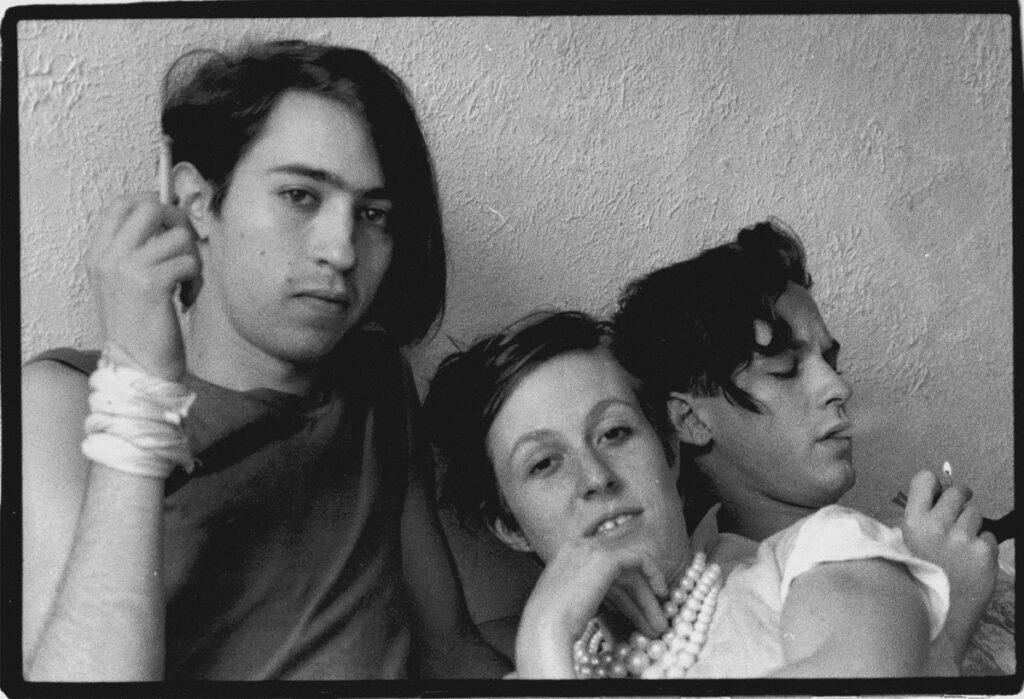
That era and scene brought together figures who would later become leading figures in Mexican music and art. Ulalume Zavala—who would later become the lead singer of the band Casino Shanghai—Walter Schmidt, and Carlos Robledo—members of Size, considered the first Aztec post-punk band. “It was a totally different country. At the San Ángel market, you could only buy flowers. The Roma neighborhood was a landscape of nearly ruined houses, and rents were incredibly cheap,” recalls Lyndell.
From Mexico to New York: a sense of constant danger
New York wasn’t exactly paradise. The neighborhood Lyndell had left behind was now overrun with junkies, dilapidated buildings, and a constant sense of danger. Mexico had become her refuge. However, her dull, monotonous stability was short-lived.
The advertising agency faced financial difficulties during those years, shortly after President López Portillo had devalued the peso—the same currency he had vowed to “defend like a dog” before breaking down in tears during his State of the Union address.
Volti: From Mexico to New York
She had to return to the United States. But this time she didn’t go alone: Eddie Rubello, the punk she’d met that night, had become her constant companion, and he accompanied her to what was then a lackluster and somewhat run-down Big Apple.
“Ever since we arrived in New York, we’d been thinking about how to make music with synthesizers and pick up where we’d left off in Mexico. Later on, we were among the first to try our hand at Latin electronic music,” he says. By then, the DIY philosophy had already taken hold.
Eddie, also known as Pepe Guadalajara, took the name of a band he had formed in Mexico alongside some prominent figures in the scene, such as musician and publicist Mateo Lafontaine and Mariano Petit: Volti. “We made music using nothing but our imagination, with whatever keyboards we could afford and some drum machines—which was the latest technology available at the time.”
Art for art’s sake: Volti and “Corazón,” his most iconic song
“We made art without social media, without Instagram: We made art for art’s sake. Volti played one night at the same event as Madonna at the Danceteria club, but we thought she was trash, that she was too commercial. Six months later she became a big deal; we also used to go out partying with Lydia Lunch, the queen of No Wave, who’s still relevant today,” he recalls, “It was a time when art was completely free from economic constraints, a very special moment that I don’t see anywhere now.”
“It reminded me of my time in Paris, when painters would gather in cafés, discussing their work and living in the moment without a thought for fame.”
Throughout its brief history, Volti managed to record songs that were significant to Mexican-American electronic music. For example, “Corazón, ” a Spanish-language single that was influenced by British synth-pop and electronic funk as well as New York salsa and even the then-emerging Miami Sound Machine with its Latin pop sound.
The single featuring that song was released in 1986 by the Belgian label Crammed Discs. It had a striking cover featuring an engraving of skulls by Mexican illustrator José Guadalupe Posada, creator of the Calavera Garbancera. The one whom Diego Rivera transformed into the famous Catrina. “The first thing we tried was to make it big in Spain because for New York, Volti was too nice, too cheerful, and the city was darker back then.”
“In Europe, there were a lot of bands starting to emerge under the New Romantic label, and we got along really well with them. In Belgium, a producer named Marc Hollander recognized us during a visit to New York and liked the graffiti I’d done on the streets; he signed us to record the album.”
Volti: From Worship to Tragedy
News reached Mexico that Volti was gaining popularity in Europe. And although the group did perform in Mexico City at one point—and were booed because the audience didn’t understand why they used synthesizers and prerecorded drums—their name, which appeared in Mexican magazines of the time that chronicled their adventures, became synonymous with a cult band.
“Especially because of what happened next, ” he recalls. “He decided to stay in Belgium.”
““I never had any problems with drugs. I didn’t like them, and I realized that if I got hooked on them, I’d die. But Eddie was way too into heroin.”
Saddened, Lyndell returned to New York. Eddie’s return was delayed, and they lost all contact. In 1987, the singer received a letter from the record company in Belgium. It was her birthday, and she thought it was a birthday card. The letter, however, explained that the musician had died from a heart complication most likely caused by an overdose.
Forty years after Volti
With Eddie’s death, a fleeting chapter in the history of Mexican-rooted alternative music came to a close. Volti never returned, and Lyndell has devoted himself to painting and drawing ever since. He never made music again. He has two children: Arianna Gil—an artist and founder of the Brujascollective —and Orlando Gil — a producer and film director . He traveled extensively and has been based in Oaxaca de Juárez, Mexico, for several years, where he often exhibits his paintings. He has held several artist residencies in Los Angeles, participated in various group and solo exhibitions, and also takes on commissioned work.
His work draws on “moments in time” and is rife with references to Mexico, urban life, and Oaxacan culture. There are no obvious nods to his past, with the exception of a few paintings of Californian diners. Perhaps a tribute to that night when he met Eddie at a Vips?

Her upcoming exhibition, Portrait as Resistance: An Archive of Community Memory,will take place on February 27, 2026, at Naima Club, a venue in the Historic Center of Oaxaca. “I have lived in Mexico on and off for more than 40 years; the people in these paintings represent those who have helped me create a unique sense of place.”
“This exhibition celebrates and highlights people who might not have been portrayed in the past,” he says.“I believe in living life to the fullest, embracing change, and fostering meaningful connections with others,” he concludes almost dogmatically.
His past and present works can be found at lbgpaintings.com
Volti’s only album
Volti’s first and only album was reissued on remastered vinyl in 2017, and the single “Corazón” was included on the album *Back Up: Mexican Tecno Pop 1980–1989*, released by the label Dark Entries in 2021. Why do these stories always end up becoming cult classics? Because they are born in the wrong place to succeed and in the exact right place to become legend: perhaps they are too strange for the market, too alive to disappear. In the end, the story of Volti and Lyndell’s journey is the tale of something that could not be, but that changed everything for those who lived it.
To keep exploring this thread, visit cultural perspectives from Latin America.