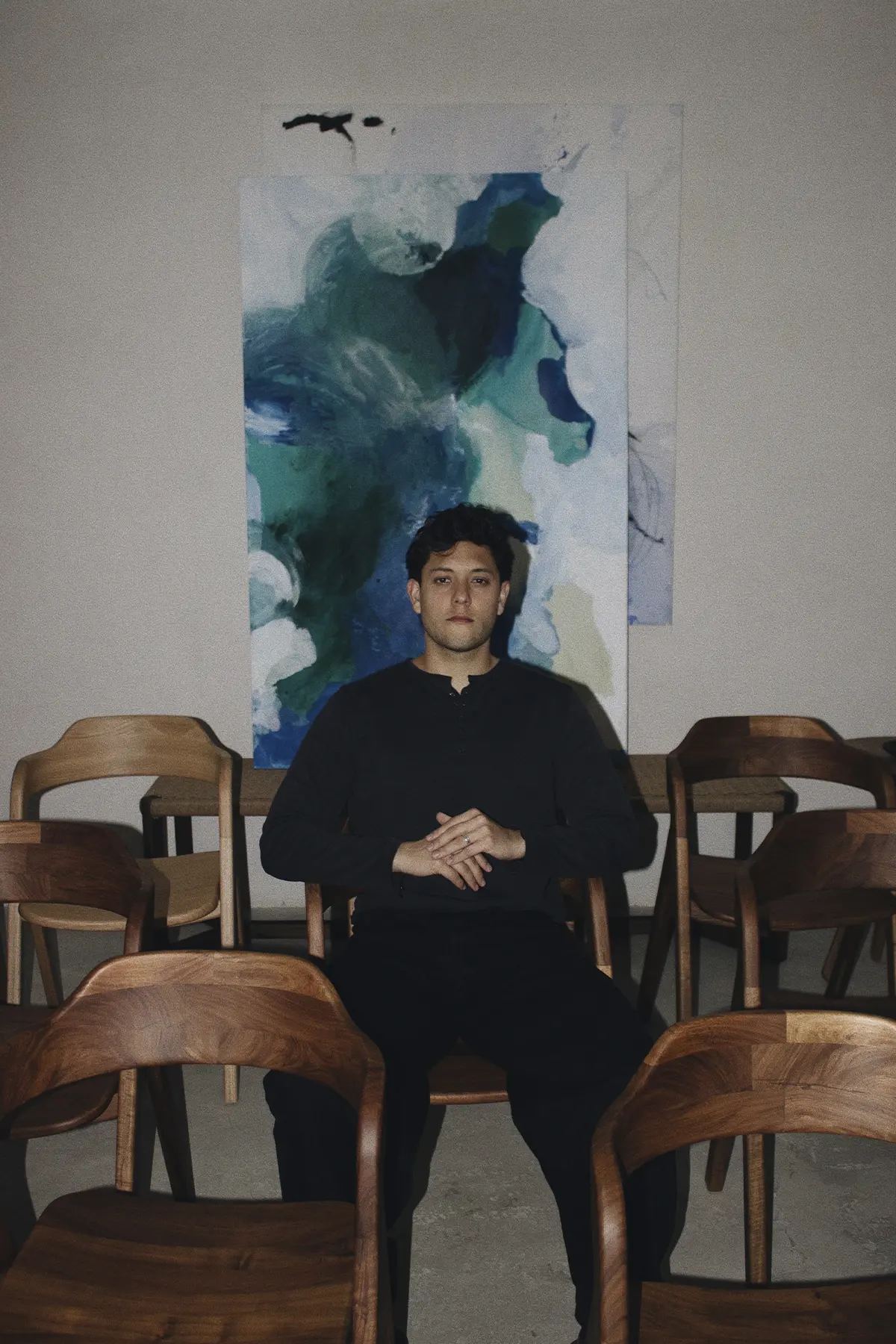

Born in Badajoz, in the province of Extremadura, Spain, and having taught himself the craft through long nights spent drawing, Borja González went from self-publishing to becoming one of the most distinctive voices in contemporary Spanish comics.

He made his debut in 2012 with La boca del lobo, but it was with La reina Orquídea that she began to shape a universe of her own: female protagonists, raw emotions, and stories driven by impulse.
With The Black Holes (2018) kicked off the trilogy The Three Nights, a generational fable that led to his successful publication in the Franco-Belgian market. In 2021 came Grito nocturno, a surrealist story that won the National Comic Award in 2023. That same year, he concluded the saga with El pájaro y la serpiente.
I know you started out in fanzines and the indie scene before moving on to larger publishers. What was that process like?
Badajoz is a small city. When I was a kid, there wasn’t much of a cultural scene there. I read comic books from the newsstand, but it was my father who instilled in me a love for fanzines and taught me that I could create my own comics without relying on the commercial market. With photocopies and staples, I had a comic book.

How do you distribute your first comics?
I would leave copies in bars—even though I wasn’t even old enough to be there—and I almost always gave them away for free. Over time, I started meeting more people, improving my technical skills, and organizing exhibitions. About 15 years ago, together with my partner, Mayte Alvarado—a comic book author and illustrator from the same city—we started putting more effort into the fanzines, using better paper and improving the production quality.
I had to leave Badajoz at that point…
That’s right, we started traveling outside of Badajoz to self-publishing festivals in Madrid, Barcelona, and Seville. We’d pack our backpacks, set up a booth, and through that we met people and our work sold well.
When did these fairs first start appearing?
Around 2010, they began to emerge and take root. Fairs like Festival Tenderete and GRAF became gathering places. Spain had a strong comic book tradition in the 1980s and early 1990s, but then domestic production collapsed and magazines and distribution networks disappeared. Suddenly, there was demand again, and within a few years, fairs popped up all over Spain. The internet played a major role in connecting creators from different cities.
Were your influences mainly independent, or did you also read mainstream comics?
I read everything. As a kid, I read Marvel, DC, Mortadelo y Filemón, and newspaper comic supplements. Then I went through a phase where I lost interest because comics were no longer available at newsstands, and what was out there was very mainstream. I got back into comics through my father’s collection, especially Franco-Belgian ones: Moebius, Jodorowsky, Milo Manara. Later, I discovered American independent comics and connected with them much more.

In one of your early novels, you feature characters from your own circle, such as the painter Antonio Juez. Is it important for you to draw from what is close to you and rooted in reality?
Yes. It was my first graphic novel, and I drew on real-life figures from Badajoz. The funny thing is that we were living in the house where Antonio Juez had lived… and we didn’t know it. I found out while doing research for the script. The story revolves around the night his mother died, which happened in that very house. Plus, he designed Castelar Park, where I used to play as a child. Everything was connected to my life and my surroundings.
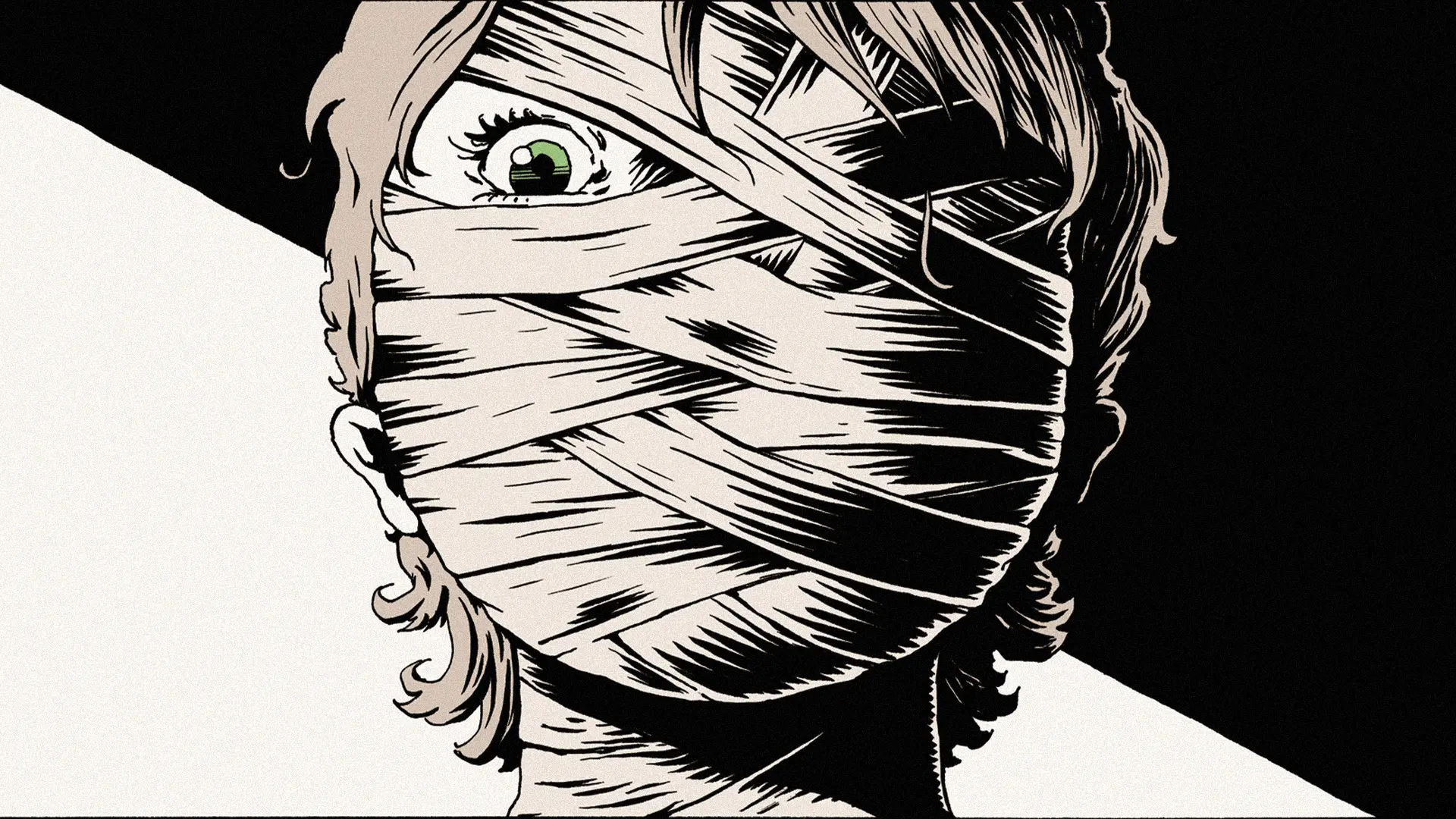
But in many of your works, the characters don’t have visible faces…
That comes from my work in illustration. I started focusing more on the setting than on the characters, scaling them down and simplifying their features. Eventually, I eliminated the face altogether. I discovered that this allows the reader to project themselves more fully, since there’s no specific emotion on the face; the reader fills in and imagines the nuances. That’s why I started focusing more on body language and the setting to convey what the face no longer showed. The architecture, the objects, and the space around the character tell a lot.
There is a strong presence of female protagonists in your work. Why is that?
At first, I did it without thinking, and when people asked me why, I didn’t know how to answer. Now I know that I find it easier to express myself through female characters because it creates a sense of distance. If the protagonist is a male artist, it seems autobiographical. If it’s a woman, that interpretation changes.

The Black Holes was published in France even before it came out in Spain. What did that mean to you?
It was amazing. When the rights were sold to Dargaud, I started crying. I called my father right away, because my whole background came from those comics he showed me when I was a kid. Going from self-publishing—where you know almost every reader—to publishing in France was a huge leap.
Winning the National Comic Book Award. Did it give you more freedom or put more pressure on you?
Both. It opens doors, but it also creates uncertainty. It’s like having to “defend your title.” I’ve always made the comics I wanted to make, and the award was for one where I did exactly what I wanted.
Winning the National Comic Book Award made my imposter syndrome worse: I always think the comic could have been better, that I approached something the wrong way, or that someone else has already told that story better.
“Winning the National Comic Book Award made my imposter syndrome worse: I always think the comic could have been better, that I got something wrong, or that someone else has already told that story better.”— Borja González
What are you working on right now?
I’m working on *The Autumn Queen*, which is scheduled to be published this year by Reservoir Books ( Random House).
Is there anything you still wouldn’t dare to draw?
Well, that’s it, but I finally took the plunge: I wanted to write a book that was “easier” to read, more adventurous—something my daughter could read.
And was it easier to tackle a more traditional story?
No, it’s been the hardest one I’ve ever done. I’m finding it hard to keep my own voice in a story that’s meant to be more broad-appeal and accessible. It’s supposed to come out worldwide in the middle of the year; I hope it doesn’t get delayed.
To keep exploring this thread, visit music, film and cultural stories.