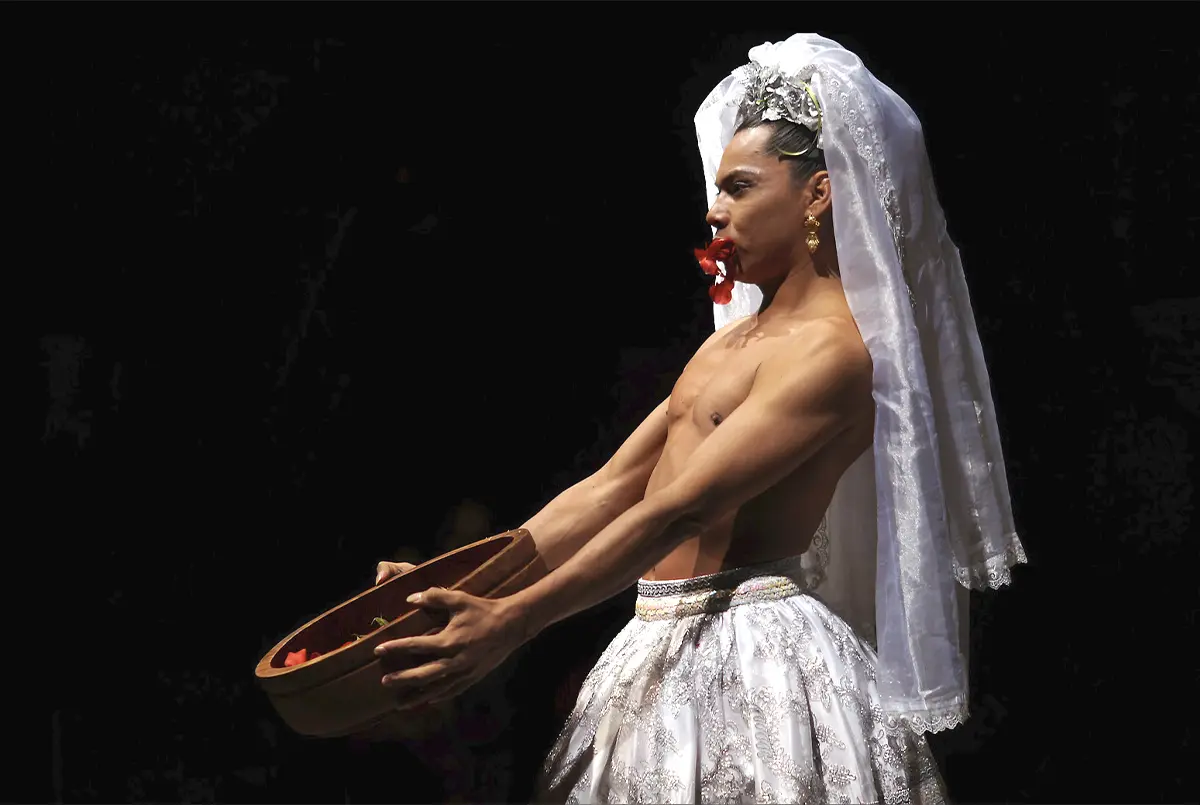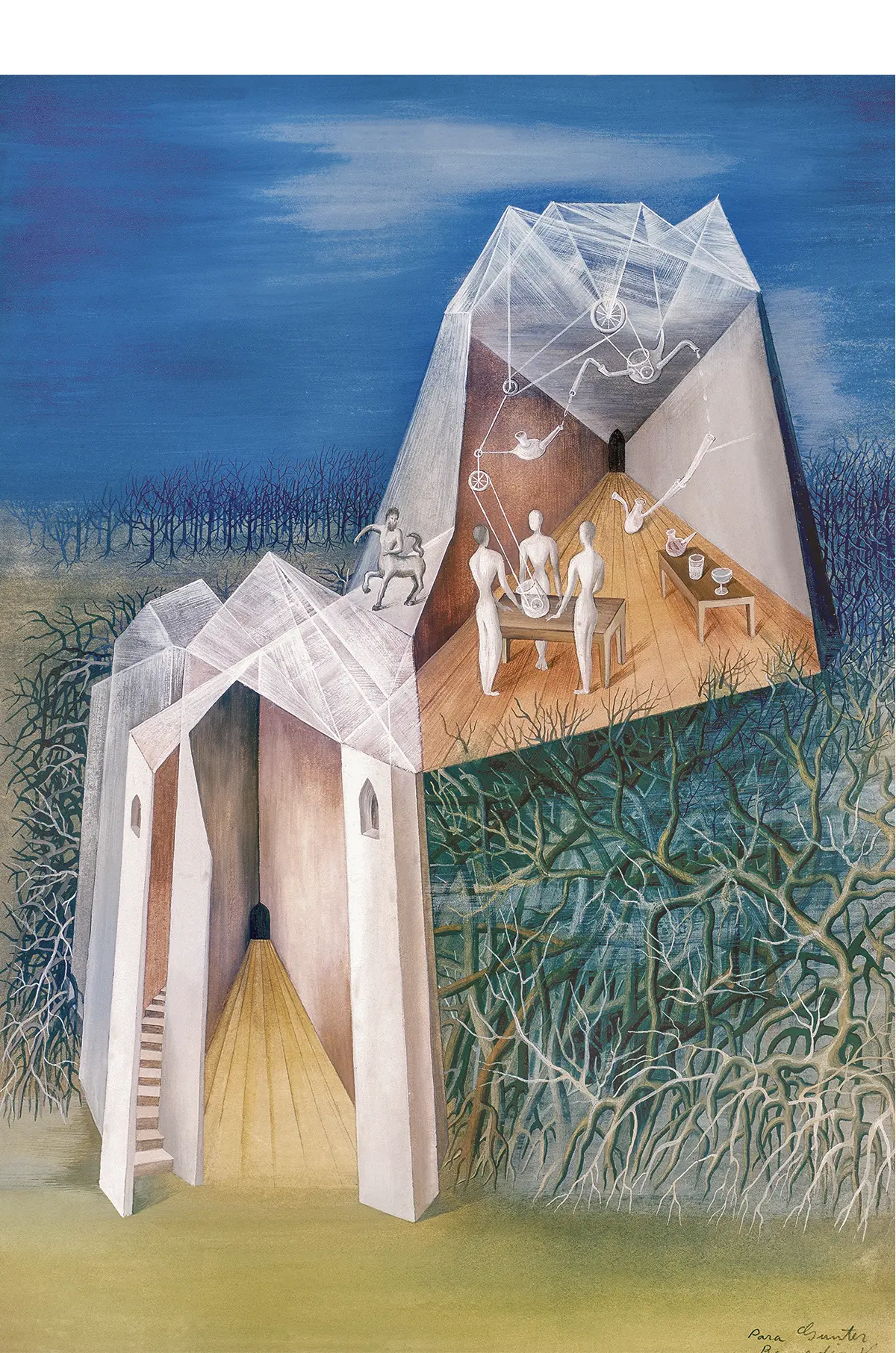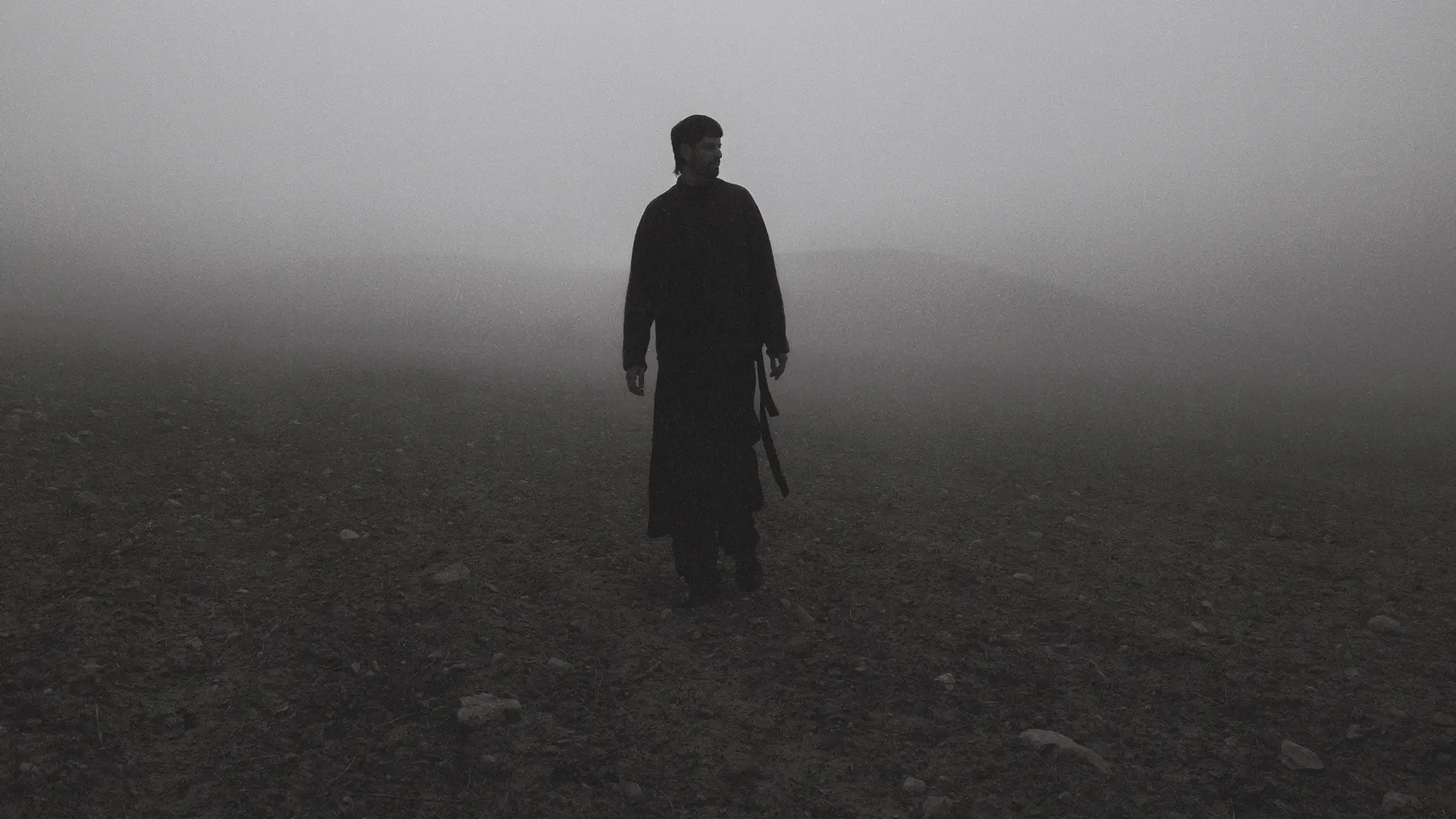

His friends warn him to be careful not to get lost in the labyrinths he has built himself. “But sometimes, to create something personal, you have to shut yourself off from the world, and that comes with a risk: you can get lost in there,” he tells me about his obsession with making music.

Children in Conflict: A Product of Their Environment
Niños Luchando was formed in 2021 in Granada, after Javier Bolívar spent five years without writing songs following the breakup of his previous band, Aurora. The lockdown was the catalyst that ultimately shaped this solo project.
The name is taken from a mysterious street in Granada, very close to where he lives—and not from the 1888 oil painting Children Wrestlingby Paul Gauguin, as I thought I had discovered at first. “Yes, it’s a street in my neighborhood that has a legend that has changed over the years and has always caught my attention.” It’s a 17th-century tale about two boys who, while fighting in the street, discovered a treasure hidden in a partition wall. As they fought over the loot, they teamed up to face the police who arrived to confiscate it.“Children Wrestling has that touch of innocence, but also of violence,” he tells me.
When Ultravox wrote “Vienna,” they had never set foot in the city. Agustín Lara wrote “Granada” without ever having been there. That’s how pop culture works: it imagines places and turns them into myths. Javier, on the other hand, doesn’t imagine Granada—he lives it. He doesn’t idealize it from a distance, but rather transforms it into raw material alongside his influences.

“My music ‘lives in the vortex between dancing and thinking,’” he says. Or crying, to quote Ultravox once again and their anthem “Dancing with Tears in My Eyes.”
There’s a reference on his Instagram account that caught my attention: part of the lyrics to “Ya me cansé de ti” by the Puerto Rican singer Raúl Marrero, a tropical bolero that echoes “Tus historias,” one of the songs from JAB/CROSS, the album that Niños Luchando released on March 13. The nod is coincidental. “I found a connection that struck me as curious. It was a coincidence. I’d say there’s an ironic aspect to it, but I liked the song; it doesn’t bother me.”

In fact, Niños Luchando ’s sound is the exact opposite: it’s introspective electronic music rooted in the 2000s and 2010s, with echoes of Four Tet, Radiohead’s minimalism on *Kid A*, and indietronica. I confess that I thought the genre had breathed its last when The Postal Service and Lani Puna decided they wouldn’t release any more albums. But there’s a new wave of indietronica, and we have no choice but to accept that pop continues to devour itself.
“In the end, I don’t know if I make indie or arty music—I don’t know what that even means. The term has lost its value; it’s become meaningless. In fact, I don’t know what image Niños Luchando projects to the outside world,” Javier Bolívar
And yet, from across the Atlantic comes a reference he never could have imagined: Juan Gabriel. The inflections in his voice and a certain drama unexpectedly evoke the Mexican singer’s melodic style. “I thought you were going to tell me I sounded like La Bien Querida, ”he jokes.
The Imaginary World of “Crying Children”
“I know who Juan Gabriel is, but I don’t know anything about him.” He associates him, rather, with Julio Iglesias or Rocío Dúrcal. The comparison doesn’t bother him. “There’s always something that can lead you to a certain reference. I make music that draws from everything that has influenced me,” he explains. “I want people to connect with my music because of what I’m creating. I want that imagery to be complex.”
From the new album, JAB/CROSS, which contains ten songs, three were released prior to its release: the aforementioned “Tus historias,” “Proxy,” and “Mírame.”
The latter seems to lyrically betray his philosophy of isolation and solitude, though musically there is nothing to fault it for. These are three songs of elegant, intentionally cold electronic music, accompanied by an emotional and theatrical voice and lyrics that speak out against monotony (or perhaps in favor of it—you never know).
“I like to play with that idea—or perhaps that contradiction. Yes, that point is very important because that’s what art is all about. It doesn’t have to be linear; it has to question itself.”
Discover more cutting-edge projects in AW Magazine.
To keep exploring this thread, visit music, film and cultural stories.