
“Siempre me negué a aceptar que la arquitectura per se sea un arte”, asegura el arquitecto Benjamín Romano. “Sí creo que algunos edificios merecen esa categoría. Pero el oficio del arquitecto es crear espacios. Espacios confortables que mejoren la calidad de vida”, aclara, “y eso no tiene nada que ver con el arte”.

El Mejor Rascacielos del Mundo
La plática es en el contexto del nuevo proyecto del arquitecto y su despacho LBR&A, el estudio mexicano de arquitectura que fundó y que ostenta haber realizado Torre Reforma.
Dicho edificio no solo fue galardonado como El Mejor Rascacielos del Mundo por parte del International Highrise Award 2018, sino que, un año después, el Council on Tall Buildings and Urban Habitat (CTBUH) lo incluyó como uno de Los 50 rascacielos más influyentes del mundo de los últimos 50 años.
Además, destaca por ser el primer edificio con certificación LEED Platino en el país.
Su portafolio destaca por resolver complejidades extremas con audacia. Desde la Casa BCH 73 —premiada con el German Design Award tras proyectar un cantiléver de 20 metros sobre una barranca profunda— hasta el diseño de las columnas en forma de “matatenas” para el nuevo Aeropuerto de Puerto Vallarta, en un encuentro entre ingeniería y diseño estructural.
La esencia de la arquitectura: Crear espacios
“El arte es una experiencia. Es una sensación. Pero la esencia de la arquitectura es crear espacios. Cuando resulta ser que la estructura es parte integral del espacio y de la fachada, la espacialidad es generosa, y los flujos están bien analizados, pues es otra cosa”, asegura.
« Yo mismo me atrevo a decir que muchos edificios que conozco son una obra de arte. Pero no es la finalidad de la arquitectura »
Entonces, otras de las artes consideradas como Bellas Artes, como la música, ¿podrían ser descalificadas como ejercicio artístico si no son bellas? Le pregunto.
“No, la música está diseñada para los sentidos. O sea, la escuchamos y nos puede agredir, nos puede emocionar, nos puede hacer llorar. Pero estamos hablando de sensaciones. La espacialidad, no. La espacialidad está hablando de funcionamiento. Y de calidad de vida”.

Muchos profesionistas, después de alcanzar hitos como el de Torre Reforma, bien podrían “cerrar la fábrica” y dedicarse a escribir libros. Romano ya lo ha hecho, pero reconoce que el proceso es lento y que llega a hacérsele cansado publicar un nuevo libro —aunque tiene algo en puerta—. Digamos que prefiere la acción: “Mi ADN es seguir investigando”, asegura, quien también ha sido catedrático muchos años.
La nueva Torre Corporativa de BanBajío en León
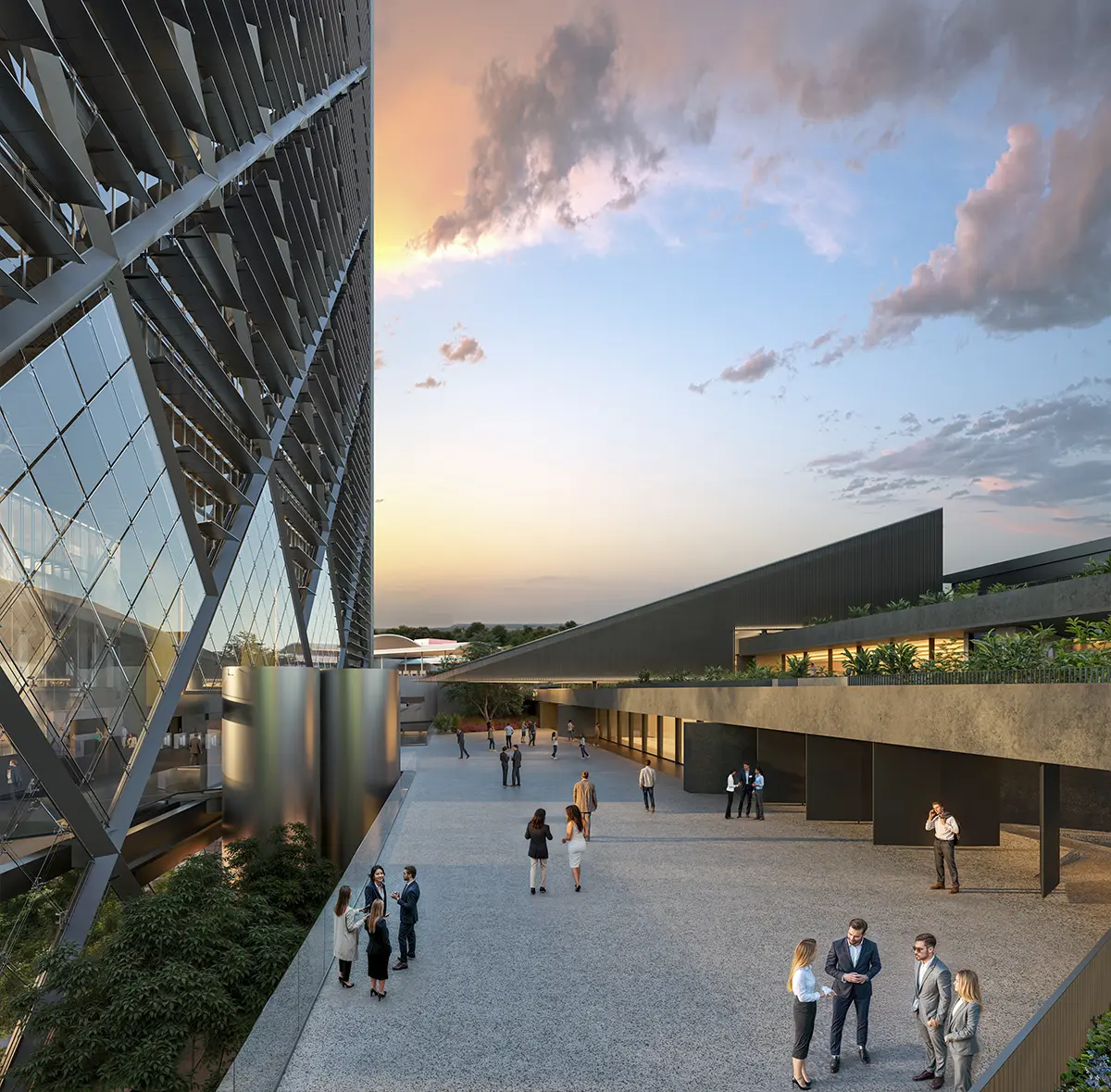
“Te voy a quedar mal con esto que voy a decir. Afortunadamente yo no trabajo, yo me divierto y me la paso bien haciendo lo que hago”. Su nuevo proyecto nace precisamente de esa funcionalidad y de una filosofía que suele aplicar en su trabajo y en su vida: la estructura es el corazón. “Esta nueva torre tiene dos pilones muy altos y separados de extremos a extremos 100 metros. Y arriba se unen por una portería, una gran portería que mide 100 por 16 por 179 de alto que tiene todos los flujos del edificio”, describe.
Estamos hablando de la nueva Torre Corporativa de BanBajío en León, concebida bajo la premisa que el despacho LBR&A mantiene: la funcionalidad como motor del bienestar y, consecuentemente, de la belleza. “Una de las tesis que usamos para el desarrollo del proyecto es una en la que se dieron cuenta de que si el humano estudia o trabaja en un espacio sin vistas al exterior, su capacidad cognitiva se reduce al 14 %. Ahí partimos con el proyecto, con esa tesis, y cuando nosotros se lo planteamos al banco, le dijimos: nosotros queremos apostar por la ventana y por la vista al exterior por ese estudio”.

Arquitectura de integración total
Y cuando habla de flujos, habla de la estructura, del flujo de la energía, del aire acondicionado, de voz y datos, de escaleras, de elevadores; todos los flujos están ahí en esta gran portería: “De ella, cuelgan tirantadas unas losas diáfanas, totalmente diáfanas, totalmente iluminadas por luz de día natural. Y ahí es donde se genera el espacio de trabajo”.
Para Romano, esta integración total no es un mero gusto estético, sino el reflejo de una visión donde la ingeniería es indisociable del diseño puro. Esta profunda comprensión estructural la atribuye en gran medida a su formación y trayectoria personal: “Tuve la fortuna de trabajar 24 años cerca del ingeniero Heberto Castillo y tuve la fortuna de aprender, primero a calcular y a usar los esfuerzos”.
Además de la habitabilidad, el diseño responde a una estrategia de negocio flexible que le permita al banco seguir creciendo a su propio ritmo. Las bases del concurso exigían proyectar dos lobbies o vestíbulos independientes: uno de uso exclusivo para la institución y el segundo —jerarquizado con una imponente cascada de agua— diseñado para las empresas que arrienden los pisos corporativos excedentes.

Una declaración de principios
Esta dualidad de usuarios exigió una solución tecnológica sofisticada en materia de logística y seguridad para gestionar sus 16 elevadores. Tras analizar el problema del doble usuario, el despacho recurrió a la firma neoyorquina VDA, Inc. Con su tecnología, si un empleado del banco y un inquilino externo llaman al elevador al mismo tiempo usando sus respectivas tarjetas inteligentes, el software los asigna instantáneamente a cabinas diferentes.
El sistema restringe los accesos estrictamente a los pisos autorizados por cada credencial, impidiendo traslados no verificados. “Hay tantas especialidades hoy en la arquitectura que uno tiene que estar al día; es importantísimo para lograr que el cliente quede muy contento con la seguridad de sus espacios”, enfatiza.
La decisión de la institución financiera de mantener su sede en su región de origen en Guanajuato y no mudarse a la Ciudad de México —como ha ocurrido con la mayoría de las empresas en el país— representa para Romano un mensaje, una declaración de principios. El proyecto de LBR&A rinde homenaje a ese arraigo e integra la historia de la empresa, respetando un edificio semicircular de tres pisos que funcionó como la primera sucursal del banco y el sitio exacto donde nació la institución.

Un diseño que rinde tributo al pasado
“Decidí inclinar el edificio para que esta sucursal histórica sea la auténtica protagonista”, detalla Romano. “Cuando vayas circulando por la avenida Clouthier, el nuevo edificio te va a obligar visualmente a ver la sucursal original; todo gira en torno a ella”.
Además, el diseño rinde tributo a la filosofía original del banco: el impulso a la agroindustria del Bajío. Para reflejarlo, el complejo incluirá un edificio terraseado en la parte posterior donde se ubicarán salas de exposiciones, un auditorio y el comedor institucional, rematando las azoteas con imponentes huertos urbanos. “Me parece muy interesante porque los empleados van a poder ir y recuperar, a lo mejor, una zanahoria que ellos mismos sembraron, pero también el entorno les va a dar la paz y la emoción que transmite un huerto urbano de esa categoría y dimensiones”, añade.
El desarrollo de la obra, cuya victoria en el concurso arquitectónico les fue notificada hace tres años tras un retraso provocado por un lamentable tema familiar en la directiva de la empresa, avanza a paso firme. En un terreno de más de 11 mil metros cuadrados, LBR&A trabaja actualmente en la excavación de cinco niveles de sótanos y la colocación de las anclas estructurales necesarias para evitar derrumbes.

La cuenta regresiva hacia 2029
Romano, quien supervisa personalmente el edificio en León cada dos semanas, estima que la excavación cuenta ya con un 70% de avance. Con la meta de colar la primera columna monumental de la portería el próximo 18 de septiembre, el arquitecto anticipa con optimismo el desenlace de su nuevo hito arquitectónico: si el ritmo se mantiene, las puertas del nuevo corporativo de BanBajío se abrirán de forma oficial en marzo de 2029.
El reto de generar “proyectos estructurales complejos en soluciones eficientes, sustentables y financieramente sólidas”, está completado. Y sí, aunque nuestro entrevistado no lo reconozca, puede ser arte.
Dessubre más temas de arquitectura en AW Magazine.
To keep exploring this thread, visit architecture in transit.