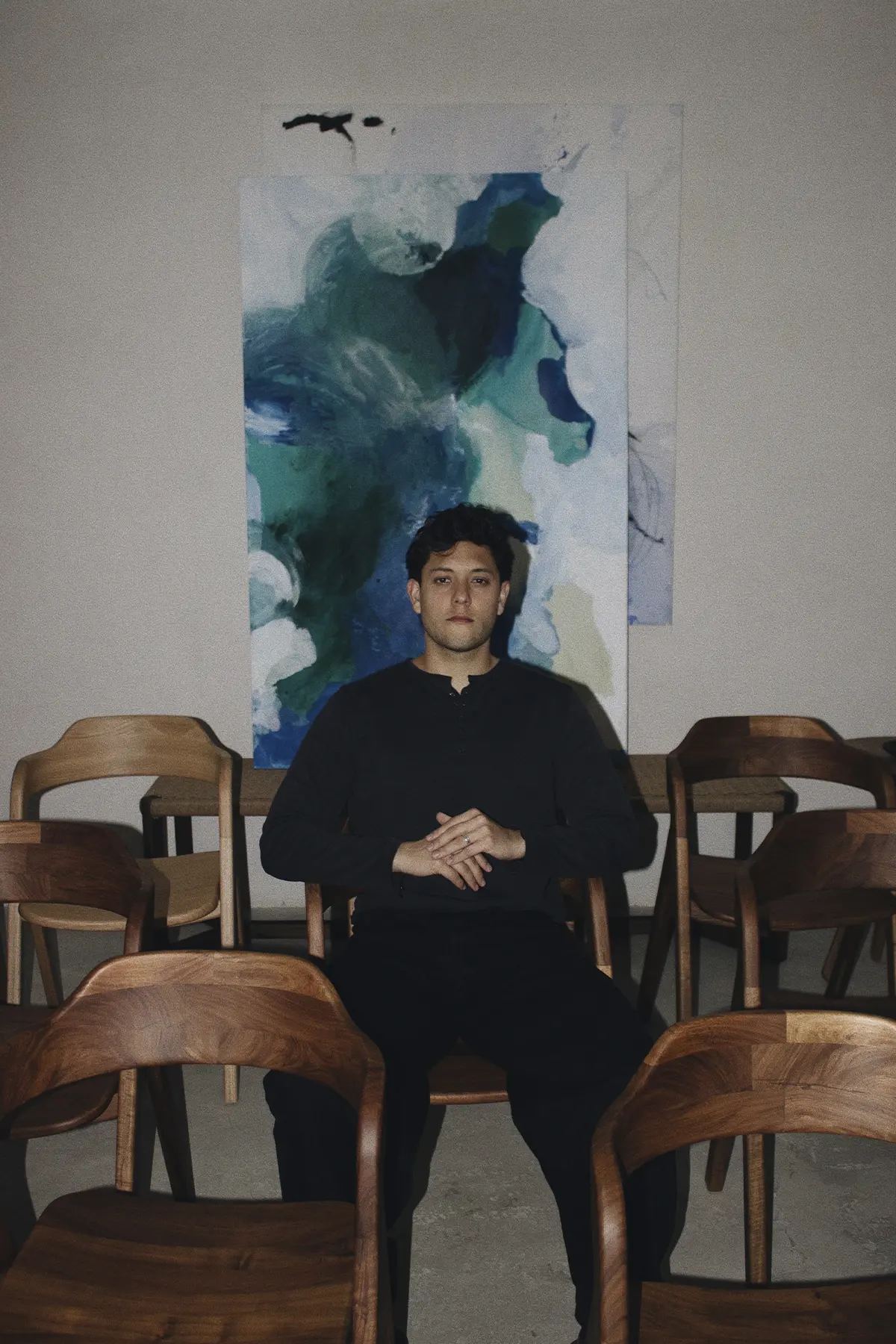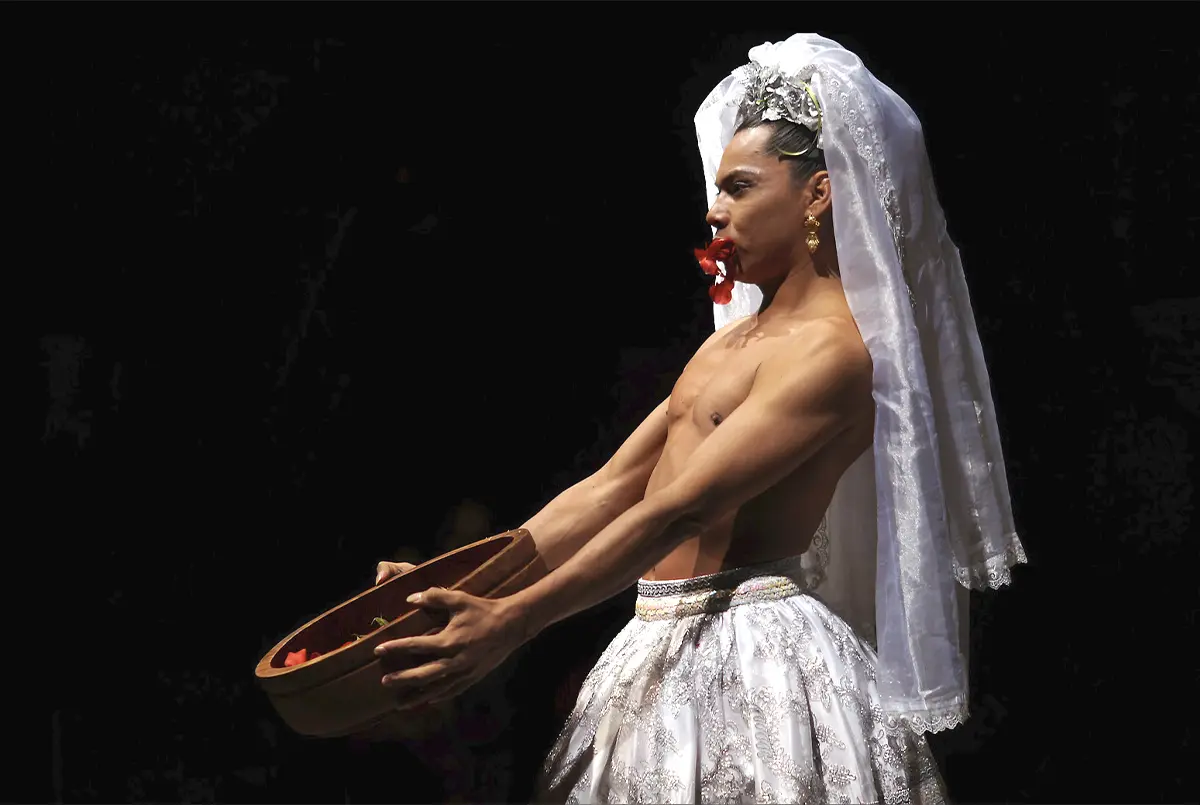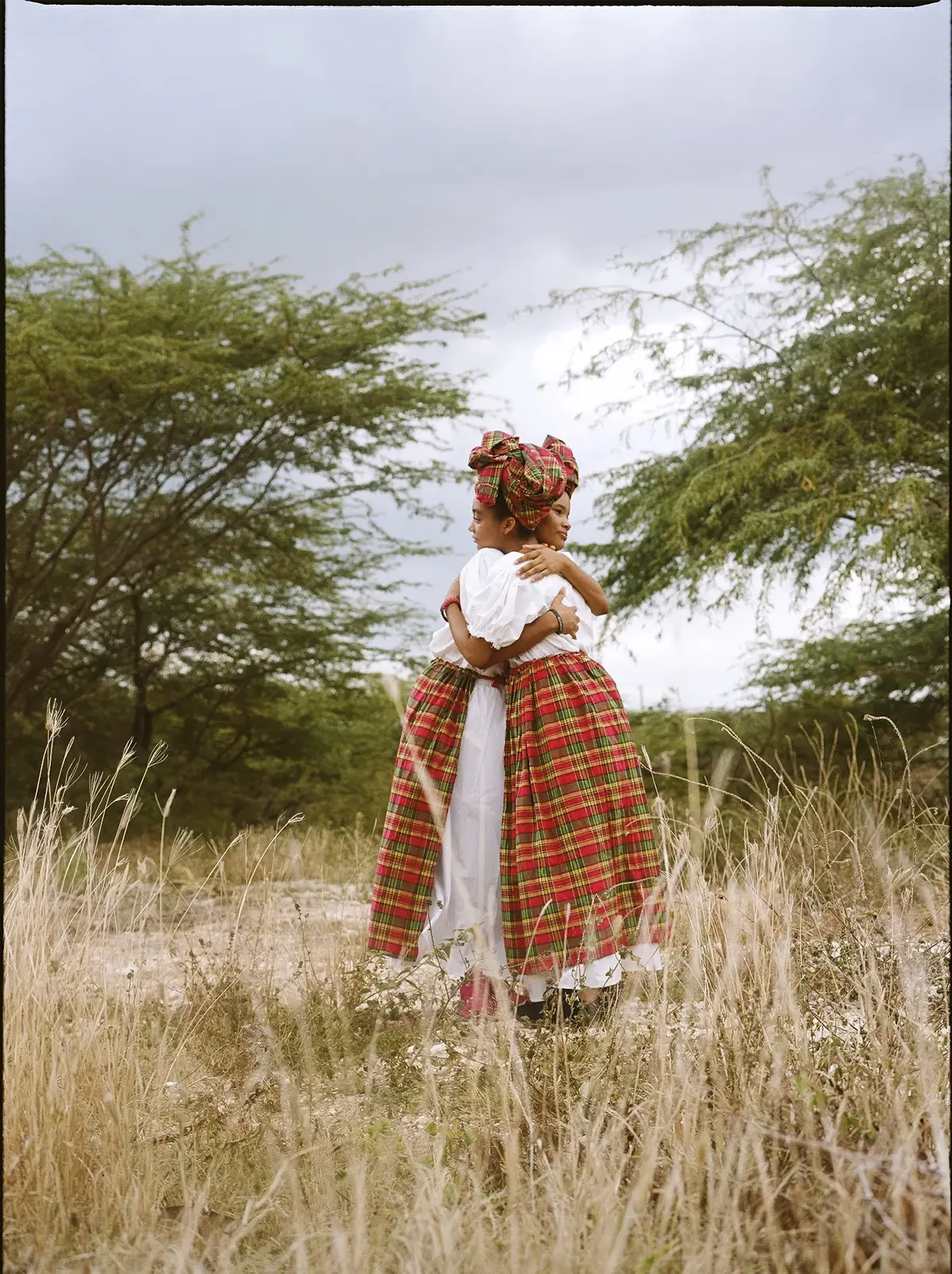

She always knew it: her calling was working with images. Cecilia Duarte is a Brazilian/Hispanic photographer who divides her time between Barcelona and São Paulo, and she surely finds plenty of visual inspiration amid the transatlantic clouds of her constant travels.

“At home, when I was little, my interest in photography came from my father, who was an amateur photographer and loved cameras and gadgets in general,” she tells us.
“I believe that the way we view and perceive photography is constantly changing; it evolves along with you and your life. It is closely tied to my interests, experiences, and life events.”
“I believe that the way we see and perceive photography is constantly changing; it evolves along with you and your life. It is closely tied to my interests, experiences, and life events »– Cecilia Duarte.
“In college—where I studied Communication—I began to delve deeper into the world of photography and gradually drifted away from my major and advertising. ‘It was then that, by chance, I started an internship at a photography studio, and that’s how I got more involved and felt comfortable with this medium,’ she recalls.”

Her enduring influences: “Sophie Calle for her world of mystery, Nan Goldin for her realism and power, Philip-Lorca diCorcia, the portraits and still lifes of Irving Penn, Alec Soth, William Eggleston, the Polaroids of Andrei Tarkovsky, Viviane Sassen, Nigel Shafran, and Wolfgang Tillmans, among many others.”
After graduating from college, Cecilia moved from Brazil to Barcelona to study photography formally, and that is how her connection with Spain began. “From then on, I worked in almost every aspect of photography. I worked at a studio where many photographers came and went; I assisted some of them and, at the same time, began developing my own work. During this period, I was constantly traveling back and forth between Barcelona and São Paulo,” she recalls.
At first, he would get together with friends to create their own editorial proposals, which they would then submit to well-known magazines and publications.

“Little by little, I started getting my work published in various media outlets. Then I began doing portraits, which has always been something I’ve really enjoyed. And from there, things just naturally evolved, and I started working with brands.”
Canada, the outstanding Spanish creative production company behind some of Rosalía’s most groundbreaking music videos, is her agency in Europe, “and I feel very supported by them. They always help me with my editorial and personal projects, something that’s not so easy to find,” Cecilia acknowledges.

In her work, the photographer focuses heavily on human faces. In an age of image overload and manipulation on social media, it’s worth asking her how a photograph makes a difference beyond mere technique.
“For me, the difference lies in your interest in the person you’re photographing: what you see in them, how you perceive them, and how they make you feel, how they interact with the camera… These are very subtle things, but in the end, they show up in the final result,” he says.
“I don’t usually talk much or give a lot of directions. I prefer to leave room for things to happen more naturally. I’m looking for that naturalness, which is, in a way, the exact opposite of what we see in many social media posts, where everything is highly staged, controlled, and, often, manipulated.”
He has worked with both international brands and high-profile magazines: “With magazines, you usually have more freedom and less oversight; you can let loose a bit more and let everything flow, and the result is often richer in that sense. With brands, there are more demands: they want to showcase their product effectively and usually start with a fairly specific brief. Even so, little by little I’m seeing that many brands are becoming interested in a more personal and freer style, as a way to stand out in the final result, especially those that aren’t so big or so bureaucratic,” he confesses.

In any case, she enjoys both types of work. “I enjoy both the freedom and the challenge of meeting certain demands.”
Cecilia believes that the caliber of professional photographers in Brazil has risen significantly in recent years and has evolved in every way. “I feel that they are valued more or less equally, or at least that’s my perception. When I started out, I felt it was a very male-dominated job market, and that, fortunately, has also been changing,” she acknowledges.
And that fight against clichés isn’t just a matter of genre: “I think aesthetic clichés can be interesting; it depends a lot on how you incorporate them into your work. They can even become part of a unique visual language. In my case, perhaps what interests me least are heavily manipulated images, but not so much because they might become a cliché, but because it’s not something that comes naturally to me.”
Her work has ventured into more sensitive areas than magazine covers, and she has explored social issues, such as an exhibition at IICA (Inter-American Institute for Cooperation on Agriculture) that highlights rural leaders in Latin America.
“I received the invitation, and when they proposed the project to me, I was really excited,” she says. “It was a very special project for me. We were a team of four women traveling through four countries in Latin America, meeting other women with stories of great strength and resilience. I always tried to portray them with great respect and admiration. I also wanted to show just how strong they are. It was a very important experience in my career. I learned a lot, and we built a relationship of mutual respect. I think you can feel that in the images.”
Right now, one of her plans is to develop a project on motherhood and childhood. “It’s a very rich, complex, and special topic for me, although it’s still in the very early stages,” she notes.

Throughout his well-established career, he has photographed legends such as Caetano Veloso: “I’ve always been a huge fan of Caetano Veloso. In fact, when my son was born, we played some of Caetano’s music during labor at the hospital, so it was the first voice he heard—almost before mine or my husband’s. I think admiration always adds an extra touch of nervousness to these kinds of encounters.”
His photography is often luminous: “I think that, in the end, a large part of photography is about light. I really enjoy working with it, because its effect on us is very powerful and it conveys so much. But I’m also interested in shadow. I like it when not everything is shown, when there’s a bit of mystery and darkness in the image,” he concludes.
To keep exploring this thread, visit music, film and cultural stories.