
El Apartamento was founded in Havana in 2015 under the direction of Christian Gundin and opened its Madrid location in 2023, after several years of participating in ARCOmadrid and developing projects outside of Cuba. From its location on Calle de la Puebla, the gallery works with Cuban artists alongside Spanish and Latin American artists. The season begins with two concurrent exhibitions: *Diálogos en el desierto* by José Bedia and *La pesca* by Brenda Cabrera.
Gallery Profile
El Apartamento opened in Havana in 2015. Christian Gundin is listed as the gallery’s founder and director. The first location is in an apartment in El Vedado, on the corner of 15th Street and H Street, an address that remains active eleven years later.
In Cuba, the project began working with artists from different generations. Juan Carlos Alom, born in Havana in 1964 and known for his work in photography and film; Roberto Diago (Havana, 1971), whose work has addressed the history of slavery and the Afro-Cuban experience; Lázaro Saavedra (Havana, 1964), winner of Cuba’s National Prize for Visual Arts in 2014, and Flavio Garciandía (Caibarién, 1954), a member of the generation that revitalized Cuban art in the early 1980s, are among the relationships the gallery has cultivated.
Madrid soon became part of that story. El Apartamento participated in ARCOmadrid before it had its own space in the city. The gallery also expanded its activities through projects linked to the 12th and 13th Havana Biennales, the CONDO exchange program in New York and Mexico City, and PHotoESPAÑA.
In June 2023, the Madrid location opened at Puebla 4, in the Malasaña neighborhood. El Apartamento began operating across both locations and incorporated artists residing in Spain into its program. The Madrid space is divided into two exhibition areas, the Main Room and the Project Room. This layout allows for two simultaneous exhibitions, a format also used in the current programming. The expansion later continued in the United States. El Apartamento now has a third location in Miami, at 4750 SW 74th Avenue. Havana, Madrid, and Miami are currently the gallery’s three locations.
Program
Why Go
The Madrid location has served to introduce artists from the recent history of Cuban art to Spain and to incorporate others linked to the Spanish art scene. In 2023, a few months after the opening, Juan Carlos Alom presented *Periodo especial* as part of PHotoESPAÑA. Alom had begun photographing Havana during the years of economic crisis that followed the collapse of the Soviet Union. The Madrid exhibition revisited that body of work and, from the outset, established a direct connection between part of Puebla’s programming and Cuba.
In 2025, Ariamna Contino and Alex Hernández led Total Cartography out of the gallery spaces. The project was installed in the gardens of the Lázaro Galdiano Museum in Madrid from September through November. Contino and Hernández have been collaborating for years on projects based on documentary research and data.
The 2025–2026 season included *The Storm, the Pond, and the Fruit Bowl*, by Eloy Arribas, in the Main Room, while Adolfo Manzano took over the Project Room with The Echo of Love, the Stillness of Wings. In February 2026, Eduardo Ponjuán presented Ruy López Opening, his first solo exhibition at El Apartamento Madrid. Ponjuán (Pinar del Río, 1956) belongs to the generation of Cuban artists who began working in the 1980s; in that exhibition, he used the Spanish Opening in chess as a starting point for a series created over the course of approximately a year and a half.
In May, El Apartamento participated in PHotoESPAÑA with “Tropicália”, curated by Verónica de Mello. The exhibition brought togetherMaria Ana Vasco Costa, Márcio Vilela, and Ariamna Contino and remained open until the end of July.
The gallery’s activities also extend beyond its own exhibition spaces. In 2026, Roberto Diago will participate in the new presentation of the Reina Sofía Museum’s permanent collection and will present *Hombres libres* at the Venice Biennale; Juan Carlos Alom is part of Améfrica at the Andalusian Center for Contemporary Art, and Rocío García has had a solo exhibition at the Leslie-Lohman Museum of Art in New York.
What to Expect
The September season features two different generations of Cuban artists in both galleries at El Apartamento.
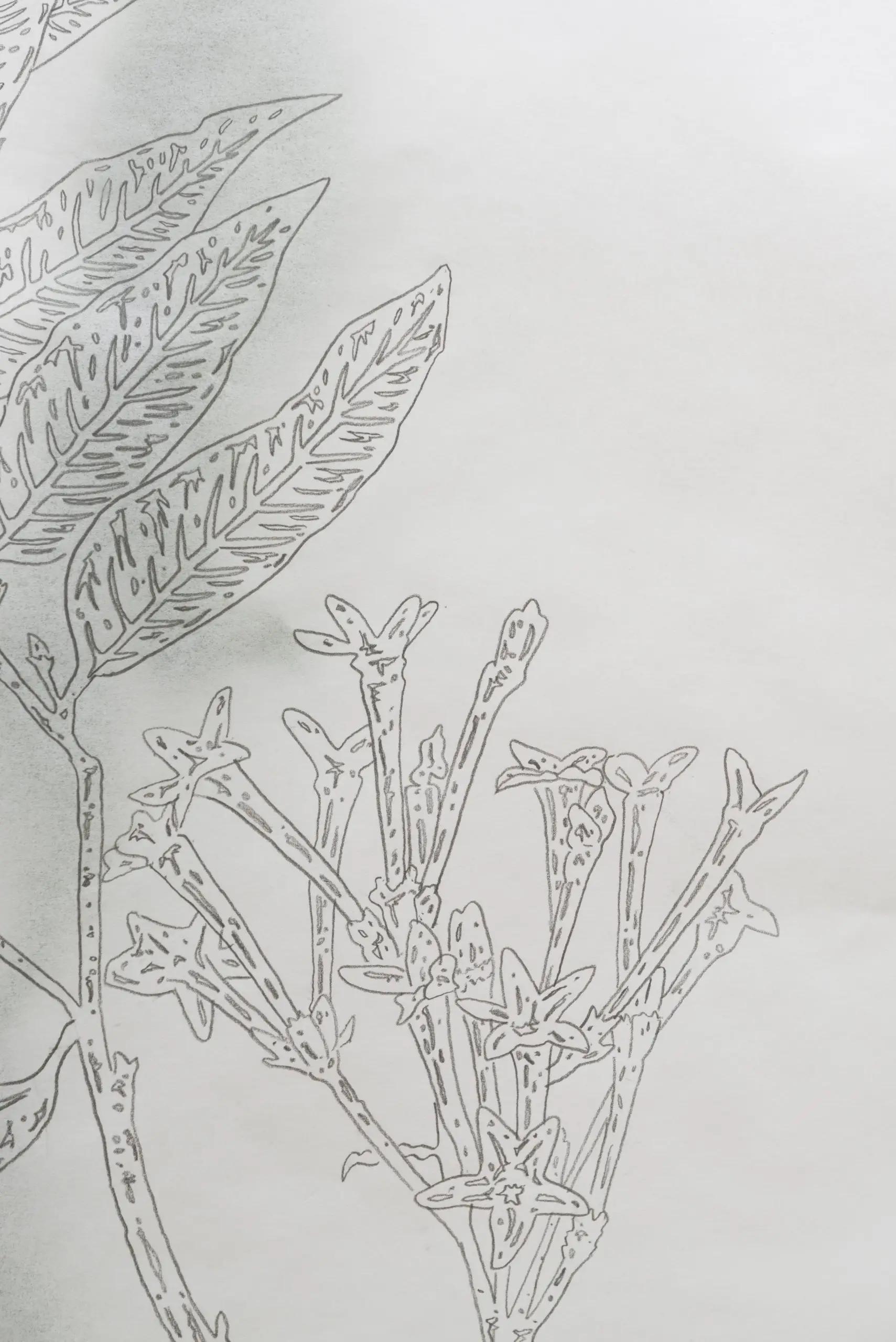
José Bedia (Havana, 1959) takes over the Main Room with Dialogues in the Desert. He studied at the San Alejandro Academy and graduated in 1981 from the Higher Institute of Art in Havana. That same year, he participated in Volumen Uno, an exhibition associated with the renewal of Cuban art in the early 1980s. For decades, Bedia has developed a practice linked to his studies of Afro-Cuban religions and his time spent with indigenous communities in the Americas and other regions. In an interview published by the Museum of Modern Art in New York in 2023, he spoke about his collection of ceremonial objects and the relationship he maintains with his work. MoMA holds works by him and included him that same year in *Chosen Memories: Contemporary Latin American Art from the Patricia Phelps de Cisneros Gift and Beyond*.
In Dialogues in the Desert , he presents works based on traditional West African textiles, specifically from Mali, selected from materials the artist himself gathered there. Bedia incorporates figures and symbols from his graphic repertoire into these fabrics. Another group of works uses jute, a material the artist associates with Afro-Cuban traditions linked to Babalú Ayé, and depicts patakíes—stories belonging to the Yoruba and Afro-Cuban religious traditions. This explanation comes from Bedia himself in the text published for the exhibition.
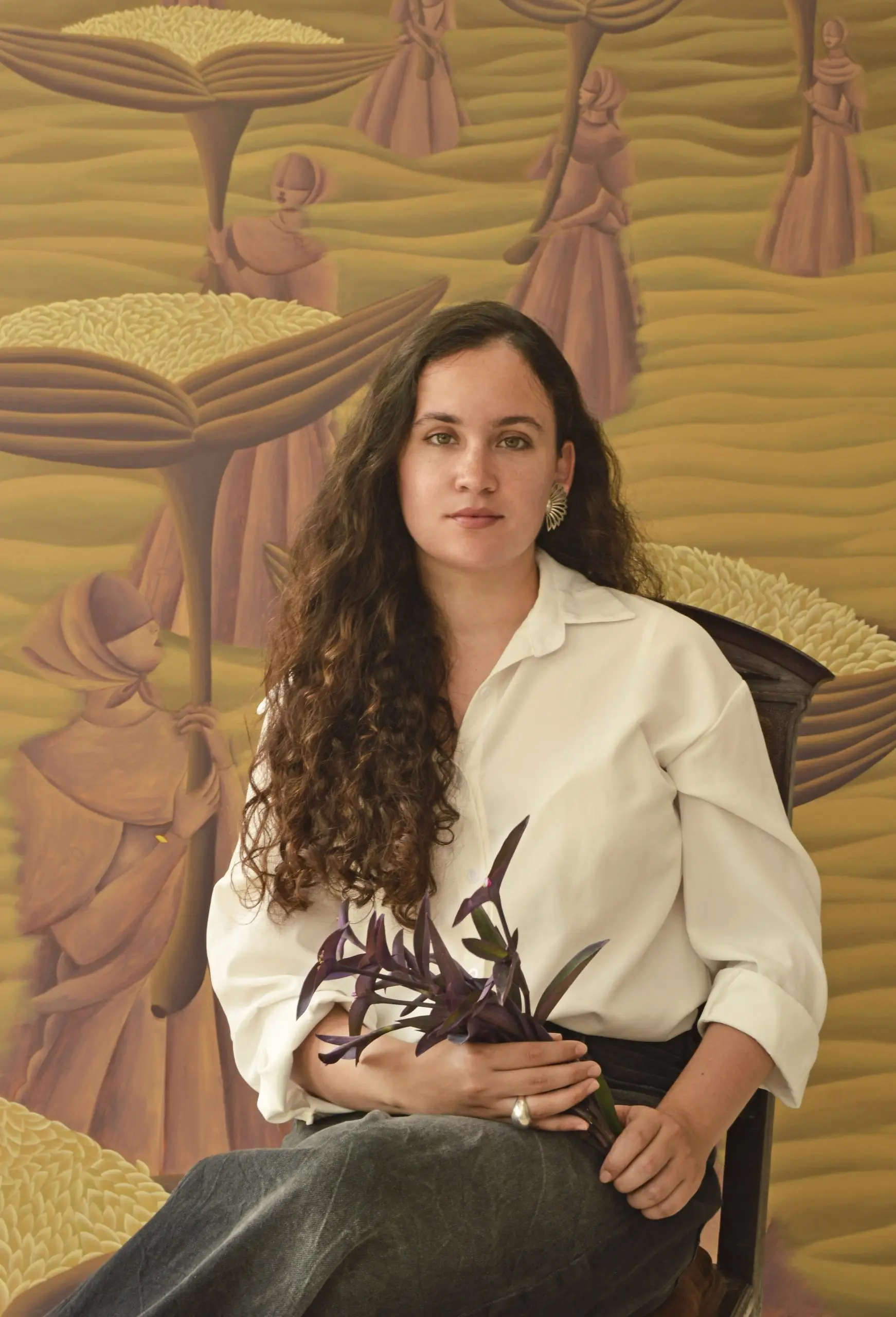
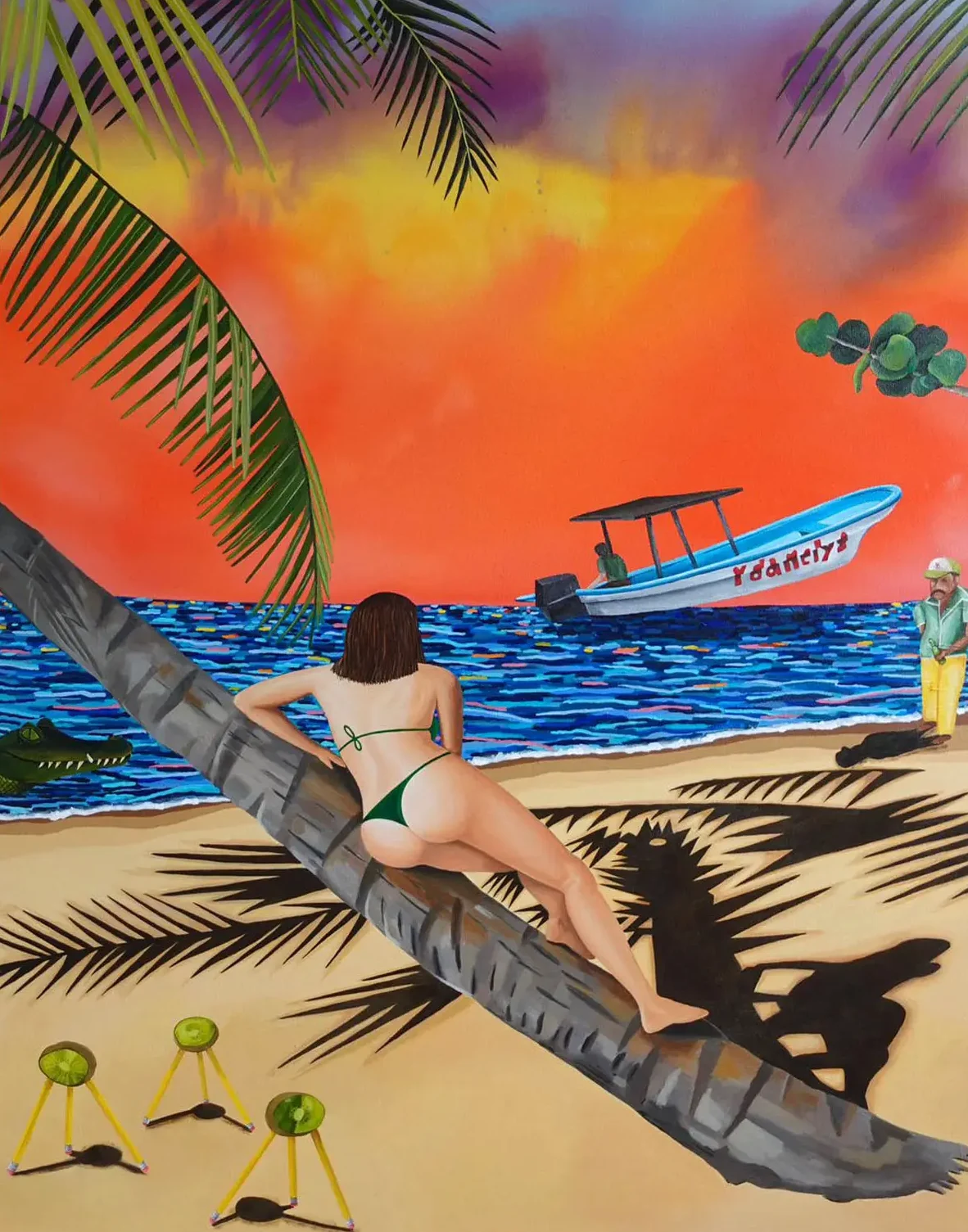
The Project Room is occupied by La pesca, by Brenda Cabrera (Havana, 1997). Cabrera studied at the San Alejandro National Academy of Fine Arts and later at the Higher Institute of Art in Havana. In an interview published by El País during Apertura 2026, she explained that she decided to continue working in figurative painting during her studies, even though at that time much of her academic circle was turning toward other media.
His paintings are populated by modified human figures, animals, and vegetation. Cabrera refers to some of these characters as “prototypes” and avoids assigning them a specific gender. In earlier works, he had placed them in gardens and landscapes with lush vegetation. Fishing changes that setting. The recent paintings move the figures into the water and use a palette dominated by darker blues than in earlier works. Bodies appear in the sea, along with fish and scenes related to fishing. The artist explained to El País that these works are part of a project she will continue to develop and that will be presented again in Mexico in 2027.
Both exhibitions can be viewed separately in the galleries at Puebla 4. Dialogues in the Desert and Fishing opened on September 10, coinciding with Apertura Madrid Gallery Weekend, and will run through November 7, 2026.
Represented Artists
What to Do Nearby
The apartment is located at Puebla 4, between Gran Vía and Malasaña. On the same street, at number 22, is the Church of San Antonio de los Alemanes, built between 1624 and 1633 as the chapel of the Hospital of San Antonio de los Portugueses. It is the only church in Madrid with an elliptical floor plan, and its interior is entirely covered with frescoes. Francisco Rizi, Juan Carreño de Miranda, and, later, Luca Giordano contributed to the decoration. The church has been designated a Site of Cultural Interest and is open to visitors Monday through Saturday.
For a drink after the tour, 1862 Dry Bar is just a few minutes away, at 27 Calle del Pez. It’s one of Malasaña’s classic cocktail bars and specializes in classic cocktails, with a laid-back atmosphere and a menu that lets you extend your night out without leaving the neighborhood.
Café de la Luz is a great mid-afternoon option, with a cozy, homey atmosphere that changes the tone of the tour. You can stop by after visiting the museum or to take a break from the exhibition. The choice depends on whether you feel like continuing with another visit or stopping for a drink. Casa Julio offers another break at the bar with some croquettes. It fits well into a plan that includes a meal as part of your neighborhood tour. Between the café and this stop, there are two ways to organize your break, without having to combine them into a single day.
Toward Corredera Baja de San Pablo lie the area around the former Teatro Lara and Plaza de San Ildefonso. For a longer stop, the Hotel 7 Islas is located at 10 Calle de Valverde, next to Gran Vía, and features The 7 Islas restaurant —a designer hotel option for dining or having a drink in the area.


