
Blanca Berlín opened her gallery in Madrid in 2007 after working for more than twenty years as a photographer. From her gallery on Limón Street, across from Conde Duque, she has built a collection that brings together Spanish and international photography from different generations. Her roster includes artists such as Gabriel Cualladó, Ramón Masats, Carlos Pérez Siquier, Cristina García Rodero, Isabel Muñoz, Martín Chambi, and Manuel Álvarez Bravo, alongside contemporary artists who work in photography and other media.
Gallery Profile
Blanca Berlín opened her eponymous gallery in Madrid in 2007 after working for more than twenty years as a photographer. With a degree in Political Science and Sociology, she initially worked with sociologist Mario Gaviria and trained in photography during a stint in London. Upon her return, she built a professional career in magazines, newspapers, and travel publications. Ramón Masats, whom she has cited as one of her mentors, has been involved with the project since its inception. In 2020, Mujeres en las Artes Visuales awarded her the MAV Prize in the gallery owner category.
The gallery, located at 28 Limón Street, houses works by several generations of Spanish photographers. Gabriel Cualladó, Ramón Masats, Carlos Pérez Siquier, and Ricard Terré were associated with AFAL, the group that emerged around the magazine published in Almería between 1956 and 1963, which played a decisive role in the renewal of postwar Spanish photography. Cualladó received the first National Photography Prize in 1994; Pérez Siquier won it in 2003, and Masats in 2004. Their works are part of public collections such as that of the Reina Sofía Museum, which also houses the AFAL Archive.
Among the subsequent generations are Cristina García Rodero, Ouka Leele, Isabel Muñoz, Castro Prieto, and Toni Catany, all of whom have been honored with the National Photography Prize. In 1989, García Rodero published *España oculta* (Hidden Spain), the result of years of work documenting folk festivals and ceremonies, and that same year she received the W. Eugene Smith Grant. Isabel Muñoz, a 2016 award winner, has produced much of her work using large-format platinum prints. Castro Prieto, winner of the National Prize in 2015, participated in 1990 in the restoration and printing of Martín Chambi’s original plates preserved in Cuzco.
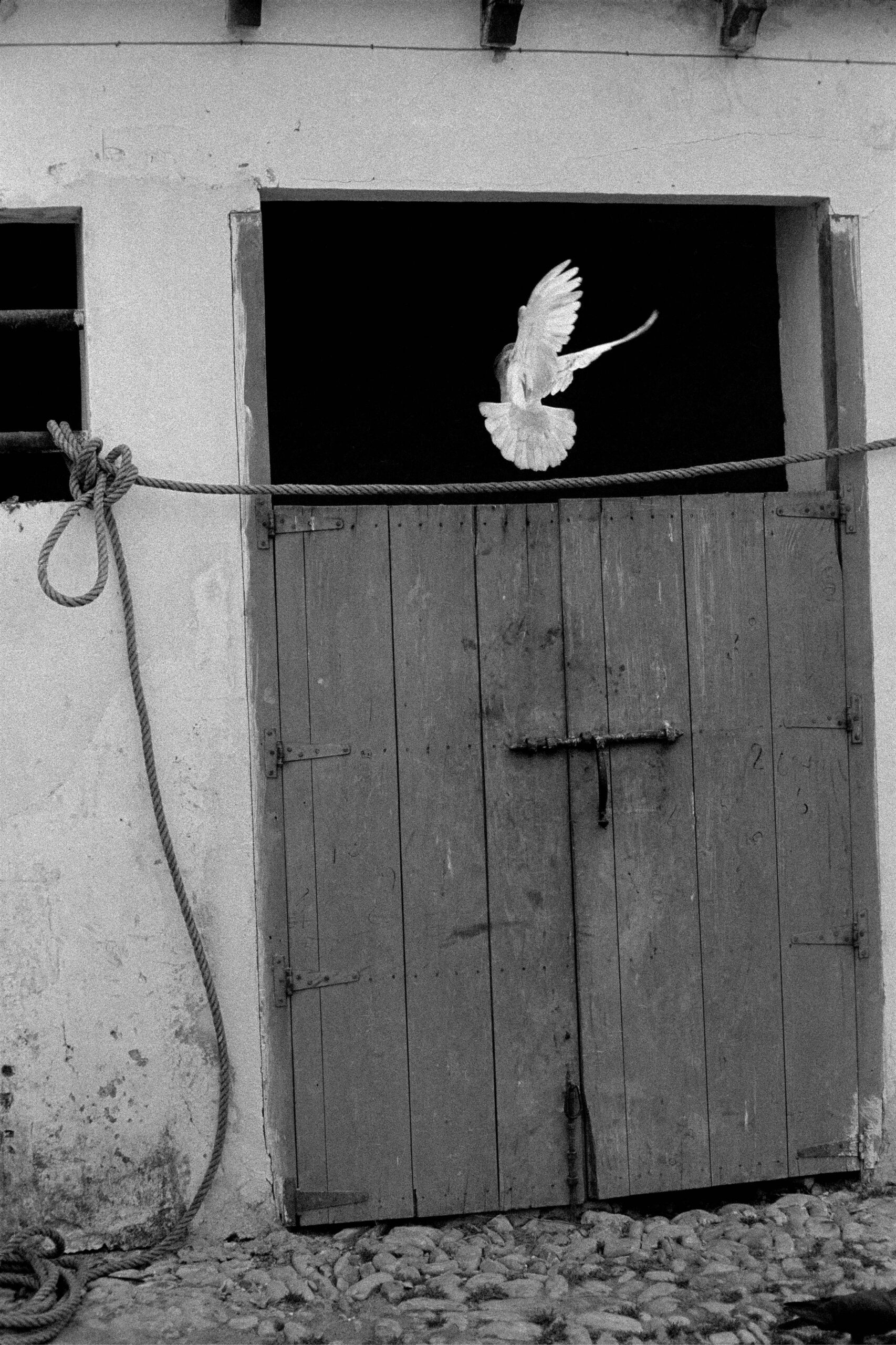
The catalog also features key figures in Latin American photography. The Peruvian photographer Martín Chambi (1891–1973) spent decades documenting Cuzco and Andean society, and the Museum of Modern Art in New York dedicated an exhibition to him in 1979. Mexican photographer Manuel Álvarez Bravo (1902–2002), whose career spanned more than seven decades, was the subject of a retrospective at the same museum in 1997.
Joining them are Flor Garduño, Luis González Palma, and Cecilia Paredes, as well as the American artist Jerry Uelsmann, known for creating photomontages in the darkroom using multiple negatives long before the advent of digital editing. Photography remains at the heart of the program, although the gallery has incorporated artists who work with other media. Soledad Córdoba, Irene Zottola, Linarejos Moreno, and María Oriza are part of this recent programming.
In September 2026, *Instantes de luz* brings together works by twelve National Photography Award winners, while *Entre lo visible y lo latente* by María Oriza occupies the 6M³ Space and the back of the gallery with her sculptures. Both exhibitions remain open through October 17 and will have their own sections in this guide.
Blanca Berlín also participates in art fairs and festivals both in and outside of Spain. In 2026, she attended ZONAMACO in Mexico City for the first time and maintains an ongoing relationship with PHotoESPAÑA. In addition to these activities, she works with the gallery’s collection, which Blanca Berlín herself has described as a significant part of her relationship with collectors.
Program
Why Go
Blanca Berlín's body of work can be seen as a visual biography of Spain from the second half of the 20th century. The photographs document a country transitioning from the postwar period and dictatorship to developmentalism, mass tourism, and the urban culture of the 1980s. They also show how photography gradually moved away from the dominant postwar models and found new ways of working with photojournalism, color, and staging.
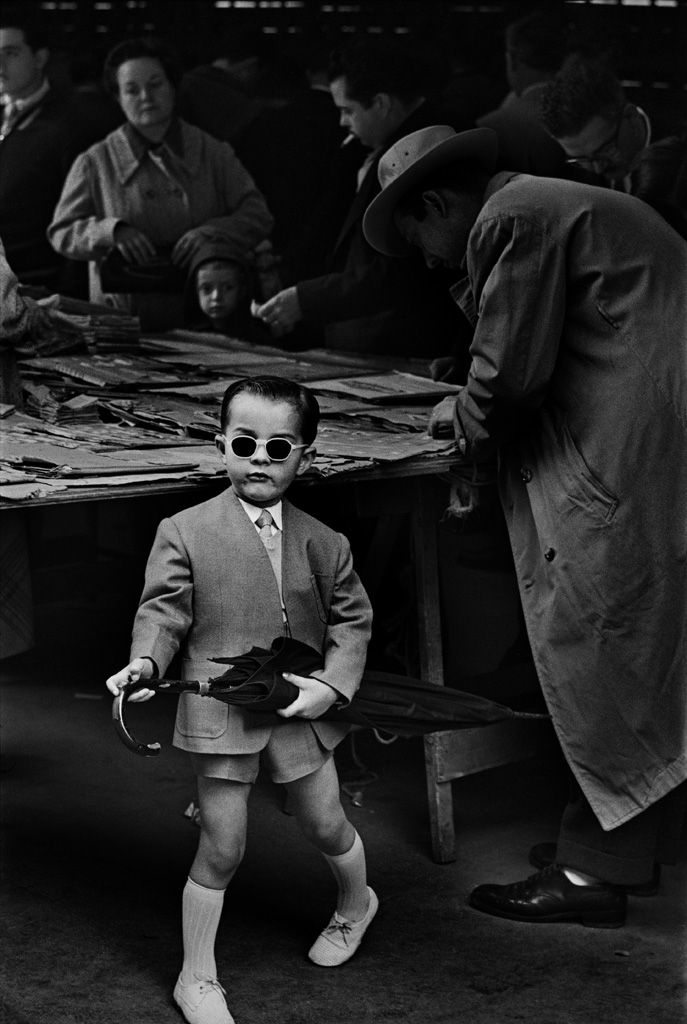
Ramón Masats ’s photographs, taken between 1955 and 1965, depict processions, festivals, bars, streets, and everyday scenes. His series "Visit Spain" coincided with the years when the Franco regime was using tourism to project a certain image of the country. Masats photographed many of those same clichés (religion, folklore, bullfighting, and everyday life), introducing irony and contradictions that the official narrative left out.
Carlos Pérez Siquier allows us to observe the change from a different perspective. La Chanca showcases this Almeria neighborhood from the late 1950s onward. Later, his color photographs captured beaches, tourists, new consumer habits, and the visual effects of developmentalism. His career allows us to trace the progression from postwar social photography to the advent of the consumer society.
Through Cristina García Rodero, another side of Spain emerges. For more than fifteen years , she traveled through villages photographing festivals, pilgrimages, ceremonies, and rituals that would ultimately come together to form *España oculta* (Hidden Spain). Her work preserves ways of life that were changing and pays special attention to what happens around the ceremony: the participants, the spectators, and the situations that fall outside the protocol.
Ouka Leele captures Madrid in the late 1970s and 1980s. Rather than simply documenting what she found on the street, she staged many of her images and later colored the black-and-white prints with watercolors. "Peluquería", a series begun in 1979, encapsulates this shift toward a staged style of photography that became associated with the visual culture of Madrid’s Movida.
Taken as a whole, these artists allow us to trace several decades of Spanish history through what they chose to photograph: from the processions and streets of the 1950s to the beaches of the development era, the popular celebrations documented during the Transition, and the staged images of 1980s Madrid. This historical sequence is one of the reasons to take a closer look at the Blanca Berlín collection beyond the exhibition currently on view in its galleries.
What to Expect
Moments of Light brings together more than sixty photographs by twelve artists recognized with the National Photography Award. Blanca Berlín has curated the exhibition, featuring works by artists represented by the gallery, grouped in such a way that each photographer has a distinct space within the exhibition layout.
Among Ramón Masats ’s photographs are *Sanfermines* (1957), *Tomelloso* (1960), and *Seminario de Madrid* (1960), in which a seminarian appears suspended mid-jump. Works by Gabriel Cualladó on display include photographs such as Niña Afal (1957), Fifi (1960), and Rue de la Paix. Couple Holding Hands, Paris (1962). Joan Colom is represented by several images from *El Carrer*, his body of work created in the late 1950s in the streets of Barcelona’s Raval neighborhood.
The exhibition also includes *El beso* (1980) and *Peluquería* (1979) by Ouka Leele, alongside photographs by Cristina García Rodero and works by Isabel Muñoz from series such as *Danza Khmer*, *Danza Cubana*, and *Roma Barroca*. The techniques vary from one wall to another. There are silver gelatin prints on baryta paper, selenium-processed prints, pigment prints, platinotypes, and a light box. Carlos Pérez Siquier is represented by photographs from *La Chanca*, while Cristóbal Hara presents images taken between 1985 and 1993.
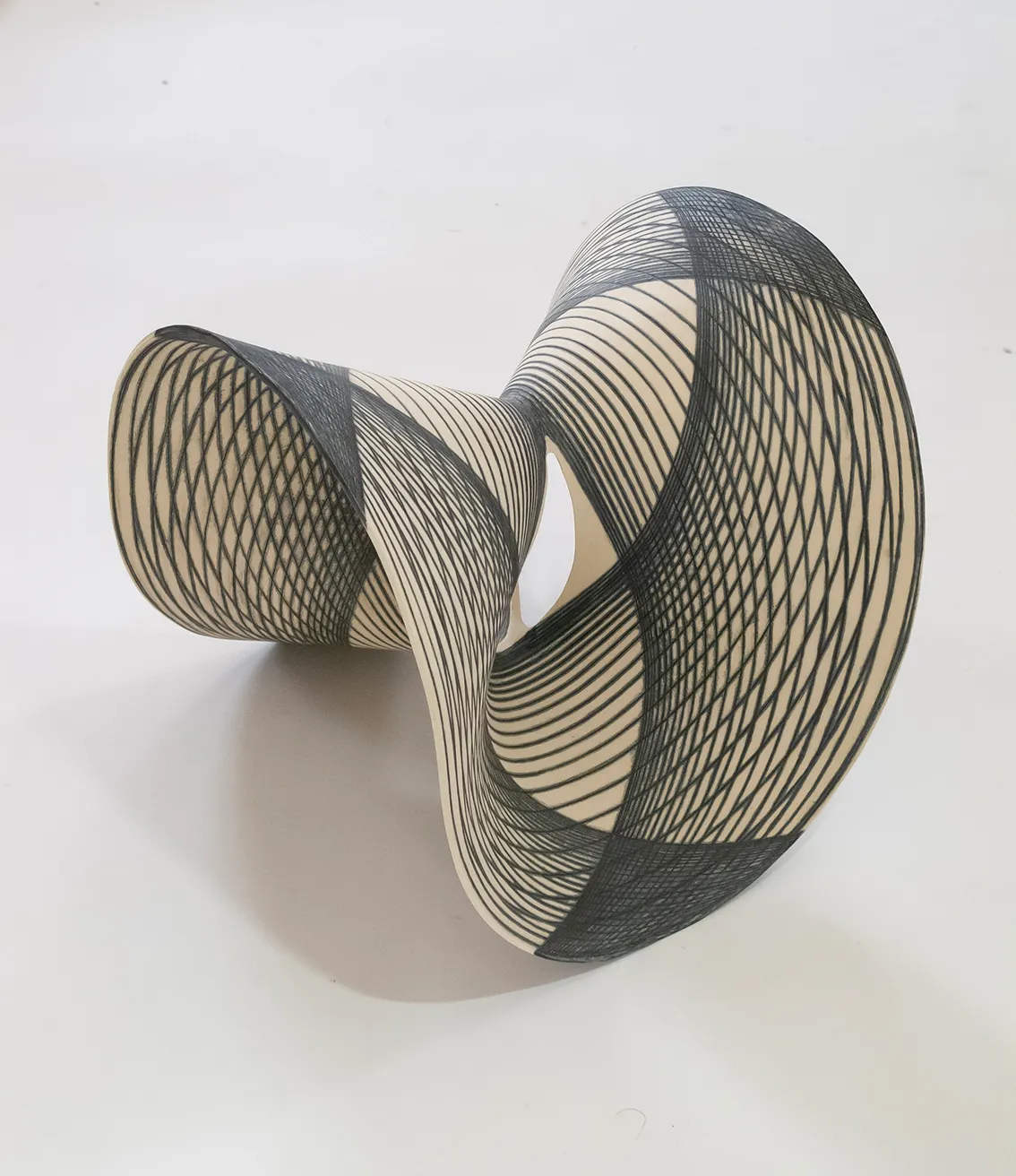
At Espacio 6M³ and at the back of the gallery, María Oriza presents *Between the Visible and the Latent*. The exhibition, which opened during Apertura Madrid Gallery Weekend, consists of stoneware sculptures with metallic oxides. Oriza constructs the pieces from surfaces that she cuts, folds, and curves. *Lo que permanece* features suspended modules whose arrangement is determined by gravity, while *Ahura* applies that same process to a single ceramic piece. Both exhibitions are on view through October 17, 2026.
Represented Artists
What to Do Nearby
Blanca Berlín is across from Condeduque, so the next stop is just across the street. Construction of the former Royal Barracks of the Guard began in 1717 at the behest of Philip V and was designed by Pedro de Ribera. Today it houses exhibition halls, a theater, and an auditorium, as well as the Villa Archives, the Municipal Newspaper Library, the Historical Library, and the Museum of Contemporary Art of Madrid. The museum preserves the office that Ramón Gómez de la Serna set up in Buenos Aires, reconstructed with his furniture, photographs, and personal items.
Just a few minutes away is the Liria Palace, the Madrid residence of the House of Alba. Its collection takes you back in time after visiting Blanca Berlín: Titian, Goya, Mengs, Madrazo, and Sorolla are part of an art collection housed within a historic residence. The library houses more than 18,000 volumes, a second edition of *Don Quixote* from 1605, and an important collection of manuscripts by Christopher Columbus. Since 2024, the former stables have also hosted contemporary art exhibitions.
Another possible stop is the Rafael Alberti Bookstore, at Tutor 57. It opened in 1975, has a collection of more than 20,000 titles, and has hosted a series of author events for decades. Authors such as Ángel González, Almudena Grandes, Francisco Brines, Ernesto Cardenal, Ida Vitale, and Joan Margarit have appeared there .
For a cup of coffee, Siniestro is located at Conde Duque 5. It serves specialty coffee and single-origin teas, but it has another unique feature that fits right in with this tour: it carries a selection of photobooks and photography magazines. Very close by, Panic, at Conde Duque 13, specializes in sourdough breads made with long fermentation times. Javier Marca, its founder, has been recognized as one of the pioneers in the revival of high-quality artisanal baking in Madrid.
If your visit ends with lunch or dinner, La Tasquita de Enfrente, at Ballesta 6, is less than a twenty-minute walk away. Juanjo López ’s restaurant has been awarded 2 Repsol Guide Suns and is featured in the Michelin Guide. His cuisine is based on available ingredients and the season, with a menu that features some of the restaurant’s classic dishes alongside two tasting menus. The dining room has only eight tables, so it’s best to make a reservation.
Around the old barracks, small shops, bookstores, bakeries, bars, and galleries continue to operate on streets such as Limón, Amaniel, San Hermenegildo, and Conde Duque. It’s a neighborhood that’s easy to explore on foot, with narrow streets and gentle slopes, where shops, bars, and homes are still intertwined with cultural spaces.

