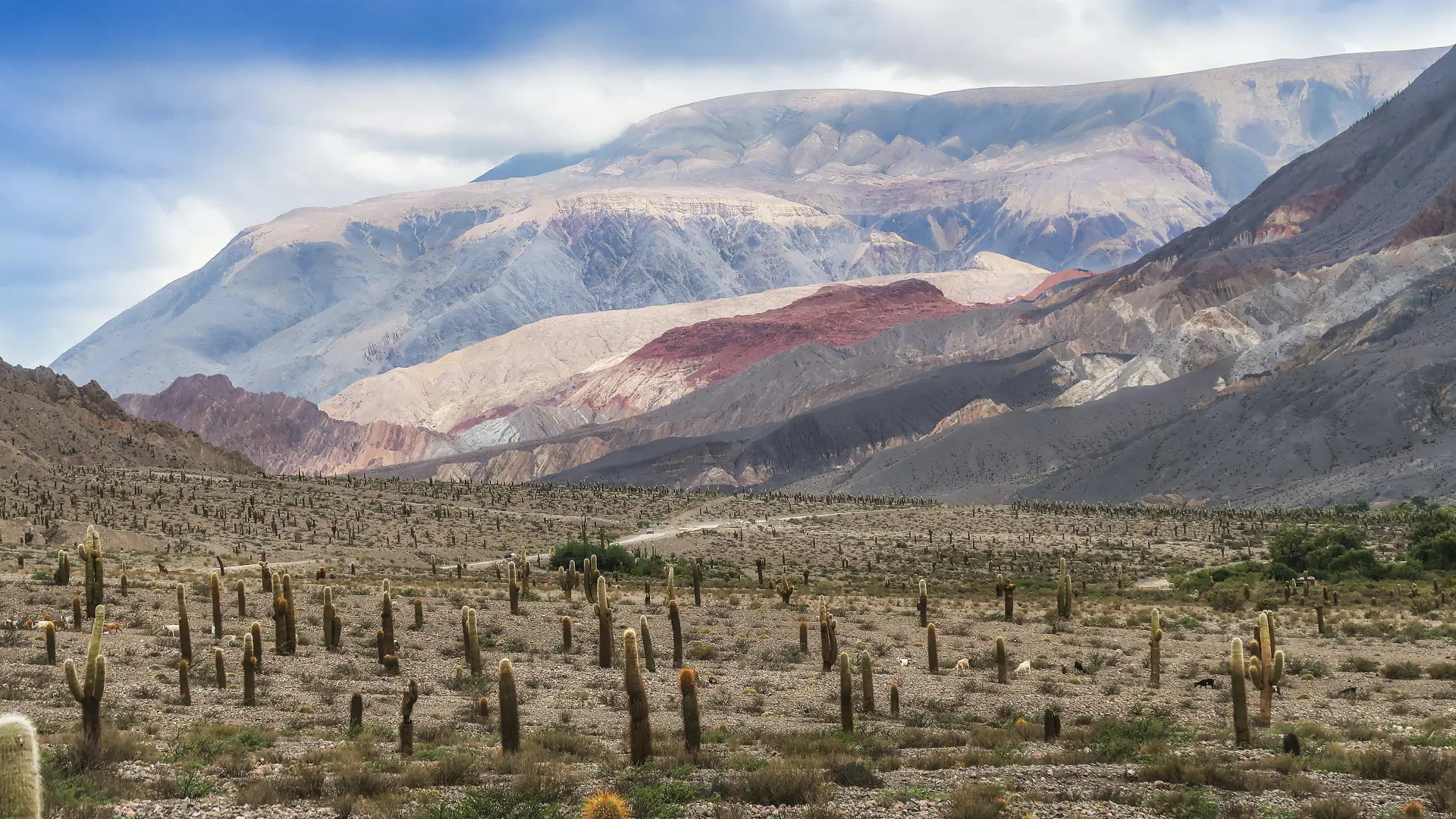

Time seems to stand still in this quiet corner of the world. And it’s not because of a lack of Wi-Fi—yes, there’s a connection so you can join that important online meeting, don’t worry—but because the timeless atmosphere and the surrounding landscape could belong to any era. We’re talking about the Quebrada de Humahuaca, a charming Andean valley stretching 155 km through the Argentine province, offering a weekend getaway—or however long you’d like to stay: remember, time stands still here—

The journey begins on the Inca Trail, following the Río Grande until it meets the Río León in the province of Jujuy. The most striking aspect of the experience is sensory: in addition to the scent of dry leaves and the ancient sounds that echo like remnants of a past that endures, the timeless view of its mountains—which look as if painted in watercolors—offers perfect scenes for the traveler’s eyes (and for their social media).
A Granite Rainbow: Pure Visual Luxury
The road is long, but it’s full of picturesque views, framed by the unique and colorful natural landscape of the area. The first major town along the route is Purmamarca, set against the backdrop of the Hill of Seven Colors, a beautiful marine sedimentation formation that resembles a granite rainbow in the midst of a dreamlike landscape.
There, travelers can find a market featuring local handicrafts from northwestern Argentina. Further on lie the Salinas Grandes: more than 12,000 hectares of open salt flats that look like an endless horizon painted white.
The river that will always be
A tour of this UNESCO World Heritage Site can take two days, with a base in Purmamarca or Tilcara. Humahuaca means “sacred river,” and it is no coincidence that the historic capital of the valley bears this name. For the Omaguacas, it is the “river that will always be”: a simple yet powerful idea—everything changes, but deep down, it remains the same. Like those rivers that overflow, disappear, and eventually find their way back, Humahuaca lives in an eternal loop. Like a song you hear in the middle of 2026 and don’t know if it was written in the 1970s, in 2001, or comes from the future.
Every year, the city goes into carnival mode. The narrow, cobblestone streets fill with noise, people, and music that seems to emanate directly from the rocks of the landscape.

Getting to the Quebrada de Humahuaca
Getting to the gorge is easier than it seems: you can fly into Gobernador Horacio Guzmán International Airport in Perico, just over half an hour from the capital of Jujuy, or travel by land from Jujuy or Salta, where buses depart daily for the key towns along the route—Purmamarca, Tilcara, Humahuaca. But if you really want to get a feel for the rhythm of the place, the best option is to take National Route 9 north by car—whether your own or a rental—and let the road take its course: drive without rushing, stop wherever something catches your eye, and make the drive itself part of the journey.
Choosing when to go also changes the experience: between April and October, during the dry season, the ravine appears at its clearest, like a blank canvas. In the summer, from December to March, the rains paint the landscape green and give it a more vibrant hue. If you’re looking for cultural vibrancy, Carnival—between February and March—transforms the region into a celebration. That said, no matter the time of year, the weather plays both sides: mild days and cold nights, so a jacket is always a good idea, even in the middle of summer.
It’s no coincidence that this landscape also served as the backdrop for what was once cutting-edge popular culture: the area was used as a filming location decades ago—though it feels like it was just yesterday: time stands still here—the music video for “Cuando pase el temblor” by Soda Stereo was filmed here, where long coats were not just a fashion statement but a natural response to the ravine’s changing weather.

One of Argentina’s most breathtaking viewpoints
It’s worth taking the time to explore some of the route’s must-see highlights: Tilcara and the Pucará, where the pre-Columbian past still stands among ruins and trails leading to a place known as Garganta del Diablo; Maimará, with its Paleta del Pintor and landscapes that seem made for stopping to admire (and photograph); or Uquía, the starting point for the Quebrada de las Señoritas, ideal for those seeking more challenging hikes.
Further north, Humahuaca and the imposing Hornocal offer one of the most breathtaking viewpoints in the country, while at Tres Cruces and Inca Cueva, the landscape blends with ancient ruins and natural formations. If you want to go further, Abra Pampa opens the door to the vastness of the Jujuy puna, and La Quiaca, already on the border with Bolivia, gives you the feeling that you have reached the end of the road.
The Culinary Experience in the Quebrada de Humahuaca
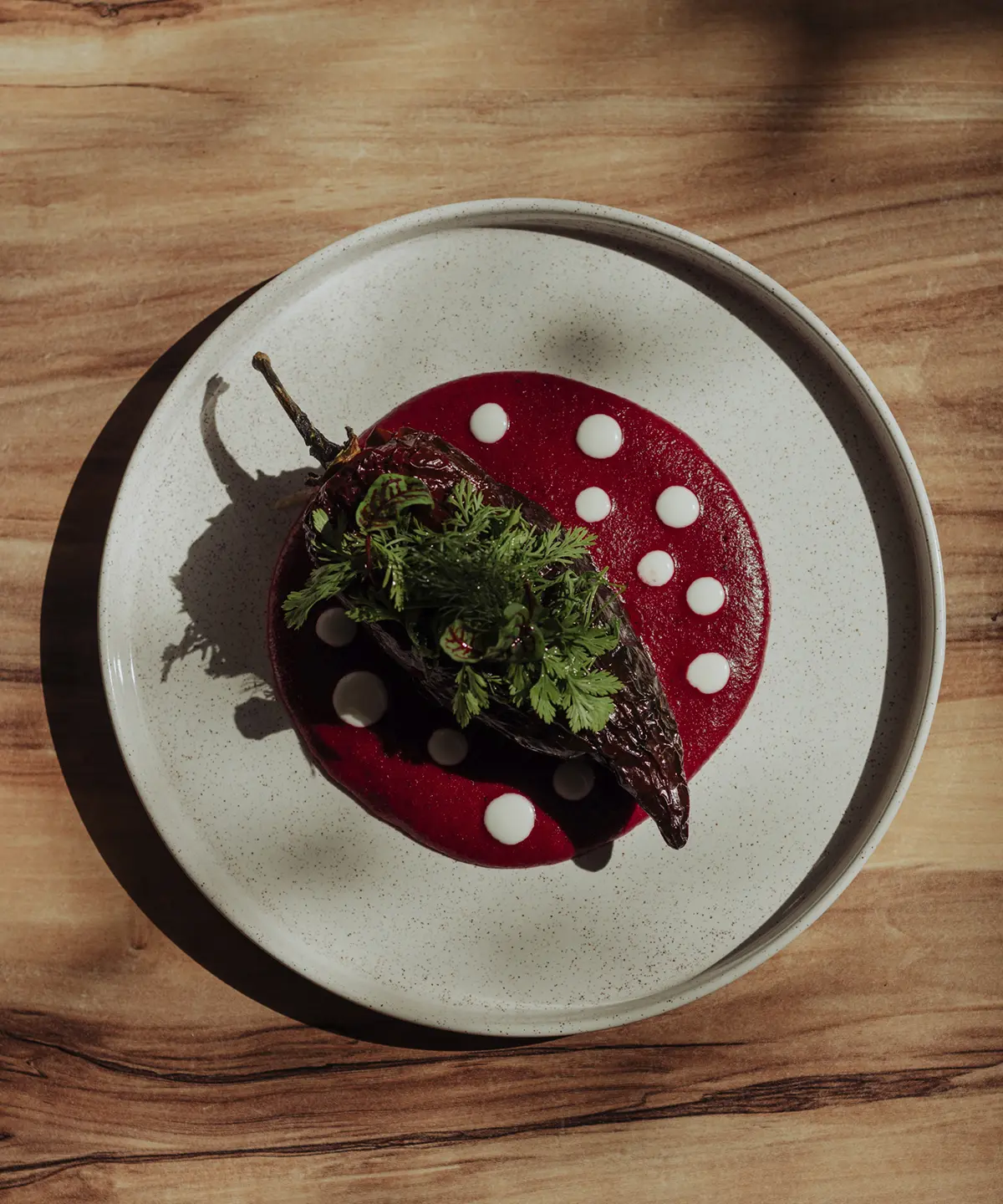
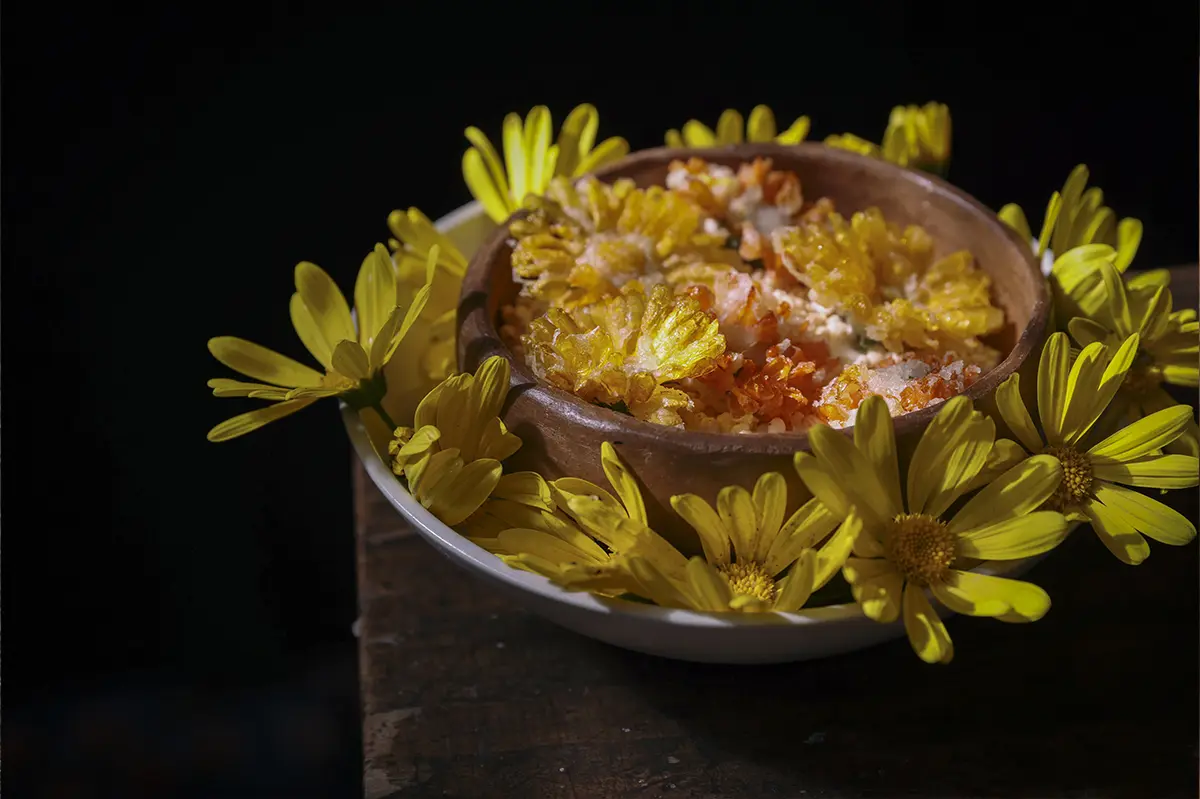
The traditional cuisine of the Quebrada de Humahuaca reflects its local identity: a fusion of Andean heritage and Hispanic influences built around ingredients such as corn, Andean potatoes, quinoa, and even llama meat. The flavors become part of the journey: from dishes like locro—a thick stew made with corn, squash, and meat—or lamb casseroles, to more everyday fare like humitas en chala or the classic cheese-stuffed tortilla found at local stalls. But yes, you can also enjoy more sophisticated cuisine at the surrounding hotels.
The Spring of Silence
And if you’re looking not just to explore but to stay, the heart of the gorge also offers lodges that blend seamlessly with the landscape in a luxurious setting. Just 500 meters from Purmamarca, on National Route 52, El Manantial del Silencio feels less like a hotel and more like a natural pause in your journey.

It is a neo-colonial-style space built with adobe and local materials, designed to blend into—rather than dominate—the surroundings. Its rooms, ranging from doubles to suites with views of the Seven-Colored Hills, are designed for total relaxation, while its culinary offerings feature gourmet Andean cuisine that draws on local ingredients and elevates them to a sophisticated level.

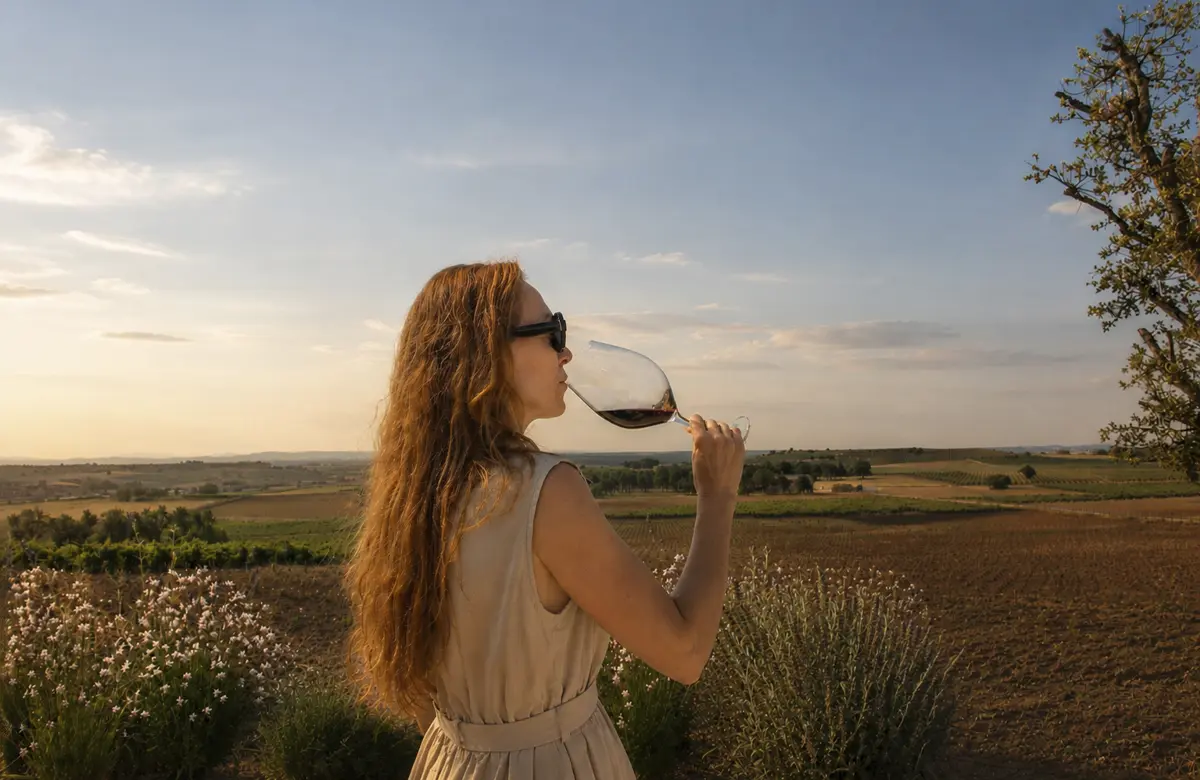
With its heated pool, spa featuring a hot tub and massage room, and activities such as hiking, horseback riding, and excursions to the Salinas Grandes, the place becomes more than just a place to stay: it’s an extension of the journey. A place to slow down, enjoy the wines, and recharge your batteries.
Ultimately, beyond its landscapes and trails, the Quebrada de Humahuaca is not a place to simply visit—it’s a place to experience. It’s a destination where every stop seems frozen in time and where, without even realizing it, you learn to move at a different pace—one that’s more emotional.
To keep exploring this thread, visit purposeful travel across Latin America.