
In the Pyrenees, between Catalonia and France, lies the idyllic principality of Andorra. Famous for its high-mountain landscapes, valleys, forests, and stone villages, this small country—like the one described by the band Derribos Arias, led by San Sebastián native Ignacio Gasca, in their song “Viaje por países pequeños”—is undoubtedly a perfect tourist destination for nature lovers, winter sports enthusiasts, shoppers, and bon vivants.

But whether you’re a ski enthusiast, a hiker, or someone who enjoys intensive shopping sprees at European fashion and tech stores, there’s definitely a place for you in Andorra. Your getaways to high-end hotels, spa resorts, and Romanesque architecture tours—which take you through small stone villages—are complemented by a wide variety of museums, ranging from those dedicated to sacred art to those focused on automobiles, tobacco… or bicycles.
Andorra also has some unique characteristics that make it, shall we say, a one-of-a-kind country. For example, it is the world’s only parliamentary co-principality, with two heads of state: two co-princes. Furthermore, although Spanish, French, and Portuguese are also spoken there, it is the only sovereign country that has Catalan as an official language. And, although it uses the euro as its currency, it has never had its own currency. Oh, and it doesn’t have a standing army either.
A destination undergoing a major transformation in the tourism sector
Today, Andorra—which means “gateway of the winds”—lives up to the meaning of its name and is also seeking to diversify its tourism offerings and attract new international travelers, especially from the Americas. According to data recently released by Andorra Turisme, between the winters of 2022–2023 and 2025–2026, visits from Brazil increased by 390%, from Mexico by 103%, from the United States by 88%, and from Colombia by 84%.
This commitment to expanding its markets is accompanied by an increasingly sophisticated offering that combines high-end hotels, fine dining, art, and entertainment. In addition to Grandvalira’s offerings, new venues will open in Pal Arinsal starting in March 2027, such as El Refugi d’Arinsal, a mountain pub that combines fine dining and music. Meanwhile, L’Abarset will celebrate its fifteenth anniversary with parties featuring Brunch Electronik, Bresh, Ants, and Zamna, while the Hibernation festival will celebrate a decade of electronic music in Pas de la Casa.

Nature and Adventure in the Pyrenees
One of the best ways to discover the region of Andorra is to explore its landscapes and mountains. In winter, the principality becomes a must-visit destination for ski enthusiasts and those looking to vacation amid falling snowflakes, with resorts like Grandvalira—considered nothing less than the largest in the Pyrenees. When the sun comes out, its slopes give way to hiking trails, walking routes, and charming strolls through the local vegetation.
But for those looking for experiences with a little more adrenaline, Naturland, in Sant Julià de Lòria, offers a variety of outdoor activities. Its main attraction is the Tobotronc, a modern alpine slide that lets you race through the forest aboard a rail-guided vehicle. It’s also worth visiting the Roc del Quer Lookout, whose suspended walkway offers panoramic views of the mountains, or crossing the Canillo Tibetan Bridge, a massive suspended pedestrian structure. And yes, there’s no better place for Instagram-worthy photos than these spots.
But hiking enthusiasts have even more to look forward to. The Tristaina Lakes, with their glacial landscapes, and Comapedrosa Peak, Andorra’s highest summit, are two of the natural landmarks that must be noted (and highlighted) on any self-respecting itinerary through Andorra.
A journey through history and Romanesque architecture
But Andorra is more than just fairytale landscapes for enchanted tourists. Its architecture offers another way to explore the principality, especially through its churches and Romanesque buildings, many of which were built between the 11th and 13th centuries.

A great way to begin your journey through this local history, rich in classical architecture, is in Andorra la Vella, the capital, where the Barri Antic retains the charm of its traditional narrow streets. There you’ll find the Casa de la Vall, the former Andorran parliament and one of the most iconic buildings in local political history. The tour also offers the chance to discover several public art installations, such as *Nobleza del tiempo* by Salvador Dalí and *Los siete poetas* by Spanish artist Jaume Plensa.
Just outside the capital, the Romanesque Route winds through small villages and stone buildings that bear witness to Andorra’s medieval history. Must-see stops include the church of Santa Coloma, with its distinctive circular bell tower, and Sant Martí de la Cortinada—two key examples of the principality’s cultural heritage.
Another important site to visit is the Meritxell Shrine, dedicated to the patron saint of Andorra. The site, rebuilt after the old sanctuary burned down in 1972, was designed by architect Ricardo Bofill and combines elements of contemporary architecture with references to the area’s deeply rooted religious tradition. And yes, it’s perfectly fine to cross yourself—or just take a great photo.
Spas, Hotels, and a Break
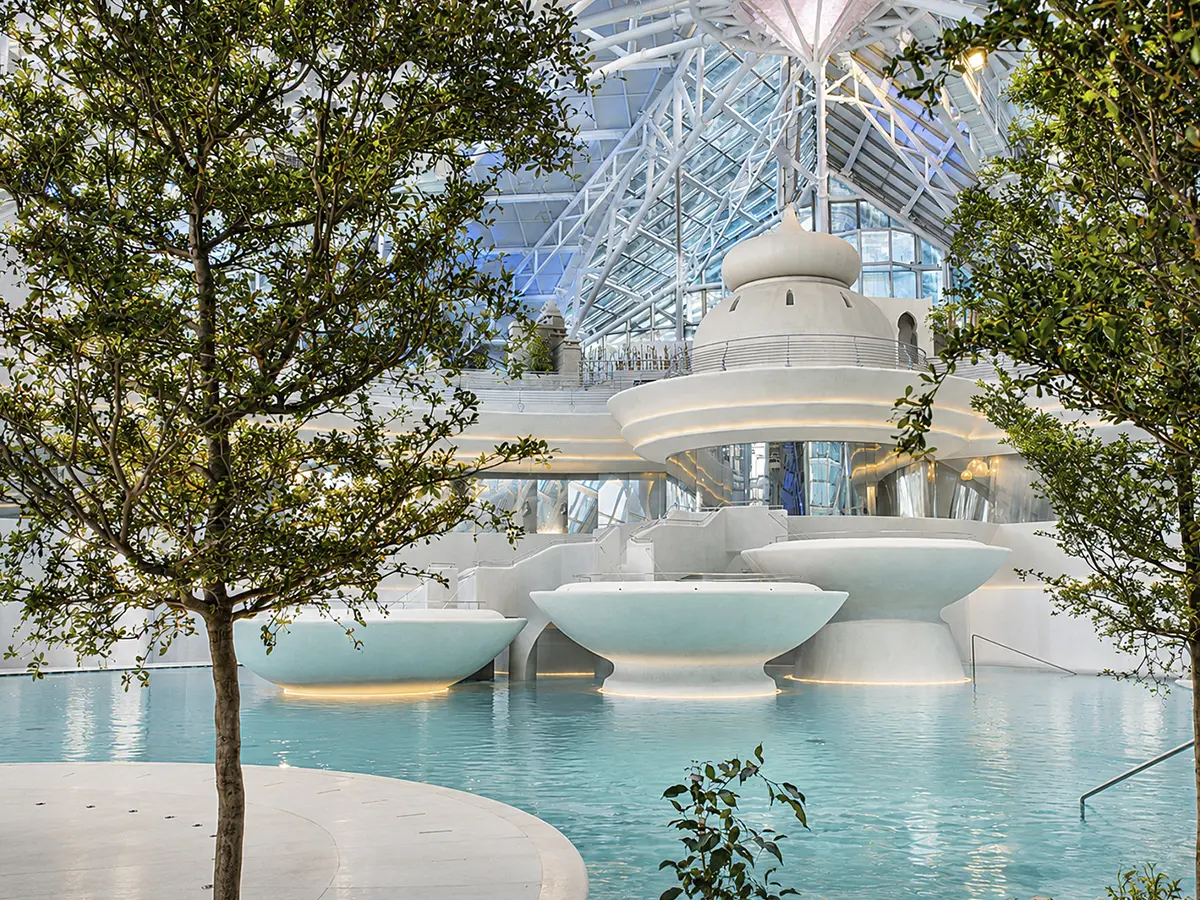
After exploring mountains and villages, Andorra also invites you to relax. Its selection of high-end hotels and thermal resorts lets you turn a nature getaway into a relaxing experience. One of the best-known spots is Caldea, in Escaldes-Engordany, a thermal spa that combines hot spring pools, relaxation areas, and wellness treatments in a setting surrounded by serene mountains. It’s perfectly fine to slow down and play a round of golf after navigating the snow-covered trails,

Art, Museums, and Galleries in Andorra
Andorra also has an art scene that’s worth exploring. In Escaldes-Engordany, the Centre d’Art (CAEE) features exhibitions and spaces dedicated to art and the work of sculptor Josep Viladomat, while the Government Exhibition Hall showcases works by national and international artists. In Canillo, the Espai Galobardes offers a glimpse into local creativity, and galleries such as Art al Set and Untitled Art Contemporani expand the exploration of contemporary art. One particularly unique venue is Alta, the fine art photography gallery founded in 2021 by Pancho Saula and Michelle Ferrara in Anyós, at an elevation of 1,342 meters. Far from the traditional gallery format, the space welcomes visitors by appointment only, in one-on-one sessions designed to allow for a leisurely contemplation of the works.
Its international reach is also worth highlighting: in 2026, it participated in AIPAD in New York and MIA Photo Fair in Milan, and is presenting *The Years Between Us*, a collection of works by American photographer and film director Bruce Weber, at Paris Photo in the Grand Palais. This is proof that, even in a remarkably small country, art flourishes on a grand scale.
Shopping in the Heart of the Pyrenees
And, of course, there’s the ever-present world of shopping. Andorra maintains its commercial appeal thanks to a tax system that features rates considerably lower than the European average, which has kept it for decades as a popular destination for purchasing fashion, technology, perfumes, jewelry, and other luxury items—all with attractive tax benefits. Avinguda Meritxell, in Andorra la Vella, is home to much of this activity, with stores and shops that invite you to spend a few hours—or a couple of days nonstop—on a shopping spree (because the sales are ending).

Thus, with its high-mountain hikes, medieval churches, contemporary architecture, hot springs, and shop windows, Andorra proves itself to be a small but remarkable destination that’s impossible to overlook when seeking a sophisticated getaway—one that feels so far away and yet so close at the same time.
Learn more weekend getawaysin AW Magazine.