The National Gallery in London is paying tribute to the work of painter Francisco de Zurbarán. From early May through August 23, 2026, the iconic venue is hosting the first major solo exhibition in the United Kingdom dedicated to the master of chiaroscuro.
Zurbarán at the National Gallery: The Spanish Master of Chiaroscuro Comes to the United Kingdom
Considered a “giant in the history of Spanish art,” Zurbarán was one of the leading figures of the Sevillian Baroque. So much so that legend has it that, after seeing his work, King Philip IV was so amazed that he named him “painter to the king and king of painters.”

In case there were any doubts, Francisco de Zurbarán ( 1598–1664) is one of the leading figures of the Spanish Baroque and the Golden Age. His distinctive body of work blends the mysticism of the era with an austerity and raw realism that led to some of his paintings being censored by the Holy Office in the 17th century.
The Inquisition, acting as a kind of Big Brother of the art world, ensured that the depiction of sacred images conformed to sacred dogma.
In addition to bringing together works from major European and American collections, the exhibition also explores the history of some of Zurbarán’s most famous pieces.
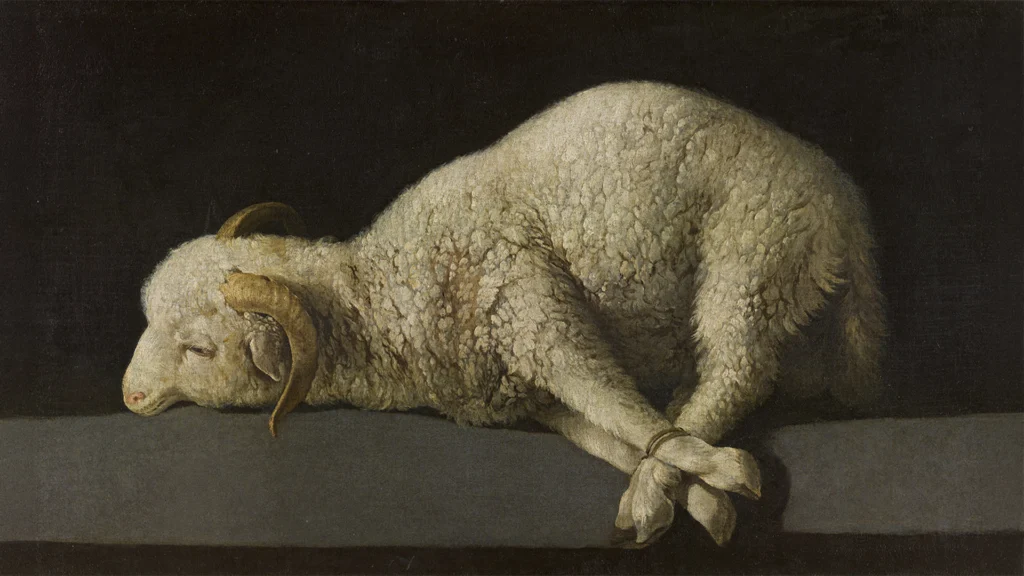
The Light and Shadow in Zurbarán’s Work
The life-size portraits of Asher and Joseph were among the painter’s first works to reach Great Britain and are part of the famous series *Jacob and His Twelve Sons*. This work was kept “under lock and key” for several centuries due to its somewhat controversial subject matter.
Some experts in modern art suggest that Zurbarán painted it as an act of defiance against censorship, since the official church took issue with those references.
Officially, in 1756, the Bishop of Durham acquired the 12 paintings, a story that is now being pieced together by experts from the National Gallery and the Spanish Gallery at Auckland Palace.
The exhibition also offers a glimpse into the restoration work recently carried out by the museum’s conservation studio. The specialists restored the balance between light and shadow in the paintings prior to their display, achieving a result that honors the artwork without altering its original form.
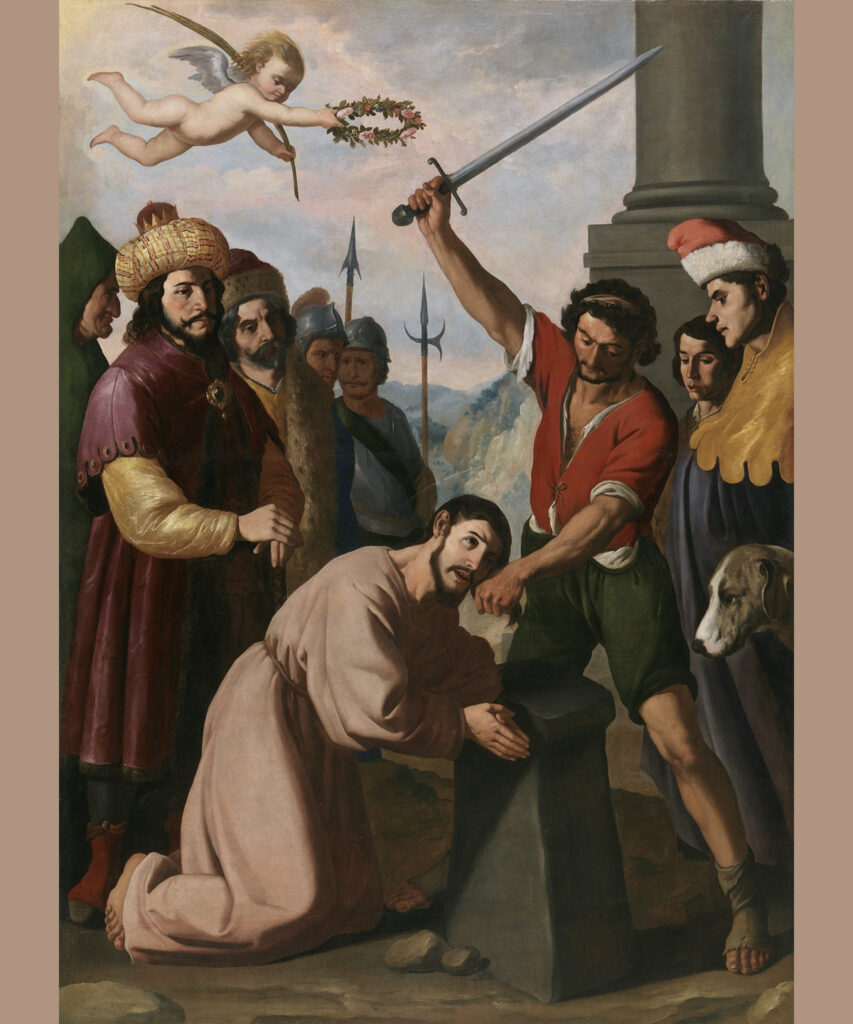
Paradoxically, the vast majority of Francisco de Zurbarán’s work was commissioned by the Church itself, which sought to uphold the ideals of the Counter-Reformation—a movement created in response to Protestantism to defend the institution’s faith. Yes, with a little delicate assistance from the Tribunal of the Holy Inquisition.
The “Zurbarán Effect”: Baroque Realism That Continues to Inspire Contemporary Art
While the legacy of the Extremaduran painter was firmly rooted in the artistic norms of his time, it also resonates in contemporary art. The “Zurbarán effect, ” a colloquial term adopted beyond academic circles to describe the optical illusion found in many of his works, has been revisited by many conceptual and postmodern artists. This phrase refers to the extreme realism that borders on the sculptural and three-dimensional.
Yes, his austere style is also considered by some theorists to be influenced by minimalism and stems from the artist’s choice to focus on the essentials—Fumio Sasaki, author of *Goodbye, Things: The Art of Living with the Essentials, would be proud—eliminating ornate backgrounds and unnecessary ornamentation to focus attention on the volume, light, and geometric forms of the figures.
His ability to transform sacred figures into deeply human characters remains as relevant as ever. Artists such as the Canadian Karel Funk took note of this in their own work. Or what about much of the visual art and photography that continues to draw on the framework established by the painter? The enduring nature of his influence reveals that his connections to modernity are firmly rooted.
Zurbarán’s works at the National Gallery
This exhibition, which is being shown in England for the first time, reveals that Latin American art is currently enjoying a golden age beyond the Spanish-speaking world. The exhibition brings together 42 masterpieces, including the iconic *Agnus Dei* and *Christ Crucified*, and was organized in collaboration with the Louvre Museum and the Art Institute of Chicago. Undoubtedly, an event that highlights the importance of a figure like Zurbarán and of an emotional and vivid art.
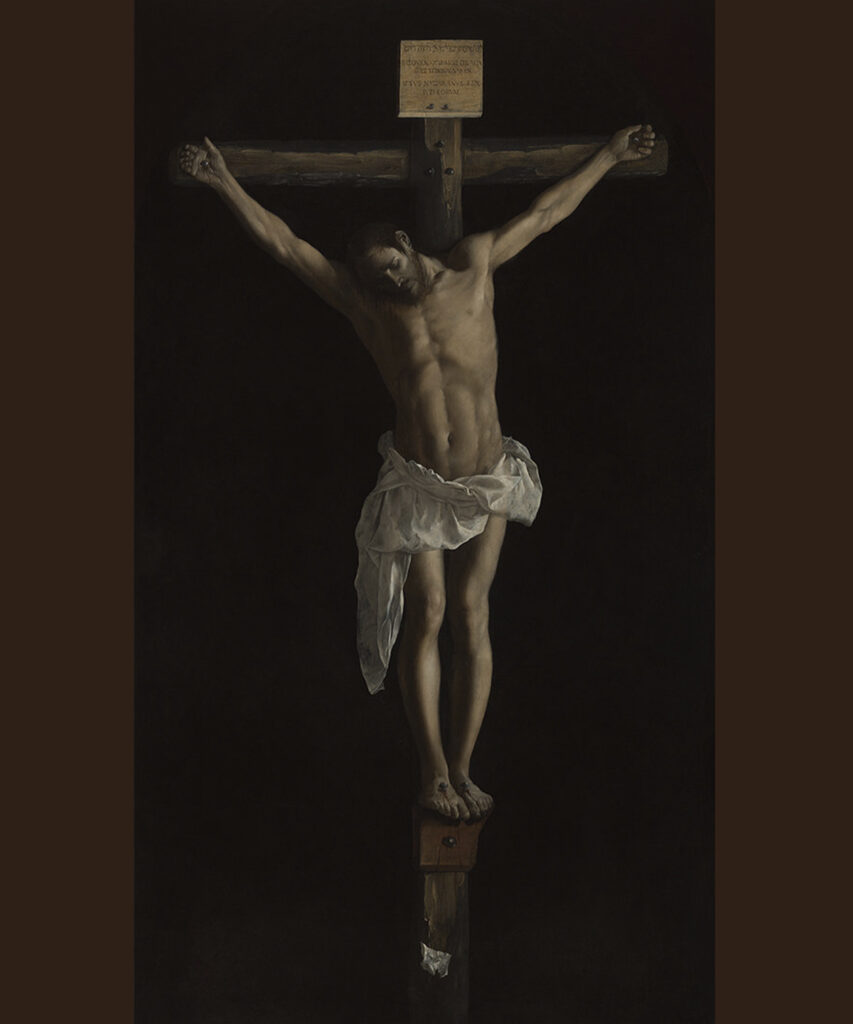
“Step into the fascinating world of the visionary Spanish painter Francisco de Zurbarán” is the promotional slogan of the National Gallery in London, inviting visitors to explore an exhibition that, in addition to religious art, features numerous still lifes and a series of works in which drama, mystery, light, and spirituality come together in a grand setting that brings a work as profound as life itself closer to the everyday.”
Zurbarán died in 1664, penniless and all but forgotten, overshadowed by the more colorful styles of his time. Yet centuries later, his work continues to illuminate museums and captivate contemporary viewers.
Learn more about exhibitions and shows at AW Magazine.