Many of the current urban problems in major Latin American cities are the result of architectural and planning practices that ignored preexisting ecological and social systems.
Mexico City was built on a system of lakes in Texcoco, Xochimilco, and Chalco. This has led to land subsidence and recurring floods, not to mention the impact this has had on earthquakes. In Chile, there are large housing complexes in high-risk areas, exposed to forest fires and constant landslides.
In Argentina, poorly planned urban development in the Paraná Delta and low-lying river basins has led to increasingly frequent flooding, as well as ecological and biodiversity losses.
Let’s face it: Latin America is one of the world’s most vulnerable regions when it comes to natural disasters—hurricanes , earthquakes, and floods—and history has proven this. Since 2000, more than 190 million people in Latin America and the Caribbean have been affected by over 1,500 natural disasters, according to data from OCHA, the United Nations department responsible for ensuring a coordinated response to emergencies. These figures rank the region as the second most vulnerable in the world to such phenomena.

Against this backdrop, regenerative architecture emerges as a critical response that goes beyond traditional sustainability. While the latter has focused on reducing impacts and maintaining the existing balance, the regenerative approach proposes a more profound transformation: conceiving of buildings and cities as living systems, capable of restoring ecosystems, strengthening communities, and improving their environmental and social conditions. Something that is definitely needed in the region.
What is regenerative architecture?
Regenerative architecture has its roots in the final decades of the 20th century. During that period,disciplines such as ecology, permaculture, and design began to challenge conventional development models in search of a greater balance with nature. Starting in the 1990s, these ideas coalesced under the concept of regenerative design.
This approach was applied to the field of architecture when buildings began to be viewed as interconnected living systems.
Over the past decade, regenerative architecture has gained prominence by incorporating energy self-sufficiency, urban design, and environmental adaptation. These are particularly significant issues in a region such as Latin America.
International Background of regenerative architecture
Among the early pioneers of regenerative architecture, the Centre for Alternative Technology (CAT) in Wales stands out; established in 1970, it has served as a living laboratory for renewable energy and construction using natural materials. At the beginning of the 21st century, the BedZED project in London (2002) marked a turning point in the development of low-impact residential communities by integrating energy efficiency and social regeneration.
In the institutional sector, Council House 2 in Melbourne (2006) demonstrated the feasibility of applying regenerative principles to public buildings through bioclimatic design, water reuse, and strategies focused on user well-being. In Asia, the Khoo Teck Puat Hospital in Singapore (2010) functions as an urban ecosystem that integrates architecture and nature.

In the United States, the Bullitt Center in Seattle—which opened in 2013 and is considered one of the most sustainable office buildings in the world—notes on its official website that, in accordance with the principles of this discipline, it generated 2,475,021 kWh of energy during its first ten years. This figure represents 551,481 kWh more than it consumed, in addition to its success in treating and reusing rainwater.
Regenerative Architecture in Latin America
In Latin America, regenerative architecture is gaining traction as a critical response to environmental, social, and urban crises. Although the term has not yet been fully incorporated into mainstream discourse, numerous projects are already implicitly applying its principles.
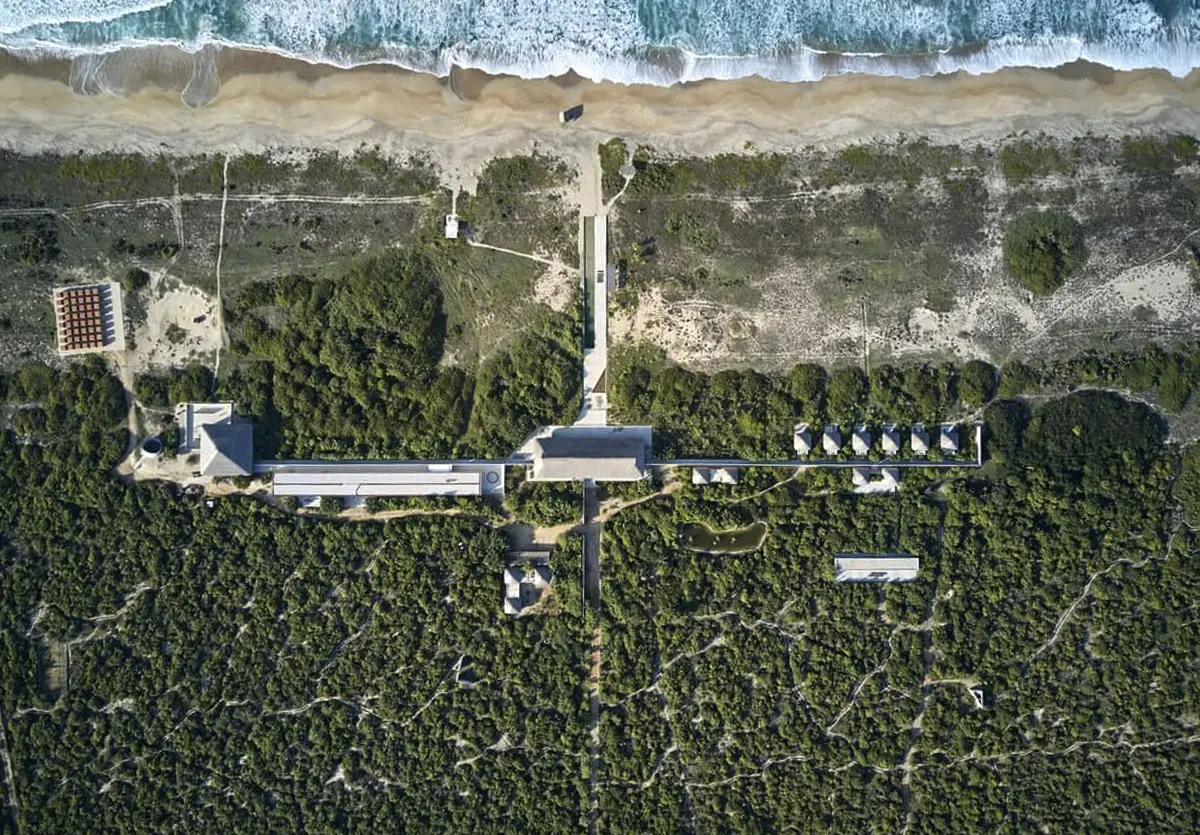
In Mexico, initiatives related to regenerative architecture such as Casa Wabi, spearheaded by architect Alberto Kalach—one of the most frequently cited Mexican architects in debates on ecological regeneration—in Oaxaca, integrate architecture, landscape, and community through the use of local materials and building strategies that engage with the ecosystem.
In Costa Rica, various bioclimatic architecture projects and regenerative eco-lodges are committed to energy self-sufficiency, integrated water management, and the restoration of tropical ecosystems.
In Colombia, rural projects developed by social architecture collectives have incorporated community participation, traditional construction techniques, and the restoration of degraded landscapes. In Chile, the work of firms such as Elemental, led by Alejandro Aravena, has demonstrated how social housing can foster social cohesion, efficient use of resources, and urban regeneration.
The revitalization of public spaces and housing projects with an environmental and social focus
Similarly, several Latin American cities have begun to incorporate regenerative principles through green infrastructure, ecological corridors, the revitalization of public spaces, and housing projects with an environmental and social focus. The goal is to improve quality of life and climate resilience in contexts marked by inequality.
“Architecture must stop being a ‘do no harm’ project and become a driving force that regenerates its surroundings. Spaces must heal both people and the planet” —Architect Ernesto Mizrahi in an interview published on a platform affiliated with UNESCO
Other voices, such as that of Mexican architect Tatiana Bilbao, have been instrumental in this process. Her projects combine bioclimatic design, local materials, and a strong social dimension, particularly in housing and community spaces that strengthen the relationship between the community and the local area.
Critical Perspectives: Critics of Regenerative Architecture
But it’s not all roses. There are critical voices warning of the risks of adopting the term without proper planning. Mexican architect Enrique Ortiz Flores, an advocate for the right to the city and affordable housing, has pointed out that “talking about regeneration without addressing conditions of structural exclusion can strip the concept of its real meaning.” This assertion is particularly relevant when comparing conditions in Latin America with those in more developed countries.

For his part, Uruguayan social ecologist Eduardo Gudynas, a researcher at the Latin American Center for Social Ecology (CLAES), warns that, in contexts where environmental regulatory frameworks are weak, “the ambiguity of the term can facilitate its superficial use as a discursive strategy or green marketing ploy, without bringing about real transformations in habitat production processes.”
Without a doubt, regenerative architecture offers a genuine opportunity if it is carried out consistently and within the real-world context. Otherwise, it runs the risk of remaining mere rhetoric, driven by a desire to “play by the book” or the temptation to include the term solely to make it look appealing in an architectural firm’s portfolio.
The real challenge lies not in reducing regeneration to a mere slogan, but in recognizing it as a transformative practice capable of redefining and strengthening the relationship between architecture, nature, and society.
To keep exploring this thread, visit contemporary Latin American architecture.