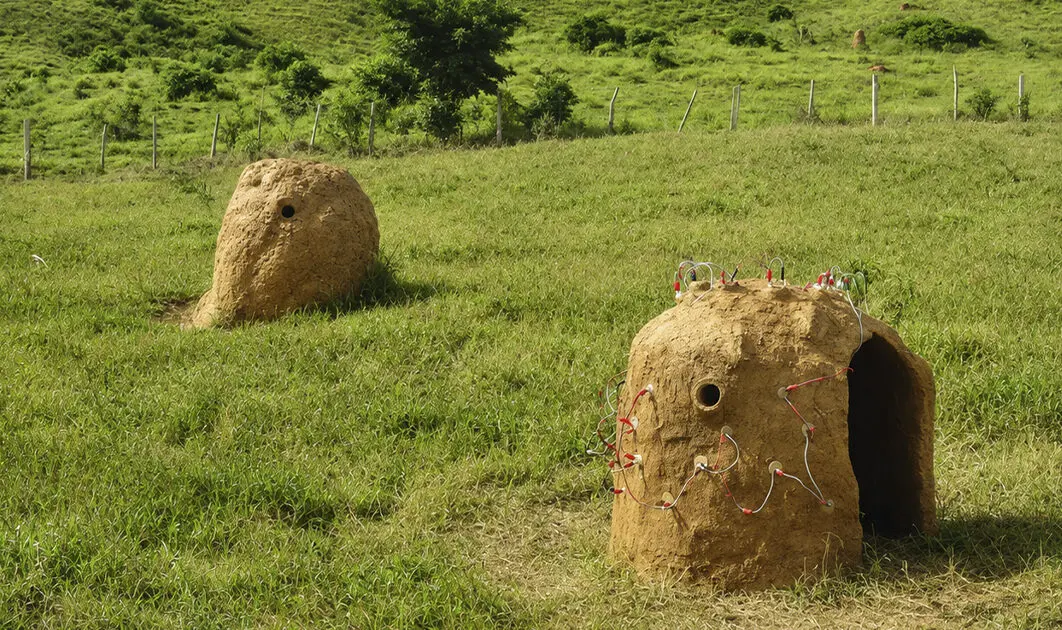

So-called bioart is a hybrid and transdisciplinary artistic practice in which artists use living biological material—such as microorganisms, bacteria, fungi, DNA, or organic tissues—and biotechnological processes (tissue culture, genetic manipulation, or mycotechnology). The goal: to create works of art that straddle the boundaries of science fiction, the avant-garde, and even ethical controversy.
The term “bioart ” was formally coined in the late 1990s. To this day, this discipline (or rather, multidiscipline) continues to be a constantly evolving practice.

Bioart, a practice without dogmas
Bioart, in reality, does not follow a manual nor is it based on a strict thesis as a model. In fact, it is not governed by dogmatic principles, as some might think. It is defined“by a set of philosophical, aesthetic, and critical approaches that question the relationship between human beings, science, technology, and life itself.” This is according to the publication Approaches to Bioart: Concept, Body, Gender, by Natalia Matewecki, published by the National University of La Plata in 2019.
However, it is necessary to identify certain key themes that underpin this contemporary art movement.
Life and living matter as a medium for creating art. In other words, we must not lose sight of the fact that living systems (bacteria, DNA, cellular tissues, plants, and animals) and biomolecular processes can cease to be mere objects of study in a laboratory for scientific purposes and instead become a starting point for aesthetic and contemplative creation.
Life as image and as matter. While traditional art portrays life through paintings or sculptures, bioart incorporates living organisms that grow, transform, or die as part of the artwork itself. Those who practice bioart are not scientists; they are artists.

Bioart in Latin America
It’s true, in Latin America we don’t have anyone like David Cronenberg doing something similar in film. No, but we do have a range of artists who have used bioart as the foundation for—or at least as part of—their work.
“ “Countries such as Argentina—a region highlighted by theorists and creators as one of the discipline’s major strongholds—and Mexico, with an active scene of art-and-science labs and collectives, have strongly promoted this field through exhibitions, publications, shows, competitions, and residencies.”
It is worth noting that bioart in Latin America, as in the rest of the world, is a hybrid and transdisciplinary artistic practice in which artists use living biological material—such as microorganisms, bacteria, fungi, DNA, or tissues—and biotechnological processes, such as tissue culture, genetic manipulation, or mycotechnology.
The purpose of the matter: to create works of art. And no, there is no legislation on the matter.

But in our Latin American context, this trend takes on specific characteristics. Biology becomes a political issue. Experimentation does not remain confined to the laboratory; rather, it intersects with the territory itself, the ecological crisis, social problems, and local ways of understanding life.
In this sense, human beings are no longer the center of attention, as many Latin American works challenge the idea that our species is superior to others. Thus, they explore other ways of relating to plants, insects, bacteria, and fungi.
Regional Leaders in Bioart
Among the region’s leading figures is the Brazilian artist Eduardo Kac, a pioneer of transgenic art and known for his piece GFP Bunny. This is the famous rabbit that has been genetically modified to produce green fluorescence. In Argentina, Joaquín Fargas, director of the Latin American Bioart Laboratory at the UAI, stands out for his work that blends science, ecology, and education in interesting projects such as Biosfera.
In Mexico, Edith Medina is considered one of the pioneers of this practice. A researcher, curator, and biological artist, she explores the body as organic matter, biomaterials, and the relationship between humans and machines. For their part, Gabriela Munguía and Guadalupe Chávez, members of the Electrobiota collective, explore interspecies relationships through biomaterials, robotics, and organic printing, with key works such as *Eisenia* in their portfolio.
In Argentina, Ana Laura Cantera uses biomaterials and fungal waste to address environmental issues in projects such as *Inhalaciones territoriales*. In Ecuador, bioartists such as Paúl Rosero, Cristina Muñoz, and Oscar Santillán explore—through various artistic practices—the intersections between nature and technology, with projects related to ecosystems, bioremediation, and artificial intelligence.

The Ethical Debate on Bioart
But the conversation doesn’t stop at how far technology can go. In Latin America, bioart also feeds into debates about who controls life, how territories are exploited, and what rights we recognize for nature itself.
In contrast to certain strands of the Global North that focus more on the technical possibilities of science, these proposals—considered cutting-edge—bring to the forefront the political, social, and environmental consequences of intervening in living beings or organisms.
As German cultural manager Karin Ohlenschläger points out: “There is a tension between a hierarchical and patriarchal way of understanding the world and an ecological perspective that proposes horizontal relationships between human beings and other forms of life.” From this perspective, bioart challenges the power structures that dictate what is considered organic and opens up the possibility of imagining futures in which our species is no longer the center of the debate.
Against this backdrop of tension, these questions have also made their way into public discourse. On February 21, 2022, Casa de América in Madrid hosted the discussion “Bioart Under Debate.” This event featured Alejandra Labastida and Juan José Sanz and brought this artistic practice to the forefront—a topic that remains open to debate.

The practice of bioart—which, as we’ve already noted, uses living organic matter—certainly raises ethical questions and sparks controversy. Manipulating life to create a work of art tests the limits of artistic creation and leads us to ask ourselves what we mean by “life.” And, of course, to what extent is it acceptable to resort to this to intervene in certain processes for aesthetic purposes?
More articles on art in debate, in AW Magazine.