Rafael Radillo apuesta por la novela gráfica no solo como entretenimiento, sino como archivo emocional de la violencia, la infancia y la memoria mexicana.
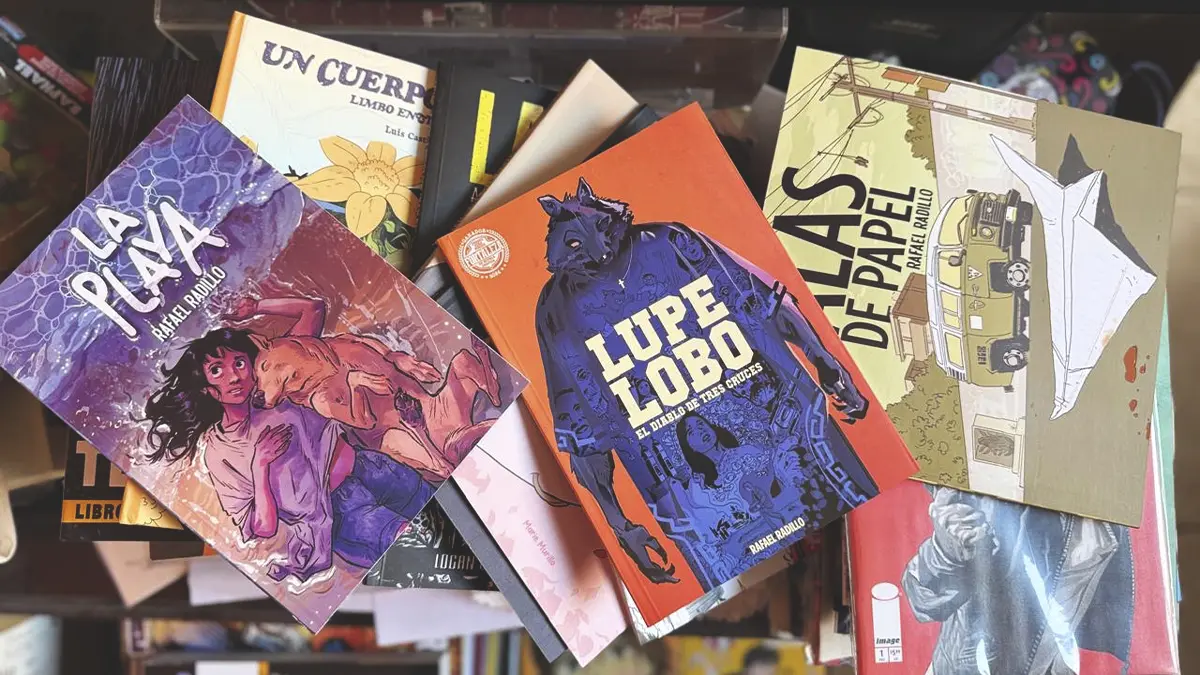
Un hombre lobo perseguido en un pueblito durante la Revolución Mexicana; la entrañable relación entre un chico y su heroica mascota en una aventura con el mar de fondo; un niño que dibuja para escapar de la violencia y comparte sus creaciones en aviones de papel enviados a destinatarios al azar.

El momento de la novela gráfica en México y América Latina
Lupe Lobo: el diablo de Tres Cruces lo llevó a ganar el VI Concurso Nacional de Cómic Premio Pura Pinche Fortaleza en la Feria Internacional del Libro de Guadalajara 2024. La Playa —del mismo año— demostró que el autor tenía más cosas que contar —y que amaba profundamente a los perros—.
Esta novela fue publicada en España por medio de la editorial Unrated Comics. Alas de Papel (2025), su más reciente entrega, refrendó que se trata de uno de los artistas gráficos que mejor saben retratar su entorno en un estilo que roza el impresionismo y el noir.
Radillo estudió en la Facultad de Artes y Diseño (FAD) de la Universidad Nacional Autónoma de México (UNAM) antes de renunciar a la carrera de Física (“cuando entendí que no podía demostrar la existencia del número uno con una ecuación matemática”, recuerda), Hoy coincide con que la novela gráfica mexicana y latinoamericana atraviesa un momento interesante.
Novela gráfica, ¿es literatura visual?
Tras varias décadas de ser catalogadas únicamente como cómics o historietas, el lanzamiento cada vez más periódico de obras de este tipo ha logrado que el género sea considerado como literatura visual.
En un país donde la historieta fue durante décadas vista como un producto menor, Radillo demuestra que la novela gráfica puede operar como una forma de literatura adulta, política y profundamente local.
«La novela gráfica se va a ir expandiendo en América Latina. Es difícil porque tenemos de vecinos una industria del cómic superfuerte. Se trata de convencer al lector de que lea algo local en vez de un Spiderman»— Rafael Radillo

“Más allá del lenguaje creo que en Latinoamérica nos reconocemos en ciertas expresiones artísticas y en nuestros personajes, en la comida y en las maneras de ver el mundo, y la novela gráfica puede representar y servir como este lazo comunitario”.
Si bien el tema de la distribución, los tirajes cortos y la necesidad de autoeditarse continúan siendo una constante, la muy particular novela gráfica hecha en México continúa manteniendo esa tradición de la historieta que data de décadas atrás. Este arte gráfico, ahora ha adoptado el formato como una forma de supervivencia.
Novela gráfica y cómic en México
“La novela gráfica es la mejor forma, al menos aquí en México, para poder hacer cómic en la actualidad”, reconoce el autor. “Este formato que parece un libro, hace que muchos lectores que no sabían que les gustaban los cómics empiecen a leer y descubran que es lo suyo”.
Una de las particularidades de Radillo —y de gran parte del cómic y la novela gráfica mexicana— es que la mayoría de los dibujantes también son creadores de la narrativa y las historias.
“Si Marvel deja de hacer cómics, muchísima gente se va a quedar sin trabajo; ellos dan empleo a escritores, distribuidores, entintadores, coloristas y demás. Pero si dejo de hacer cómics, el único afectado voy a ser yo”.
Las influencias de Rafael Radillo y su obra premiada por el Fondo de Cultura Económica
Sin embargo, contar historias además de trazar a los protagonistas de sus relatos, no es una carga para el autor, al contrario: “Creo que todo tiene que ver con la información. Yo leí mucho cómic, leí muchos libros; autores como Cortázar o Dostoyevski son autores que leí y releí. Primero porque no les entendía y después porque me gustaron mucho”.
Historietas mexicanas como Fantomas, la amenaza elegante, donde el mismo Julio Cortázar fue incluido como personaje —y luego a manera de homenaje, el argentino escribió Fantomas contra los vampiros multinacionales en 1975—.
O también las muy autóctonas Videorisa y Simón Simonazo, revistas que reflejaban la cultura juvenil nacional de las décadas pasadas, fueron sus influencias iniciales, junto a cómics clásicos del american way of life como Archie.
También toda esa ficción melodramática del Cine de Oro mexicano es una referencia presente: “De alguna forma, todas mis historias tienden a irse hacia allá, sobre todo las películas en blanco y negro que veía con mi abuela. Ese espectro desde el que se contaba el drama era algo que me cautivaba”, recuerda.
El Premio Internacional de Espectográfica del Fondo de Cultura Económica
En sus novelas, se perciben elementos cotidianos pero con ese elemento surrealista: “¿Para qué quieres ver en un cómic lo mismo que ves a diario?”, explica, Para ello, cita al autor de la novela The Fight Club, Chuck Palahniuk. La frase dice: “la obra de un artista es un diario de lo que vive y cada quien le da su propia interpretación”, asegura.
Después de todo México suele ser surreal, como lo dijo en su momento Salvador Dalí —y eso que no leyó la mencionada novela gráfica del licántropo— “No volveré a México. No soporto estar en un país más surrealista que mis pinturas”. Rafael Radillo, al parecer, tomó nota.
A finales de enero, el autor presentó Alas de Papel en Sharkomics y Rius Librería en la Ciudad de México y espera que este 2026 se publique La Última Canción.
Se trata de la novela con la que acaba de anunciarse que ganó el 2º Premio Internacional de Espectográfica del Fondo de Cultura Económica. Así pues, quedan muchos horizontes por descubrir, viñetas que dibujar e historias que narrar.
Explora más miradas culturales y descubre lo que está marcando la agenda creativa y de arte del momento en AW Magazine.
To keep exploring this thread, visit Latin American culture; you can also continue through concerts, exhibitions and festivals.