
This exhibition pays tribute to an artist whose work, within that historic moment of Mexican muralism, is now being reinterpreted as a feminist, radical, and often silenced voice—just as the work of women artists has so often been overlooked throughout art history.
A Silenced Rebellion: Rereading Aurora Reyes’s Work Through the Lens of Struggle, Identity, and Feminism
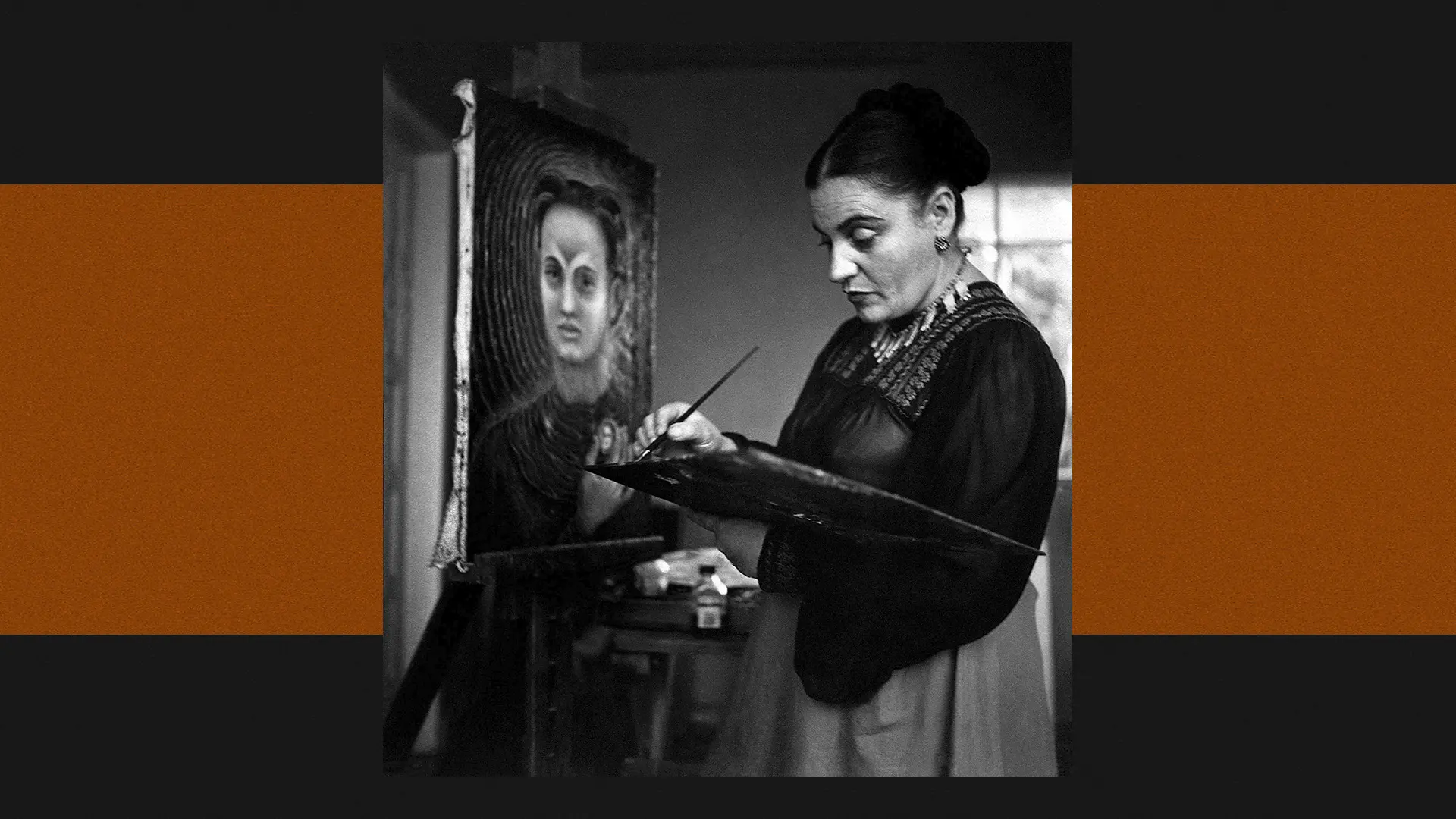
“I am completely primitive and wild. ‘I love freedom above all else’ was one of the most famous quotes uttered by Aurora Reyes, the first Mexican muralist. That freedom—uncomfortable, political, and shaped by her status as a woman—was also one of the reasons her name was left out of the official narrative of Mexican muralism for decades.”

The San Carlos National Museum, in collaboration with Casa Chihuahua, launched this artistic journey in 2025 with the exhibition *Art and Struggle: Aurora Reyes, an exhibition that not only revives the work of a key figure in Mexican art but also reaffirms its political and symbolic significance and the relevance of her work today.
In January 2026, the exhibition moved to the Old Federal Palace in Chihuahua—a building steeped in history, located in the city’s Historic District—where it remained until February 2, 2026. It is currently on view at Casa Botello in Hidalgo del Parral, in the same state, and the artist’s birthplace in 1908.
In conjunction with this exhibition, Casa Botello will change its name to the Aurora Reyes Cultural Center, a move that not only serves as a clear tribute but also establishes this space as a new hub for promoting her work.
Without a doubt, one of the must-see events on the country’s cultural calendar.
The Importance of Aurora Reyes in Art and Muralism in Mexico
Aurora Reyes belongs to the second generation of Mexican muralism, although her legacy transcends any categorization. She also ventured into literature and worked as a teacher for the Ministry of Public Education and as a union leader—.
In 1936, Aurora Reyes became the first woman to paint a mural in Mexico, in a deeply sexist society.
Trained at the San Ildefonso National Preparatory School, the artist witnessed firsthand the emergence of the national muralist movement and maintained close ties with figures such as Diego Rivera and José Clemente Orozco, who had a decisive influence on her work; she was also a classmate and friend of Frida Kahlo, a relationship she later captured in the piece Portrait of Frida in Front of the Mirror (1946).
Ever since he decided to devote himself to art, his work has been characterized by a firm political stance: art understood as a tool for social transformation.

Silenced for years, Aurora Reyes is now beginning to be recognized as a pivotal figure, not only for having paved the way for women in muralism, but also for viewing her artistic work as a means of forging identity.
“Aurora Reyes, a woman of struggle with firm convictions in both her political thought and her conception of art, left behind legacies that have not received the recognition they deserve, neither in the literary field nor in her mural work, which lies neglected and in a state of disrepair,” states a press release from the CNDH. A revealing testimony that highlights the historically neglected legacy of her work
Hence the significance of this exhibition, which highlights the work of a true trailblazer who challenged the conventions of her time. Though she passed away in 1985, her legacy lives on as a poet, muralist, and advocate for women’s rights.
The historical silencing of Aurora Reyes and its contemporary reinterpretation
Within the muralist movement, Aurora Reyes occupied an awkward position. Although she was part of that aforementioned second generation, she was excluded from the canon both because she was a woman and because of her critical perspective. She questioned the movement’s male-dominated leadership and the close ties some of its members had to political power. Added to this was a feminist stance ahead of its time, from which she denounced machismo in artistic circles and addressed issues such as motherhood, violence, and women’s autonomy—a stance that led to her work being sidelined.
Some of the most representative works by “La Cachorra”—as her family called her—were: Attack on Rural Teachers (1936) or The First Encounter (1978), a work currently housed in the former Palacio de Cortés—now the Coyoacán City Hall—which narrates the origins of Mexican identity and mestizaje through a mythological lens. Unlike her male counterparts, Reyes placed women and mothers at the center of her work, not merely as allegorical figures.

Aurora Reyes and Primitive Feminism in Mexican Art
In 1945, Aurora Reyes Flores created a mural that challenged the norms and expectations surrounding women’s clothing in Mexico at the time. The piece problematized the rebozo not as an idealized symbol of identity, but as an element linked to imposed labor and the social burden placed on women. The mural—measuring approximately 2.5 by 1.3 meters—depicted a peasant woman carrying her son while using the same garment to balance a heavy bundle of firewood on her head.
The work was presented at a livestock fair organized by the Secretariat for Women’s Social Action of the National Peasants’ Confederation. However, following that public display, the mural inexplicably disappeared—an episode that reveals both the discomfort it generated and the systematic elimination of Aurora Reyes’s most critical—and radical for their time—works.
Furthermore, after supporting the 1968 student movement, the artist was committed to La Castañeda, the capital’s notorious psychiatric hospital, as a result of the political persecution she faced. Later, true to her convictions, she rejected the position of director of the National Institute of Fine Arts (INBA) offered to her by the government of Luis Echeverría—one of those identified as responsible for the repression and massacre against which she protested— and that refusal further accentuated her exclusion from the Mexican muralist narrative.
What can we see at the exhibition Art and Struggle about Aurora Reyes?
The exhibition brings together oil paintings, watercolors, drawings, sketches, photographs, and archival documents that offer a glimpse into her creative world from a perspective that is both intimate and social. More than a conventional retrospective, the exhibition offers a comprehensive look at an artist who viewed muralism, teaching, and activism as interconnected realms.
Aurora Reyes’s commitment to education was pivotal during the Cardenas era, when she promoted models of public arts education rooted in community ideals.
This concept expanded the social reach of art beyond institutional walls, an idea that resonates with the open nature of the venue hosting the exhibition today.
In addition, the Chihuahua Ministry of Culture is set to launch the Aurora Reyes Scholarship this year as part of its commitment to preserving the legacy of a legendary muralist whose influence continues to resonate strongly in women’s art, both traditional and contemporary.
Curated by Valentina García Burgos and Mariano Meza Marroquín, Art and Struggle not only celebrates a multifaceted artist but also places her in her rightful place within the history of Mexican art: as a key figure who understood art as a tool for social consciousness and transformation. Today, Reyes’s influence is evident in the world of feminist photography, muralism created by women, and all Mexican art that follows this path.
Discover more art exhibitions in AW Magazine’s cultural calendar that engage with history and bring it into the present.
To keep exploring this thread, visit cultural perspectives from Latin America; you can also continue through concerts, exhibitions and festivals.