
guadalajara90210 operates as a platform that has made displacement a way of thinking. Its program moves between Guadalajara and Mexico City with exhibitions that treat the venue as a material entity: architecture, neighborhood, ruin, factory, house, studio, or temporary exhibition space.
Gallery Profile
guadalajara90210 is one of those projects that redefine the concept of a gallery. Its history is defined by its approach to using space as a problem to be solved. Homes, off-site projects, collaborations, relocations, different cities, and exhibitions that seem to ask what changes when a work ceases to behave as an isolated object. In a scene where many galleries seek to stabilize their image, here movement serves as the guiding principle.
The program seems to pose a fairly clear question: what can an exhibition achieve when it breaks away from the most predictable format? The answer emerges in projects where architecture, the domestic scale, humble materials, fiction, the body, or ruins take on curatorial significance. guadalajara90210 has built its identity around this intention to create situations where the context compels us to see things differently.
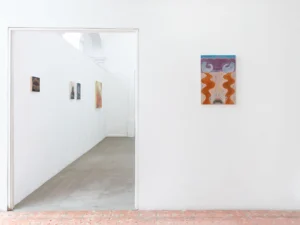
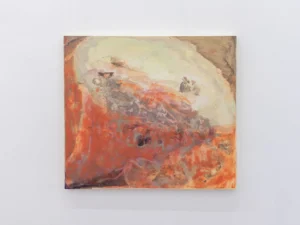
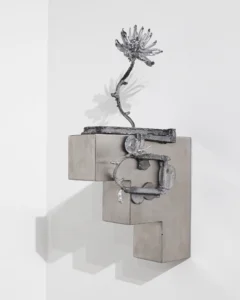
The relationship between Guadalajara and Mexico City reinforces this interpretation of operating between two scenes with distinct rhythms, audiences, and perspectives. Guadalajara brings a history of independent projects, intersections between art, design, music, domestic life, and experimentation. Mexico City adds circulation, collaboration, and visibility. The gallery seems to navigate between these two poles without sacrificing either.
The recent program demonstrates this breadth. In Guadalajara, Esteban Leñero, Marce Roldan, and Rena Kudoh come together with artistic languages that range from landscape to tenderness, from intimate imagery to symbolism. In Mexico City, Alan Hernández works with soft sculptures and wearable forms that border on the ritual, the queer, and the corporeal. This simultaneity reveals a gallery capable of sustaining distinct registers without turning the whole into a mere accumulation of names.
“We have established ourselves as an experimental project on the Mexican art scene, both as artists and curators.” — guadalajara90210
This is perhaps its most useful feature for an Art Weekends itinerary. guadalajara90210 invites interpretation as a point of friction within the city. Its exhibitions shine when you pay attention to the location where they take place, the neighborhood surrounding them, and the way each work engages with that context. It is a gallery for visitors willing to look beyond the exhibition space and understand that context—and the struggle—also generates thought and controversy.
To keep exploring this thread, visit contemporary Latin American art; you can also continue through contemporary art galleries in Latin America.
Program
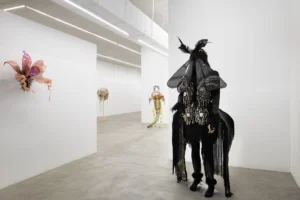
SACRO Y PROFANO de Alan Hernández · Apr–May 2026
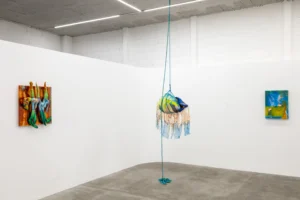
Semillas de Fuego de Amandine Guruceaga · Mar–Apr 2026
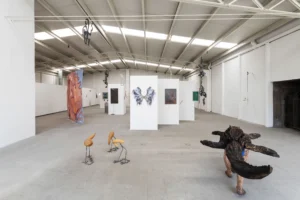
Érase una vez un universo salvaje de VV.AA. · Feb 2026
Why Go
It’s worth visiting because it challenges the conventional notion of a gallery. The history of guadalajara90210 is marked by site-specific projects, changes in location, and collaborations. Its program has fostered a dialogue between Guadalajara and other art scenes without reducing that mobility to mere brand expansion. The gallery seems to work best when the space is a house, a street, a shared venue, a building with a history, or an installation where the artwork must engage with what already exists.
On a cultural tour, the visit is compelling precisely because of that tension. It is not a space defined solely by its artists, but by the way it creates the conditions for an exhibition to take place. Here, the tour is not merely about viewing artworks, but about observing how a work adapts to, resists, or transforms the space in which it is displayed.
What to Expect
The experience varies depending on the venue, and that unpredictability is part of guadalajara90210’s identity. Don’t expect a gallery that behaves in a predictable way. Its program has featured exhibitions where the venue isn’t a blank canvas, but a condition in itself: walls, hallways, light, scale, the neighborhood, and temporality all become part of the interpretation of the work. The visit calls for more attention than haste, because often the curatorial gesture lies in how something occupies or disrupts the space.
In Guadalajara, the location of La Americana allows visitors to experience the gallery within an area that blends homes, restaurants, nightlife, residential architecture, and a vibrant, effervescent cultural scene. The current exhibitions by Esteban Leñero, Marce Roldan, and Rena Kudoh are a good example: landscape, tenderness, memory, drawing, symbolism, and materiality coexist without being reduced to a single aesthetic line. The experience is enhanced when each project is viewed separately, but also as a conversation among the artists.

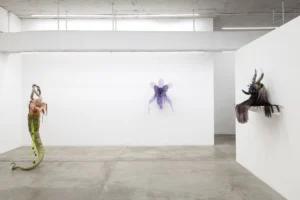
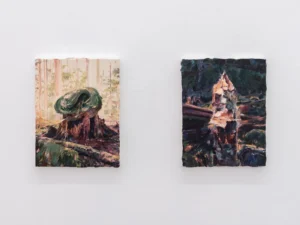
In Mexico City, the Nextitla venue shifts the experience to a different urban scale. Mar Báltico lacks the glitz of the neighborhoods most heavily frequented by the art scene, and that can work in the visitor’s favor. In SACRO Y PROFANO, Alan Hernández works with soft sculptures and an imagination rooted in the body, identity, and ritual. The result reads like an essay on presence and appearance.
What we can generally expect is a gallery with a controversial vibe—in the best sense of the word. Not always comfortable, not always immediately accessible, but attentive to the shifts that contemporary art produces when it steps outside the most domesticated format. This may require more patience from the visitor, but it also makes the reward all the more rewarding: watching an exhibition find its place.
Represented Artists
What to Do Nearby
After leaving the Guadalajara venue, it’s worth taking a stroll through La Americana. The best way to experience it is on foot. Stop for a coffee, find a quiet table, and then continue on to Chapultepec. The Expiatorio as an architectural detour, and perhaps a bookstore or restaurant where you can slow down after the exhibition. The gallery fits right into this mix of a lively neighborhood and cultural circuit.
In Mexico City, the Nextitla venue calls for a different perspective. I’d pair it with a walk to Santa María la Ribera, weather permitting—the Kiosco Morisco, El Chopo, the neighborhood cafés, and streets where you can still feel a city less overrun by gentrification and uniformity. Here, art emerges in an area where everyday life is vibrant, and that realization helps us take a less hurried look.


