
“Follow the brightest star to where the brave dare to go. What will we find when we get there? The Holy Family, we pray that the storm will soon end,”, says “La Sagrada Familia, “ a track from the album Gaudi (1987) by The Alan Parsons Project (we recommend playing the song in the background while reading the following).
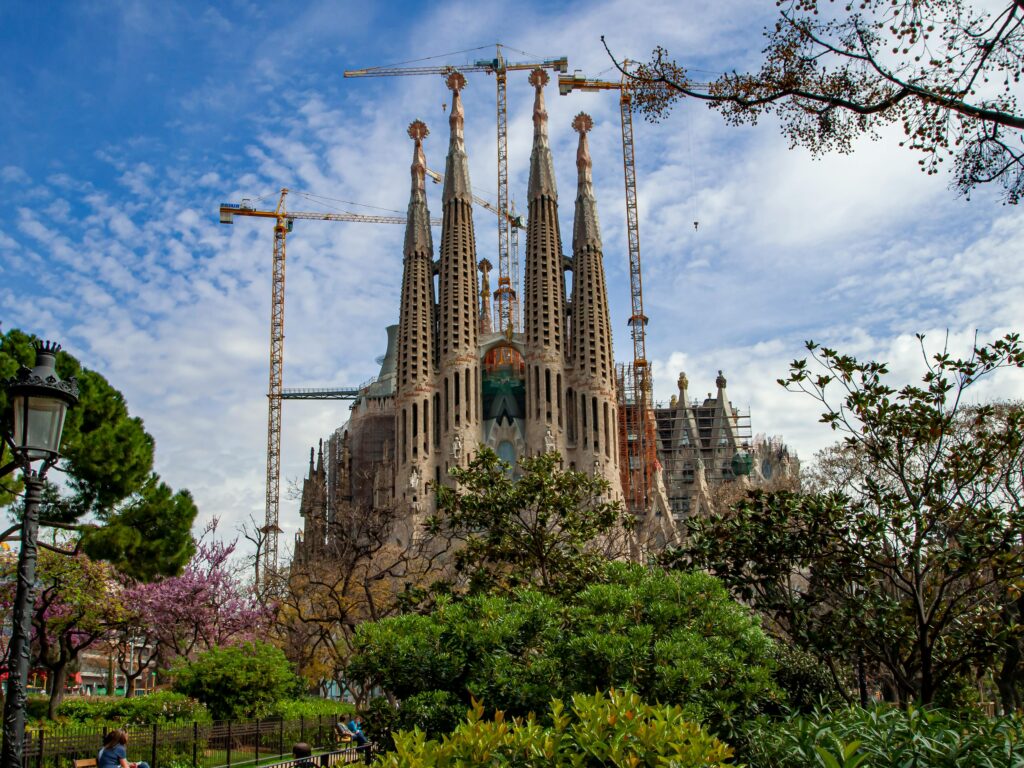
Half a century before this album was released, in 1926, Antoni Gaudí—the architect who has since become a legend—had died at the age of 73 in Barcelona after being struck by a streetcar. At the time, he was not held in such high regard. He was considered eccentric and out of step with the architectural rationalism then in vogue, which proclaimed principles such as “the house is a machine for living in.”
And he also saw decorative elements as little more than a burden.
Gaudí’s Final Days
In the 1970s, the former dandy was a relic of the past, a representative of early 20th-century Catalan Modernism that was no longer in the spotlight. The future was then imagined through a constructive logic that banished ostentation, and Gaudí resembled a fallen, anachronistic idol. So much so that several days passed after the accident before anyone recognized him. At the medical facility—where records show he was treated without much urgency—they assumed he was a homeless man with no papers or identification.

It is well documented that in his later years, the architect lived a life of austerity, driven by religious convictions and following a romantic disappointment that left a deep mark on him. He was not, however, a social outcast, as some legends have suggested. After his death, the construction of a romantic image of the architect began almost immediately: his 1960 biopic attempted to mythologize him, though without capturing the complexity or scope of his work.
But his intellectual rehabilitation would not come from the world of cinema, but rather from the realm of the artistic avant-garde. Shortly after his death, a figure even more surreal than the melancholic lyrics of Alan Parsons entered the scene: Salvador Dalí, who set out to restore Gaudí’s reputation.
A “terrifying yet edible” beauty
Between 1928 and 1929, the artist with the rococo mustache—as José María Cano would somewhat flippantly refer to him in Mecano’s 1988 song “’Eungenio’ Salvador Dalí”—published articles on Gaudí in the magazine L’Amic de les Arts, where he presented him as a visionary, almost a pre-surrealist, highlighting the organic and spatial nature of his architecture.

Later, in 1933, in the Surrealist magazine *Minotaure*, Dalí published the essay *De la beauté terrifiante et comestible de l’architecture Modern’ Style* (“On the Terrifying and Edible Beauty of Modern Style Architecture”), in which he described Modernist architecture—especially that of Gaudí—as possessing a “terrifying and edible” beauty. The metaphor—please don’t try to bite a wall when visiting the basilica—was very Dalí-esque: he saw those buildings as organic, sensual, and almost digestible forms, living organisms that could be savored with the eyes.
For Dalí, Gaudí did not build buildings, but living forms. He went so far as to describe the Sagrada Familia as architecture that seemed to grow like living matter, and he considered Gaudí the only truly important architect of Modernism.
“Saint Gaudí, pray for us”
Eventually, the Catholic Church even began a canonization process that declared him a Servant of God. The future patron saint of architects? If a verified miracle were to occur—in addition to getting Dalí to show some humility—it wouldn’t be impossible.
This marked the beginning of his rise to prominence. In the 1950s, a major exhibition was organized at the Saló del Tinell in Barcelona. That same decade, an exhibition at MoMA in New York cemented his reputation and solidified his international standing beyond Spain.
2026: The Year of Gaudí
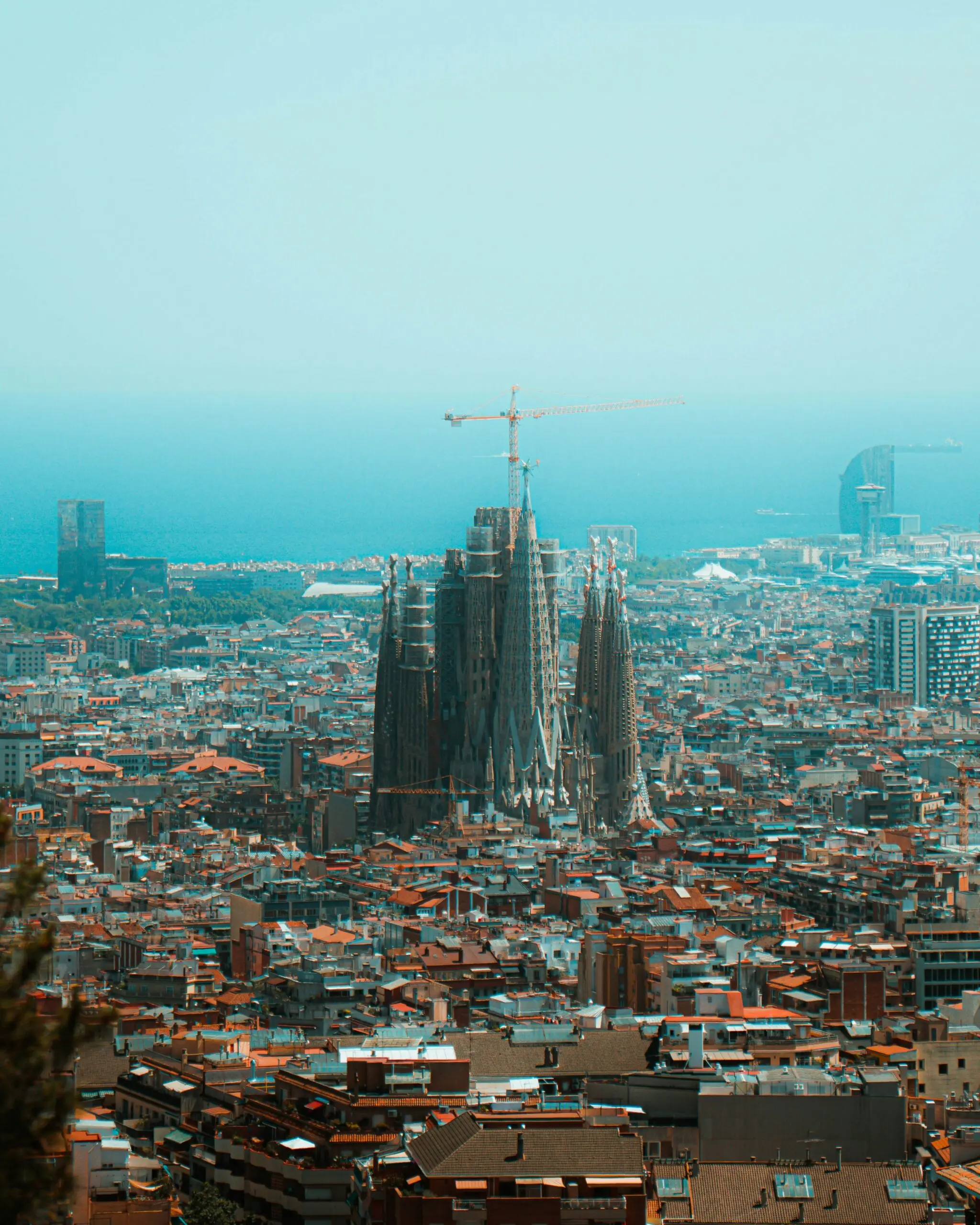
Today, in 2026, Barcelona is becoming a cultural hub to mark Gaudí Year, the commemoration of the 100th anniversary of his death. The celebration, organized by the Government of Catalonia, the Government of Spain, and the Gaudí Council, kicked off on March 19 with a religious service and a concert by the Orfeó Català at the Sagrada Familia, and will continue throughout the year with exhibitions, lectures, special tours, and activities at iconic venues such as the basilica and Casa Batlló.

The commemoration also coincides with Barcelona’s designation as World Capital of Architecture 2026, which draws even more attention to Gaudí’s legacy in the contemporary context.
And yes, it’s also perfectly fine to celebrate with a cake inspired by his work, like the ones offered by various bakeries—mainly in Barcelona—that recreate the trencadís style using fondant or chocolate to evoke the façade of Casa Batlló or the organic forms of the Sagrada Familia.
Dalí would undoubtedly have liked the idea. And he probably would have had seconds.
Discover more articles on architecture and stories in AW Magazine
To keep exploring this thread, visit contemporary and heritage architecture.