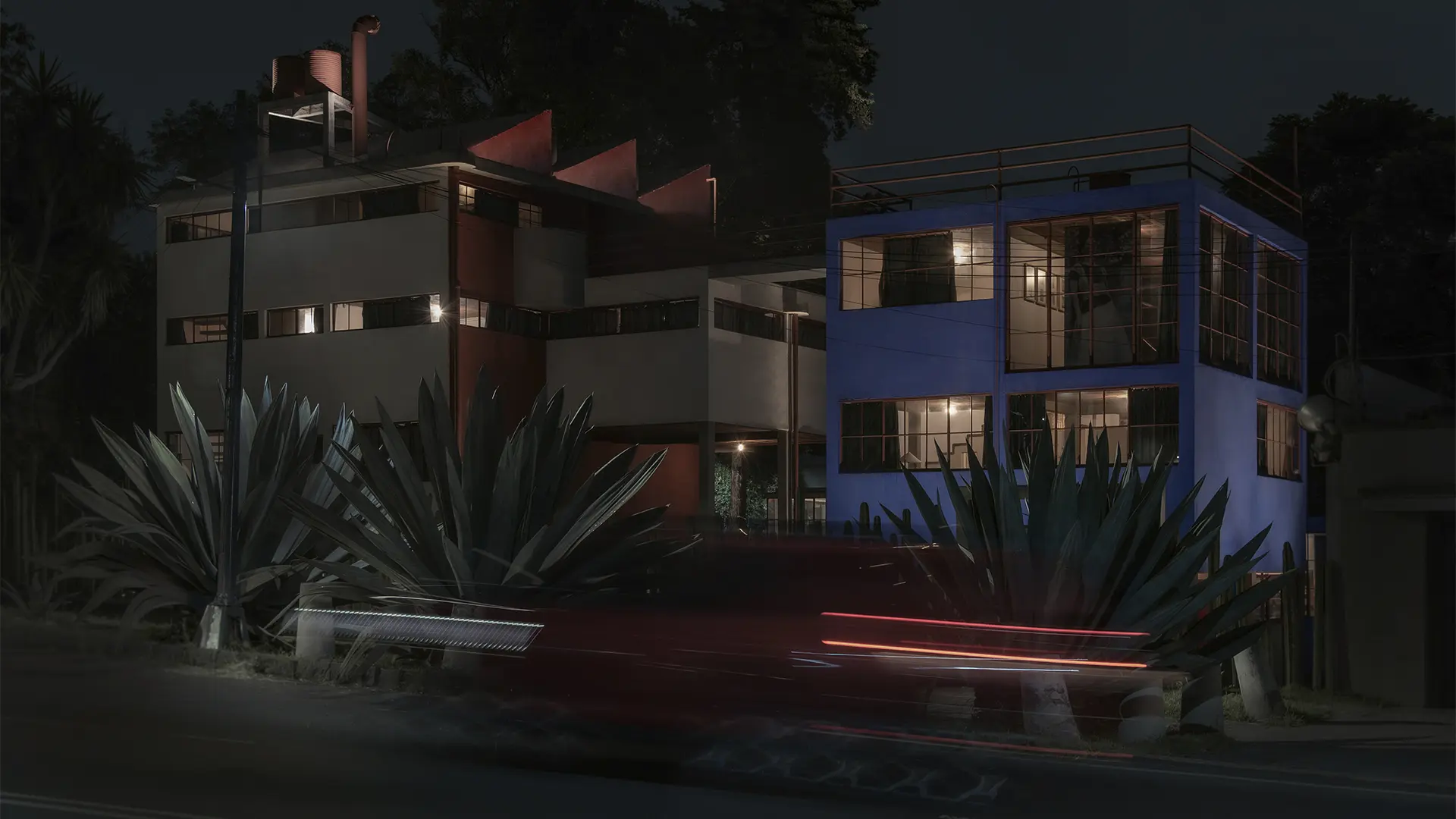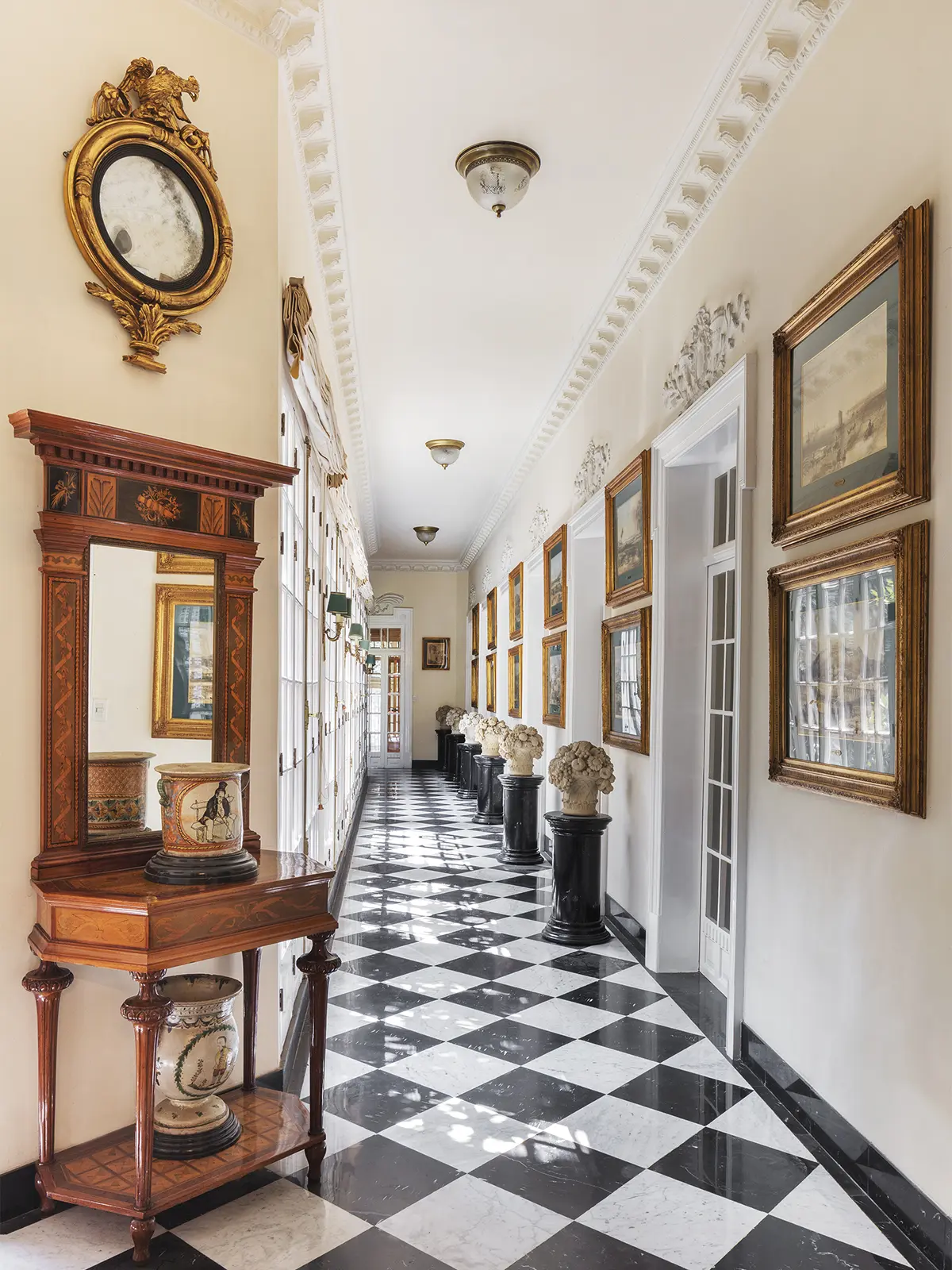

Without a doubt, the Guillermo Tovar de Teresa House, a Porfirian mansion located in the heart of the Roma neighborhood, is one of the most visited attractions in Mexico City.

A living remnant of the Porfiriato
This place stands out both as a work of architecture and as a museum of antiquities. Its walls and façade are a living reminder of the Porfiriato era and its quest for modernity.
First saved by Guillermo Tovar de Teresa himself and later acquired by the Carlos Slim Foundation, the house has become one of the capital’s premier art destinations. However, it is also a physical testament to a man who, like few others, knew his country’s history.

But… who was the enfant terrible of history and art in Mexico?
In the modern Roma neighborhood, a typical Porfirian house with a facade dating from 1910, purchased by Guillermo Tovar de Teresa in 1995, served as his home until 2013
According to historical records, Guillermo Tovar de Teresa (1956–2013) was a Mexican historian and chronicler. He displayed remarkable intellectual precocity.
He was seven years old when President Adolfo López Mateos awarded him a medal for his dedication to the study of history and art in Mexico. At age eleven, he was invited by Jorge Gurría Lacroix to work at the National Institute of Anthropology and History. At thirteen, he served as an artistic advisor to Gustavo Díaz Ordaz. At fourteen, he was giving lectures at the Institute of Aesthetic Research at UNAM.

When he was 23, he published *Renaissance Painting and Sculpture in Mexico*, the first volume of a series that eventually grew to include more than thirty books on the country’s art and history.
He died in November 2013 at the age of 57.
We tend to view the work of historians as that of pure observers. However, in the specific case of Tovar de Teresa, the house he restored can be seen as a creative endeavor and a reflection of his own perspective on Mexico.
The House: A Remnant of the Porfiriato Era in Mexico City
Under the Porfiriato regime , Mexico City (or at least part of it) underwent a period of modernization marked by a trend toward Frenchification. This Parisian influence manifested itself in buildings that are now iconic and in a new conception of bourgeois life that transformed entire neighborhoods.
The architecture clearly sought to blend technical modernity with European refinement. A prime example of this is the Guillermo Tovar de Teresa House, which was built around 1910. It sits on a 600-square-meter lot and has a floor area of over 900 square meters.
Its façade is attributed to engineer Gustavo Peñasco, a prominent figure of the late Porfirian era, while the interior design is the work of architect Manuel Francisco Álvarez.

Furthermore, the layout is representative of the residential architecture of the period: an entrance hall dominated by a Venetian mirror from 1817 crafted in Puebla, a checkered hallway, and a Victorian garden. Every part of the house is adorned with turn-of-the-century furniture.
What is life like for a historian who has decided to become a witness to modern Mexico?
Our character bought the house in 1995. The place was practically in ruins. So the historian undertook a major restoration project: he modernized the electrical and plumbing systems, knocked down some walls to improve natural light, and built his own library. The work was not limited to restoring the building; rather, he interpreted the spirit of the era and breathed new life into those walls.

Viewed as a museum, the house showcases an impressive collection and architecture. However, when we imagine daily life within those French-style hallways, we can also sense the warmth of a home: there is a living room where one could chat with friends, a bedroom where one can rest, and a small study that anyone would love to have as an intellectual laboratory.
Casa Tovar Today
After his death, the family began cataloging the collection. Eventually, the Carlos Slim Foundation acquired the house along with the entire collection.
As of December 2019, the space now serves as one of the three locations of the Soumaya Museum. Today, visitors can explore a collection featuring paintings, sculptures, engravings, unpublished photographs, antique furniture, tapestries, foreign tableware, and a library of twenty thousand volumes.
Learn about other house museums in AW Magazine.
To keep exploring this thread, visit architecture in transit; you can also continue through heritage architecture with memory.