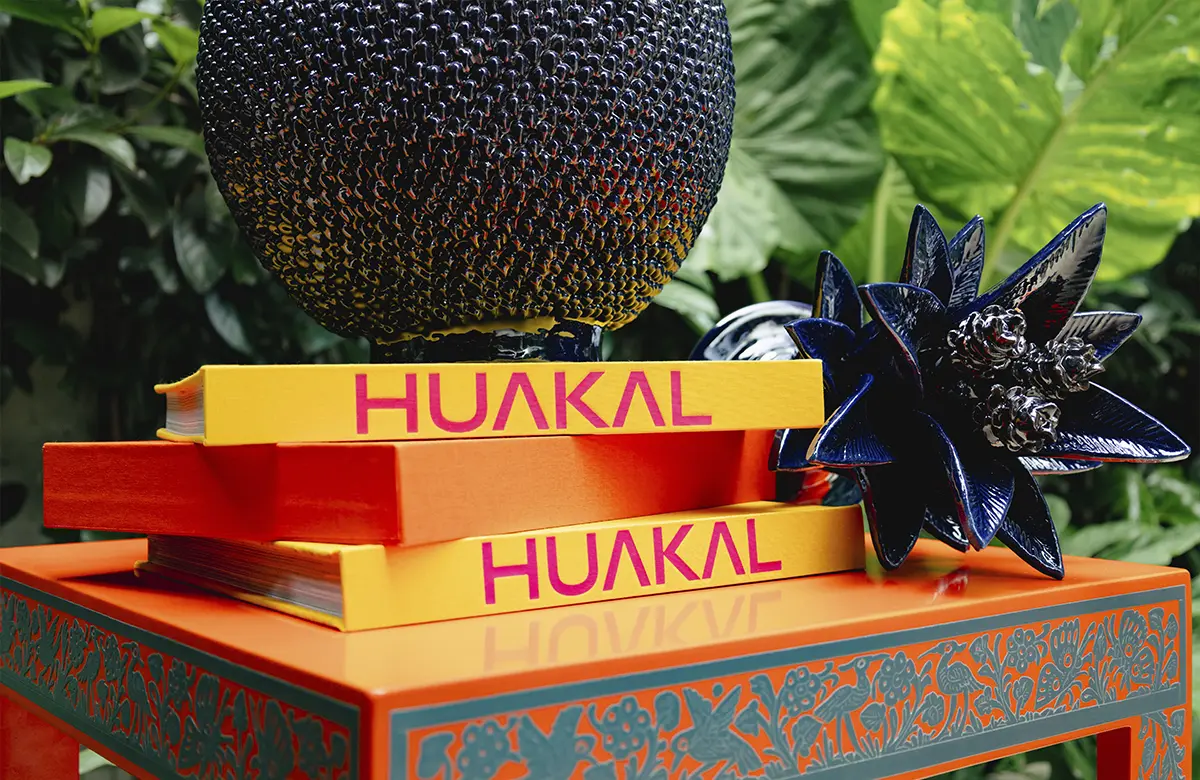

With the aim of bridging the gap between Mexican high-end craftsmanship and contemporary thinking in architecture and interior design, Huakal presents its first publication, which explores Mexico, its artisans, and their stories to offer a thoughtful and mindful look at a selection of master artisans.
Without intending to turn this publication into an exhaustive compendium or an attempt at classification, Huakal invites us to take a look at the workshops of twelve artisans who, through these images, share their worlds, their tools, and their creative processes with us. “This work is an invitation to look more closely, to choose with intention, and to understand that each handcrafted piece is a living presence within a space: a testament to time, territory, and accumulated knowledge that, when joined with other voices, silently transforms the way we inhabit this world,” said Annette Arellano, director of Grupo Huakal.

Artisanal Diversity
Each teacher introduces us to a unique craft technique. Albertina tells us about her sculptural clay jaguars; Juana and Felipe demonstrate the waistloom and pedal loom, respectively; Neftalí surprises us with his carved wooden tonas and nahuales; Diana and Eduardo show us the beauty of Michoacán clay pinecones; Pedro tells stories through his painted amate paper; Eli and Jaime create mythical and fantastical clay figures; Érick brings to life clay skeletons inspired by the ingenuity of José Guadalupe Posada; Óscar sculpts stone; Ceci’s work makes us fall in love with Mexican textile art; Aída and Cristino tell us about the magic of repujado; Norberto and Rosi also work with clay to create sophisticated, artistic pieces. Finally, we conclude this visual journey with Fredy, an artisan who works with chuspata to produce objects and furniture that bring natural warmth to any space.
“Materials come from somewhere: wood from a landscape, clay from a specific piece of land, fibers from plants that grow under certain climate and soil conditions. Even when materials travel or are transformed, they retain something of their origin. Every object is, in a sense, a fragment of territory,” said Sonya Santos, executive director of FONART, who wrote one of the book’s several forewords.
Casa Huakal: A Celebration of the Extraordinary

Located in Mexico City, Casa Huakal served as the venue for the presentation of the book *Huakal*. There, Annette Arellano, Sonya Santos, and MariCarmen Pérez—who directs the sister project Kalimori—welcomed several of the artisans who collaborate with Huakal and are featured in the book, as well as other guests.
At Casa Huakal, the crafts are the true stars of the space and the conversation. In every room, these masterful pieces coexist with contemporary furniture, demonstrating that craftsmanship can be seamlessly integrated into the modern home, thereby lending symbolic depth and enduring value. “I like to think that quality craftsmanship produces a quiet luxury. It is not based on rarity, but on precision. It’s not based on accumulation, but on moderation. In an interior, it’s recognized in the continuity of materials, in well-executed details, and in the way that use enhances the piece,” said Tomás Alía, a Spanish interior designer. “When you work this way, craftsmanship doesn’t compete with architecture. It complements it, humanizes it, and makes it last,” he concluded.

It is worth noting that donations received through the book will be allocated, via the Kalimori Foundation, to projects that promote the social integration of people with intellectual disabilities. At the same time, according to its director, Huakal works directly to help improve the economy of artisan communities by promoting fair, sustainable, and long-term relationships.

About Huakal…
Huakal is a high-end Mexican artisanal brand that works closely with artisan communities to create exceptional pieces that blend tradition with contemporary design. Based in Mexico City and Madrid, Spain, every piece featured at Huakal draws inspiration from roots, tradition, and the land, with the goal of telling stories that connect artisans with those who purchase their work. Since they are entirely handmade, each creation is unique; their imperfections are not flaws, but rather part of the authenticity and character of each object.
Discover more exclusive interviews about art and performance in AW Magazine.