
“It’s my mom’s birthday,” a girl—who appeared to be French (we later confirmed she was)—told two of the mariachi musicians who were providing entertainment at the reception organized by Cerámica Suro during the recent Estación Material Vol. 5, in Guadalajara. “Vous pouvez chanter une chanson en français à ma maman, s’il vous plaît?” she asked them: “Could you sing a song in French for my mom, please?”

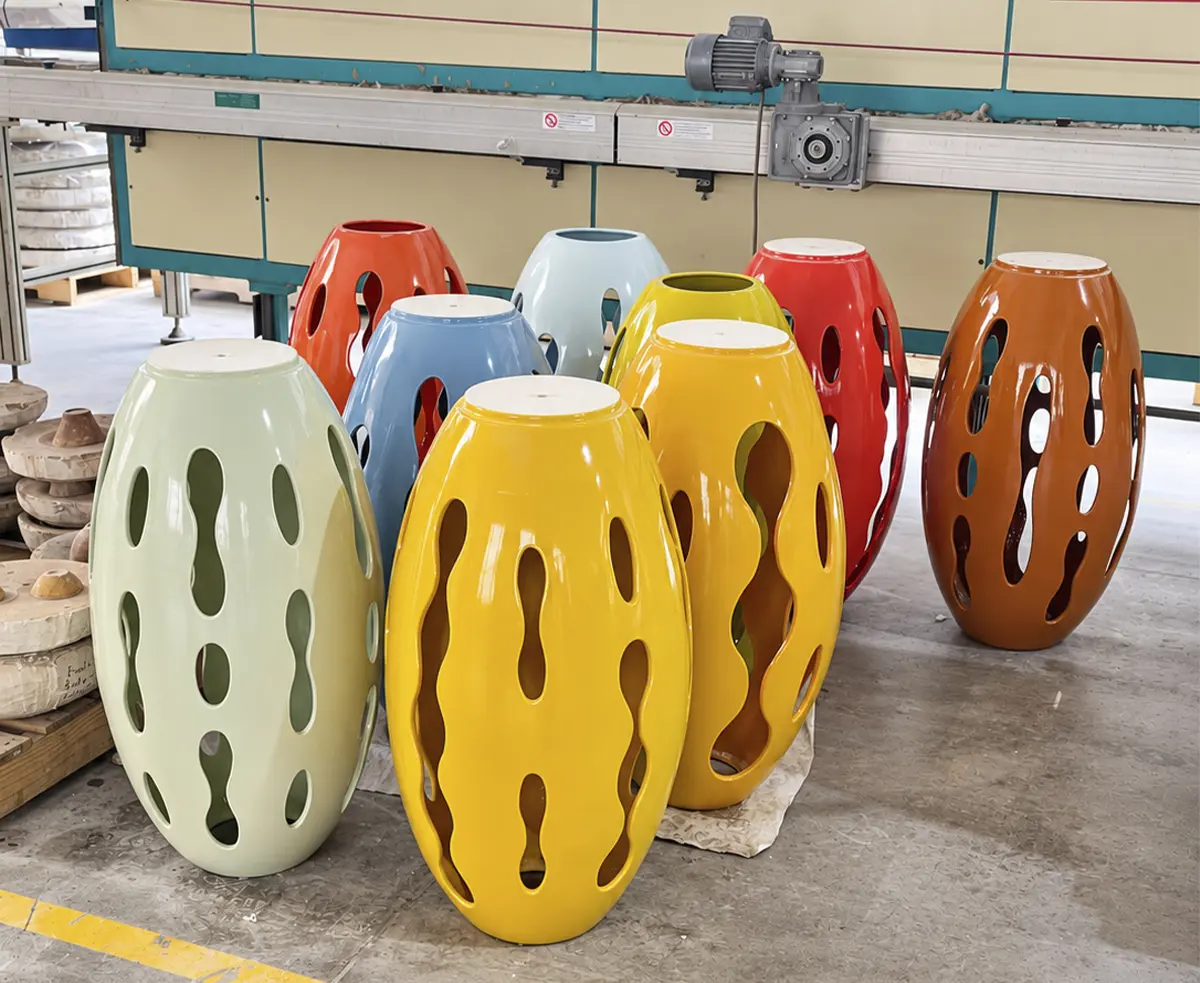
This was the atmosphere at Cerámica Suro, located at 1006 Calle 5 in the Colón Industrial neighborhood of Guadalajara. Amid tortas ahogadas, seasonal fruits, and beers, the factory opened its doors to those who had come to the city for the fair.
“We’re hosting a cocktail party and opening the factory to visitors. We support Material, but it’s now a city-wide project; we’re very pleased to have hosted the first two fairs at the factory and to see how it has taken root in the community,” José Noé Suro, director of Cerámica Suro, told us.
After lunch, Karla Torrescano, a member of the Suro team, welcomed us and invited us into José’s office. While the mariachis and the guests’ conversations could still be heard outside, Suro took a break from his duties as host to talk with Art Weekends about ceramics, the artists, and the factory’s work.

Suro Ceramics: From Guadalajara to Contemporary Art
What catches the attention of foreign visitors the most when they arrive at Cerámica Suro?
In addition to tequila and mariachi music, what appeals to them most is having seen these projects in different parts of the world and then visiting the places where they were created to understand the processes involved. Pottery is indigenous to this region, with a tradition dating back centuries.
What keeps ceramics relevant in contemporary art?
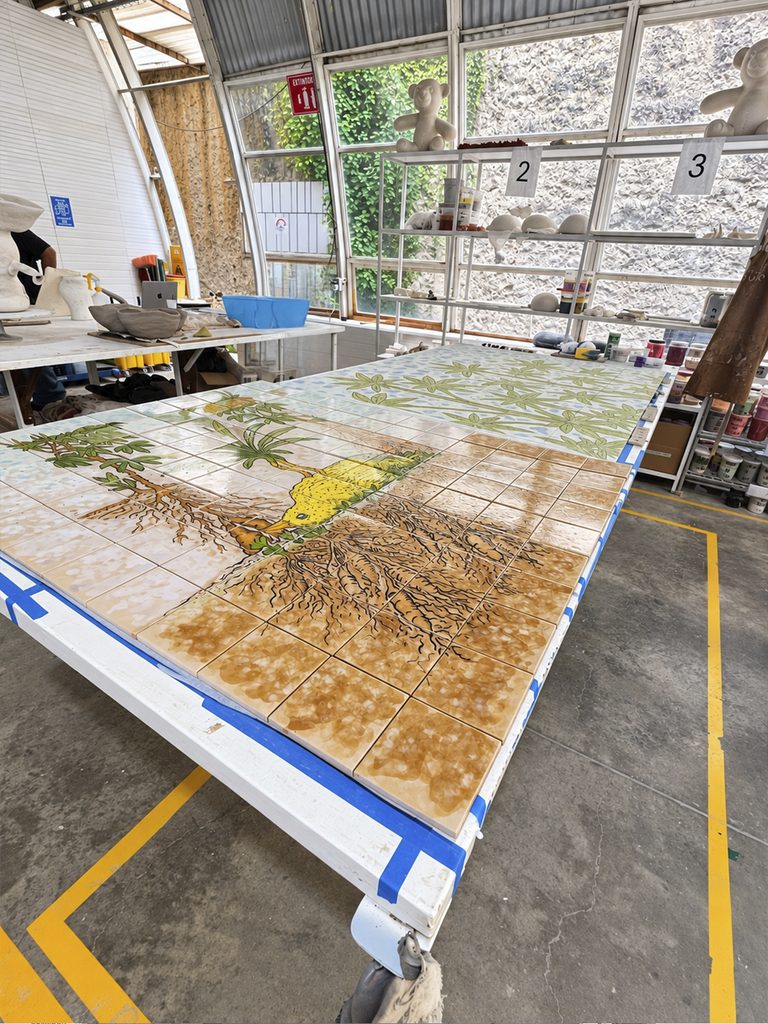
I think it has to do with the fact that artists are interested in creating work in this medium. Ceramics has many virtues as well as challenges, which is what keeps it relevant. But I think it’s experiencing its most significant moment in recent years; there are so many people working in the field at all levels. For our part, we’ve developed the capacity to produce increasingly large and ambitious projects, which is attracting the attention of artists.
What catches artists’ attention the most? Is it the organic aspect or the value of the material?
It’s mainly a matter of scale in the projects we’re involved in. Furthermore, it’s a very high-quality material: once installed, it requires minimal maintenance and doesn’t fade, remaining in perfect condition for centuries. I don’t think there’s a single reason, since we work with artists who use a wide variety of techniques without limiting their work to our production process; we adapt our processes to the artist’s practice rather than to that of the workshop.

In other words, do space and process not define the artist, but rather go hand in hand with him?
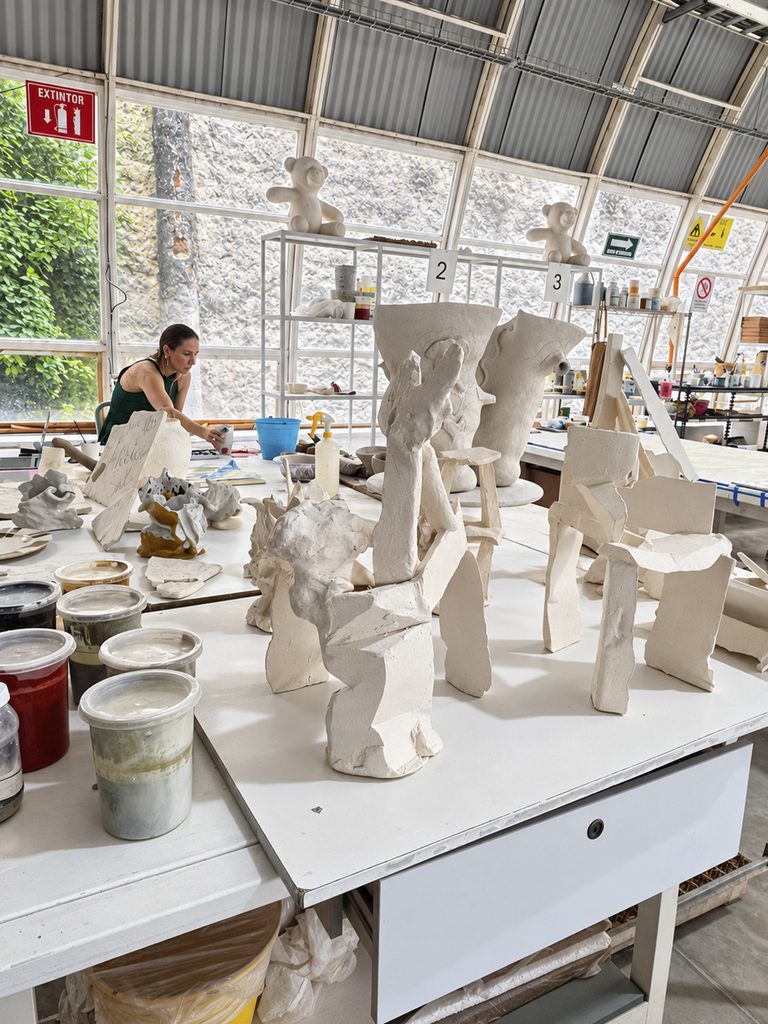
Yes, we develop techniques and processes to ensure that the final piece resembles the artist’s original vision as closely as possible, unlike traditional processes that leave their own mark on the artwork.
Tradition and Technology in Ceramics Production
Although it is a durable material, the processes have changed. How has ceramics evolved over the past 25 years?
Ceramics remain essentially the same—water, clay, and fire combined—but production methods, capabilities, and product development have changed dramatically over the past 25 years.
A think tank for artists, architects, and designers
Cerámica Suro is described as a “factory of ideas.” How does that concept play out in practice?
We strive to ensure that anyone who comes to us with an idea leaves with a project or a finished piece. The most important thing for us is to bring the ideas of clients, artists, architects, and designers to life as faithfully as possible to how they were originally conceived.
How does an idea in the analog world of ceramics engage with the contemporary environment and tools such as artificial intelligence?
There is no conflict. We can use technology as a design tool to improve processes, but ceramics are static objects: they are analog projects that become physical realities and end up as a wall, a pool, a ceiling, a bathroom, or a shower stall.
In addition to its physical properties, ceramic offers many aesthetic options. What are they?
There are many types with different properties: low-temperature, high-temperature, terracotta, porcelain, stoneware, and porcelain stoneware.
José Noé Suro: Working with Artists and Expanding the Material’s Possibilities
Do you work only with established artists, or with emerging ones as well?
We work with both the world’s most prominent artists and young artists who have never exhibited their work. What matters to us isn’t the artist’s track record, but rather that the project makes sense, interests us, that we trust the artist, and that we see potential in them.
Did you ever imagine you’d reach this point when factory work began to merge with art?
I didn’t have a point of reference, but I knew it was the path I had to take because I needed the inspiration that comes from talking and working with artists. It’s taken us 30 years, and we’re in a good place, but we still hope to take on more ambitious projects and offer more opportunities.
What are your main challenges and goals right now?
The biggest challenge is to consolidate, train, and develop leadership within our team so we can grow, while at the same time adapting and implementing new technology and manufacturing infrastructure.
Learn more Centenary Arts and its intersections with contemporary art in AW Magazine.