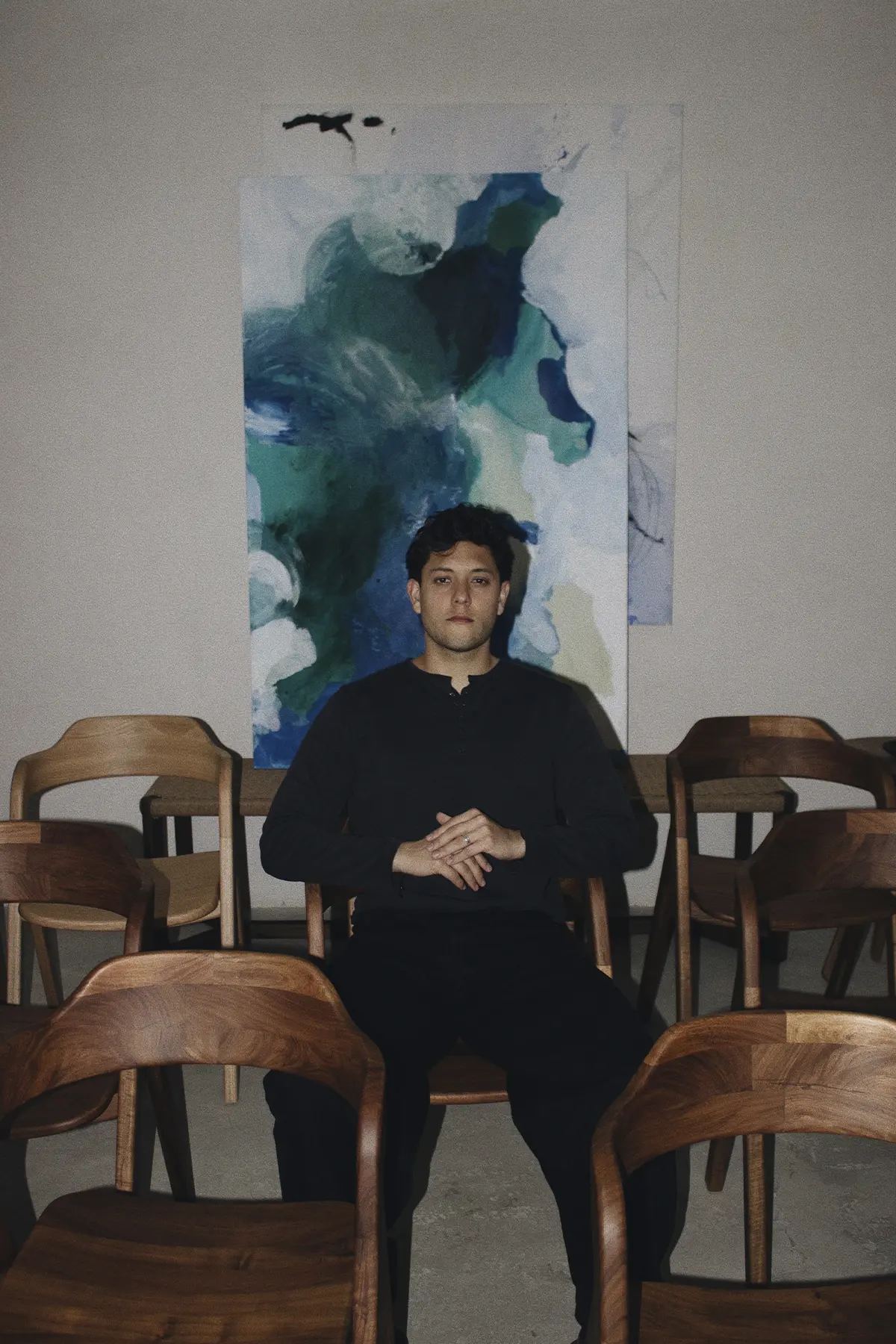
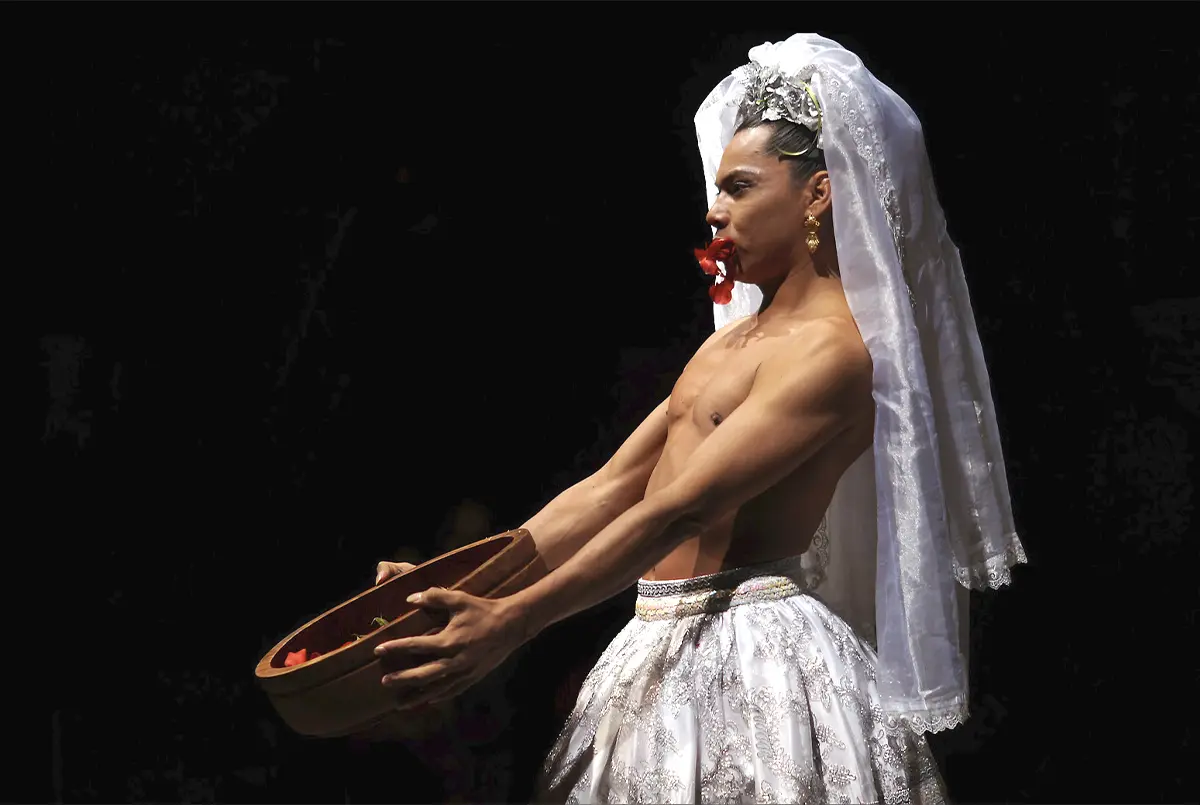
To understand Doctor Nativo. It is said that Chavela Vargas once remarked that Mexicans were born wherever we pleased. And while her remark had a touch of that folksy anarchy that characterized her, it also contained a certain wisdom.

Just think of figures like Luis Miguel, who was born in Puerto Rico but, for practical reasons, claimed to be from Veracruz. Or Carlos Fuentes, the writer born in Panama; as well as Miguel Bosé, Panamanian by birth but more Spanish than La Gran Vía. Identity in Latin America seems to be shaped more by cultural affinities than by geographical boundaries.
Doctor Nativo and the Ancestral Bridges
Doctor Nativo is in the same boat. He was born in Guatemala—and rightly hates the lame joke, “Oh, you’re from Guatepeor”—but he lives in San Cristóbal, Chiapas, where he feels right at home. “It’s a border, but I’m really only about seven hours from my hometown, which is Tenango, Guatemala,” he explains. For him, without a political border, everything would be one nation. As Carlos Fuentes once said, the border is made of glass. He even prefers the term “Guatemaya,” a fusion of Guatemala and Mayan culture.
The son of a Cuban father and a Guatemalan mother, Doctor Nativo seeks to reflect in his music the brotherhood between Latin American nations. His new album, *BarrioKandela*, attempts to weave that ancestral bridge which, to be honest, has always existed. *BarrioKandela* is almost a declaration. An ancestral bridge spanning between Guatemaya (yes, you read that right…) “and Mexico that resonates with the streets and the living memory of a shared territory and pulse.
Oral tradition and modernity
The album was recorded in Belize, Mexico City, and at the studios of their Canadian label, Stone Tree Records. It is a blend of local influences that includes a Mexican orchestra, Guatemalan marimbas, reggae, and a collaboration with Roco Pachukote of La Maldita Vecindad and Los Hijos del Quinto Patio on the track “Caminantes.”

“When it comes to the lyrics, there’s an oral tradition and a strong sense of modernity. I always try to have something to say, a powerful message, or something meaningful,” he says. The album also features lyrics in Tz’utujil, a language widely spoken in the region.
There are also stories that enrich this musical world. One of them involves Chava Haze, who plays the marimba in Doctor Nativo’s band and also raps in indigenous languages. He is the heir to a long tradition of marimba players: his great-grandfather was one of the first native marimba players—because he doesn’t like to say “indigenous,” he clarifies—in Guatemala.
Haze says that when his grandfather went to play, he had to climb up to where some elderly people lived in the mountains, through narrow alleys in the middle of the hills. Sometimes they played for up to 15 hours straight, without stopping. To keep going, they would roll a very long cigarette by rolling several together, and smoke it nonstop while they kept playing.
Doctor Nativo: Between the Maya Indigenous People and the Cuban Resistance
“I don’t like the word ‘indigenous’; that was a mistake made by the conquistadors. I prefer ‘native,’ because it means ‘of the place,’” explains our interviewee. “Excuse me, but Indians are from India.”
The artist answers questions about identity and symbols with ease and pride. That’s why his beret—very much in the style of Che Guevara, but with a heart instead of a red star—catches the eye. “I’m not Che, nor am I a saint or a shaman, but there’s something of that behind me. I come from a revolutionary family: my father was in the Cuban resistance, but he left a revolution that turned into a dictatorship.”
He himself witnessed the suffering of his people, who had been forced into exile. In a moment of clarity, he decided to travel to Havana at the age of 19 to study at the National School of Art, driven by a desire to understand his father’s roots. However, there too he witnessed repression.
After being expelled from school, he went to live with Cuban families in a neighborhood in Buenavista, Cuba, where he experienced firsthand the daily life and hardships of living on limited resources.

AKM rifles and skepticism
Faced with the idea of a possible intervention by Donald Trump on the island, his stance is critical and skeptical. He views that possibility almost as a joke. Silvio Rodríguez, the legendary Cuban protest singer, posted on social media that he wanted a rifle to defend Havana in the event of an attack: “I demand my AKM if they attack. And let it be known that I mean this very seriously.” Following his statements, Cuba’s Ministry of the Revolutionary Armed Forces (MINFAR) presented him with the weapon in a ceremony broadcast on Cuban television.
Doctor Nativo couldn’t disagree more: “I believe that liberation and revolution have to be personal; the idea that the entire country is going to take up arms against an empire like the United States is madness.”
“It’s not that we just pick up random things wherever we travel; it’s also about experiences and even recipes,” he says. “Music is about instruments, ideas, words, and melodies. In the United States, they don’t understand that concept: that of the traveler, who is someone who isn’t just traveling, but who, at the same time, has a mission.”
The heart of the album beats in “Chocolate Kakaw,” featuring the Maya rapper Chavahaze, an almost ceremonial piece that celebrates cacao as a sacred symbol, a food, a medicine, and a source of identity. The artist has been invited to the Reunión de las Tribus in Panama for three consecutive years.
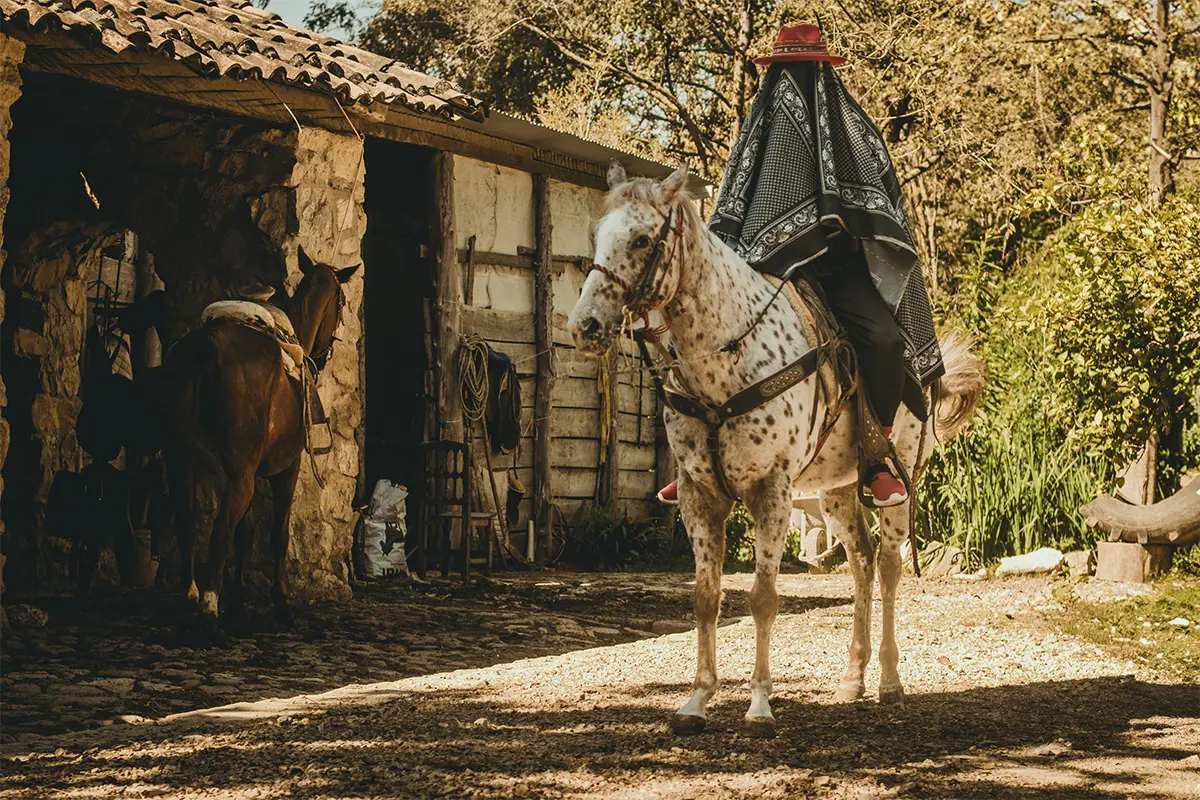
“There we performed a ritual with a shaman, with an ajiquijá—as the elders who tend the fire in Guatemala are actually called—; we performed the Mayan warrior ritual, which lasts from midnight until six in the morning and begins by consuming cacao as the Mayans did: very strong, something that truly opens your heart,” he recounts.
“Unlike ayahuasca, which can sometimes pull you out of your reality, cacao grounds you more and helps you stay centered; it also opens your heart to bring things to the surface—if you’re afraid of the dark, for example, you acknowledge it and face it.”
Doctor Nativo’s Latin Resignation
And at the end, there’s a ritual performed facing the sea, because that’s where the “Latin renunciation” lies: it’s between the jungle and the sea. “That’s where I also incorporate Afro-Cuban elements, because I inherited that part through my Cuban family, right? So, in the end, it’s all like an amalgamation of traditions that are really well captured on the album.”
At the end of the day, it’s clear that there are regions where passports don’t exist and where identity is forged through experiences, a reclamation of ancestral roots, and that musical syncretism that nourishes our forebear and, of course, bequeaths to us sounds we didn’t know could be fused with such natural ease as Doctor Nativo does. Whether we like it or not, there are artists who foster identity and who still believe in inner revolutions with reggae and marimbas as the soundtrack.
To keep exploring this thread, visit cultural perspectives from Latin America.