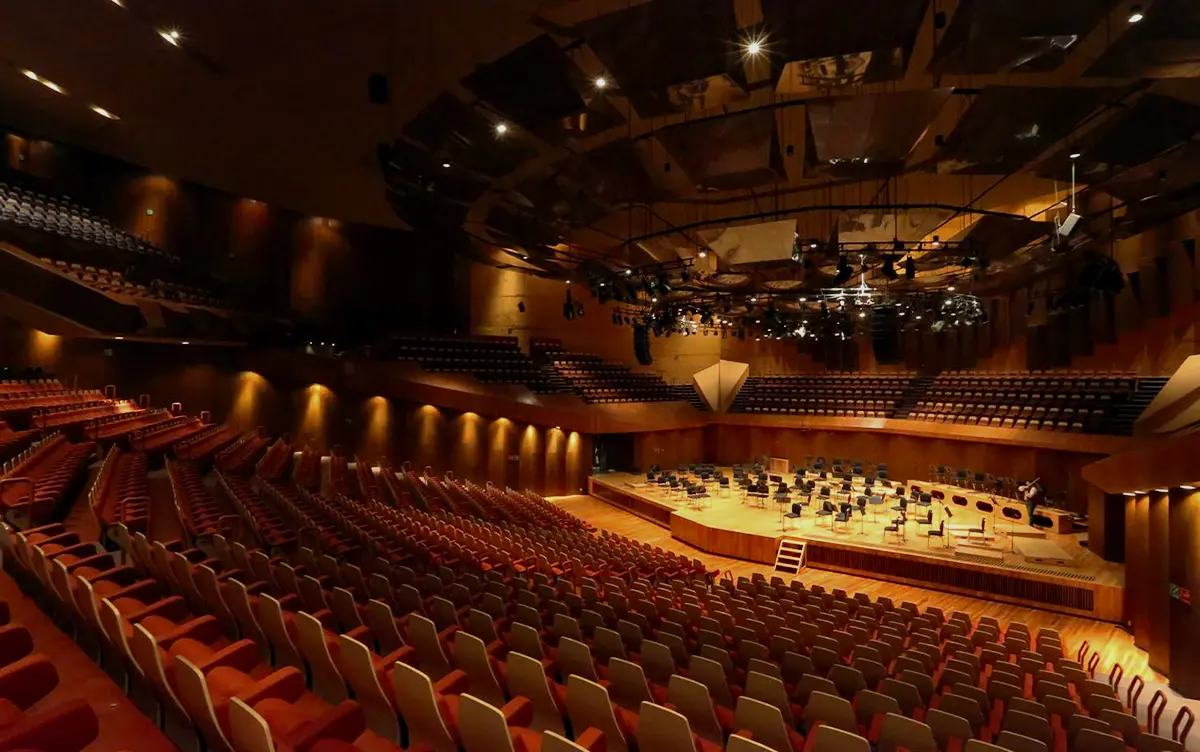

La Sala Nezahualcóyotl es uno de los recintos musicales más importantes de México y América Latina. Se encuentra en la Ciudad de México, al sur de la Ciudad Universitaria de la UNAM.
En 2026 se cumplen 50 años de su inauguración. Durante este medio siglo, la sala se ha consolidado como una pieza invaluable de la ingeniería acústica y como un símbolo de la arquitectura contemporánea en México. En cada concierto, los visitantes y melómanos nos envolvemos en su sonido y en el legado de los compositores clásicos.

La Sala Nezahualcóyotl: ¿por qué es tan especial?
La Sala Nezahualcóyotl forma parte del Centro Cultural Universitario, el mismo espacio que alberga el Museo Universitario de Arte Contemporáneo (MUAC), el Teatro Juan Ruiz de Alarcón, las salas de cine Julio Bracho, José Revueltas y Carlos Monsiváis.
Fue inaugurada el 30 de diciembre de 1976. Desde entonces se convirtió en la sede de la Orquesta Filarmónica de la Universidad. Cuenta con una capacidad para 2 mil 177 espectadores.
El recinto cuenta con un estilo tipo “viñedo”. Su diseño es circular. Los oyentes rodean el escenario. La relación clásica entre los músicos y la audiencia aquí no existe. El público se sumerge en el concepto acústico de una música que viaja en círculos.
Arriba del escenario, la sala tiene un grupo de paneles de acrílico suspendidos. Su función es dirigir el sonido hacia la audiencia. Cada nota, cada instrumento rebota en el cuerpo del espectador. Además, la Nezahualcóyotl posee muros en forma de zigzag que favorecen la reverberación de la música. Las butacas cuentan con un respaldo diseñado para llevar el sonido hacia los oyentes.
En la parte superior del escenario destacan dos símbolos fundamentales de la historia universitaria, que parecen mirarnos: el escudo de la Real y Pontificia Universidad de 1551, por un lado, y el emblema creado durante el rectorado de José Vasconcelos en 1921.

Cómo y quiénes hicieron La Sala Nezahualcóyotl
Javier Jiménez Espriú es un ingeniero, académico y político mexicano. Entre 1973 y 1977 fungió como Secretario General Auxiliar y Administrativo de la UNAM. Durante su gestión se construyó la Sala Nezahualcóyotl.
Pero no fue el único actor en el proceso. Entre los principales autores de la sala destaca Eduardo Mata, director de orquesta y una de las figuras musicales más importantes de México en el siglo XX. En entrevistas, Mata siempre fue mesurado y analítico. Sin embargo, al subir al escenario, se convertía en un monstruo. Difícilmente podemos encontrar interpretaciones tan inteligentes y emocionales de compositores como Silvestre Revueltas o Modest Mussorgsky.
Mata luchó durante años, y frente a varias instancias, para que la orquesta universitaria tuviera un recinto propio. Buscaba un espacio a la altura de las salas internacionales, esas que él conocía tan bien. Su visión estética y musical influyó directamente en el carácter íntimo del recinto y en la importancia que se dio a la calidad del sonido.
Para establecer el concepto sonoro de la sala, Eduardo Mata llamó a Christopher Jaffe, el acústico estadounidense reconocido por sus innovadores diseños en materia de salas de concierto y distribución del sonido. Jaffe es el responsable de diseñar los paneles superiores del escenario.
Los arquitectos Arcadio Artis y Orso Núñez se encargaron del interior. Ellos convirtieron las ideas de Christopher Jaffe en una realidad arquitectónica funcional y visualmente impresionante.
El resultado final es un espacio donde la arquitectura contemporánea en la Ciudad de México se encuentra con la ciencia acústica y con la tradición universitaria, un cruce disciplinario que define el valor cultural del recinto.

Después del concierto, ¿a dónde vamos?
El Festival Internacional de Piano de la UNAM se ha llevado a cabo entre enero y febrero de 2026. La sede de los conciertos y los eventos será la Sala Nezahualcóyotl. Los melómanos mexicanos podremos escuchar a pianistas como Fernando García Torres, Daniela Liebman, Sophia Liu, entre otros.
Después de los conciertos, es posible disfrutar de la curaduría del MUAC y comer en el legendario restaurante Azul y Oro.
Descubre otros espacios culturales en AW Magazine.
-unam
Encuentra más historias como esta explorando arquitectura contemporánea y patrimonial; también puedes continuar por arquitectura patrimonial con memoria.