
Fernández-Braso occupies about 400 square meters at Villanueva 30, near the Retiro Park and the National Archaeological Museum. David Fernández-Braso runs the gallery, and his brothers Miguel and Manuel serve as assistant directors. The family also preserves the archives of *Guadalimar*, an art magazine founded by Miguel Fernández-Braso in 1975, along with the books, monographs, and catalogs published since the *Rayuela* years.
Gallery Profile
Miguel Fernández-Braso (Villanueva del Arzobispo, Jaén, 1940) entered the art world through journalism. He wrote about culture for *Pueblo* and *ABC* and interviewed numerous Spanish artists before opening his first gallery. In 1971, he founded the Rayuela bookstore-gallery on Tutor Street in Madrid with Carmen Muro.
The first exhibition, *A Realistic Proposal*, brought together four artists who at the time had very different careers: Alfredo Alcaín (Madrid, 1936), a painter and printmaker who would later receive the National Prize for the Visual Arts; Alberto Corazón (Madrid, 1942–2021), an artist and graphic designer who played an active role in the renewal of Spanish design; Luis Gordillo (Seville, 1934), who in those years worked in a figurative style close to Pop Art; and José Orcajo (Segovia, 1948), painter, illustrator, and draftsman. Rayuela later moved to Claudio Coello.
In 1975, Fernández-Braso founded *Guadalimar*. The magazine was published every two months and, for twenty-seven years, featured articles on exhibitions, interviews, art criticism, and special issues dedicated to specific artists. Issue No. 10 was seized by court order after publishing a special feature on eroticism, art, and politics—an episode that Fernández-Braso himself recalled decades later in an interview with El País.
In 1980, the Juan Gris Gallery opened, named after Juan Gris (Madrid, 1887–Boulogne-sur-Seine, 1927), one of the leading Spanish painters associated with Cubism and a contemporary of Picasso and Braque. Carmen Muro continued to run Rayuela while Fernández-Braso focused his efforts there as a gallerist and continued his publishing work.
In 2011, Fernández-Braso opened at Villanueva 30. David Fernández-Braso took over as director, and his brothers Miguel and Manuel joined as assistant directors. The first exhibition was dedicated to Pablo Palazuelo (Madrid, 1916–Galapagar, 2007), a painter and sculptor whose geometric abstraction had occupied a central place in postwar Spanish art for decades.
Why Go
One of Fernández-Braso’s distinctive features lies in the documents he has produced and preserved for more than fifty years. Magazines, books, and catalogs allow us to revisit interviews and exhibitions held when some of the artists now featured in Spanish museums were still in the middle of their careers.
In 1978, Ediciones Rayuela published *La realidad en Antonio López García*, written by Miguel Fernández-Braso. Antonio López (Tomelloso, 1936) was 42 years old at the time. The painter and sculptor from La Mancha had been working for two decades with models, interiors, objects, and views of Madrid, but it would still be years before institutions such as the Reina Sofía Museum and the Thyssen-Bornemisza Museum would dedicate major exhibitions to him. The 107-page book reviewed his training, his work, and the exhibitions he had held up to that point. The press at the time presented it as the first comprehensive study dedicated to the artist.
Guadalimar also allows us to follow artists who worked from very different perspectives. Pablo Palazuelo explored the possibilities of geometry; Antonio Saura (Huesca, 1930–Cuenca, 1998), founder of the El Paso group, had been developing, since the 1950s, a style of painting dominated by distorted human figures and a very limited color palette; and Eusebio Sempere (Onil, Alicante, 1923–1985) worked with geometry, light, and optical effects. The magazine published interviews, essays, and special issues dedicated to them.
That archive is currently available through Fernández-Braso. It includes issues of *Guadalimar*, the *Cuadernos Guadalimar* devoted to a single artist, books published by Rayuela, and catalogs related to the family’s exhibitions.
What to Expect
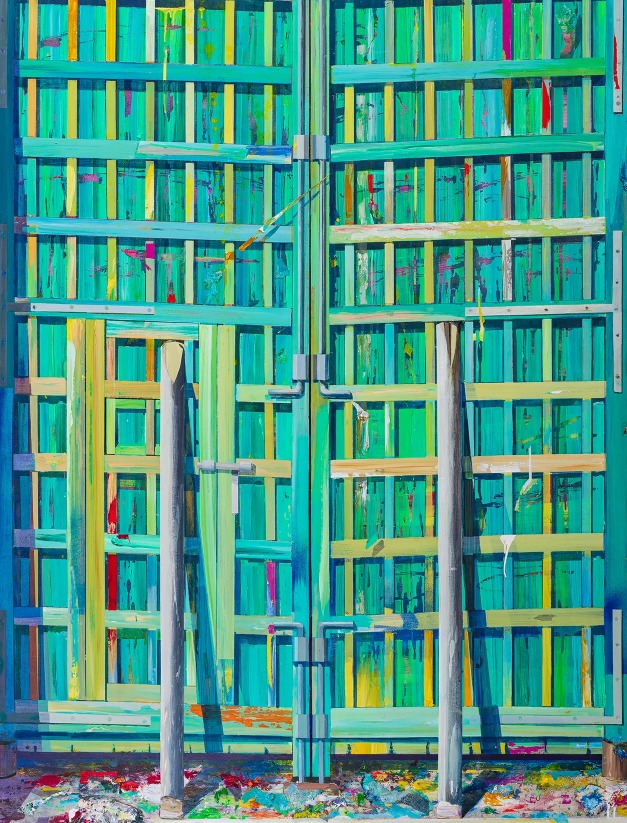
Elena Goñi (Pamplona, 1968) presents her first solo exhibition at Fernández-Braso, featuring paintings created between 2024 and 2026. Before studying Fine Arts at the University of Salamanca, Goñi attended the School of Arts and Crafts in Pamplona. There, she studied under Isabel Baquedano (Mendavia, Navarre, 1929–Madrid, 2018), a painter who taught drawing and painting in Pamplona for decades, and Juan José Aquerreta (Pamplona, 1946), an artist known for his portraits, interiors, and landscapes who received the National Prize for Plastic Arts in 2001. Goñi completed her degree in 1993. In 2000, she won the first edition of the ABC Painting Prize, and two years later she received a fellowship from the Ministry of Culture to work at the Colegio de España in Paris.
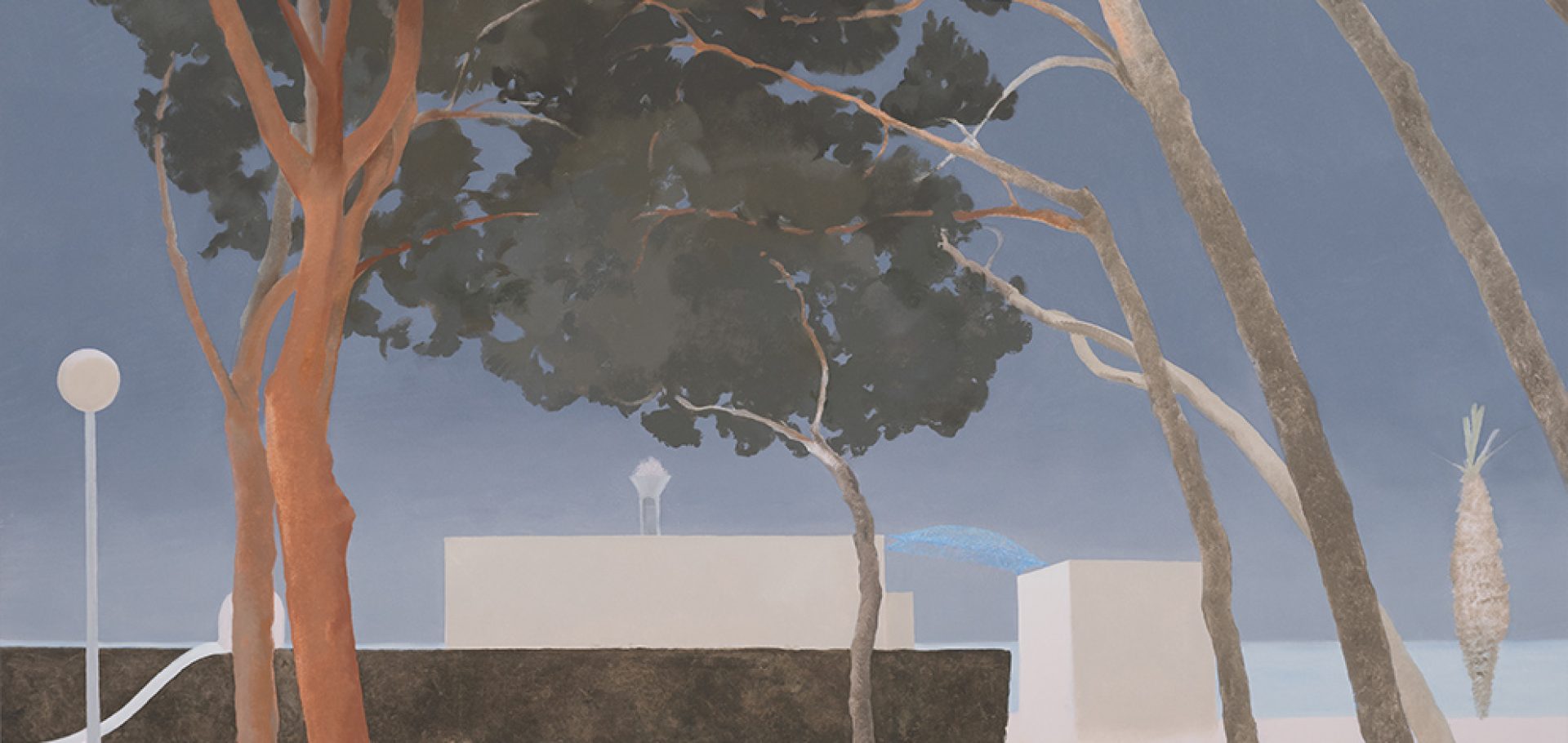
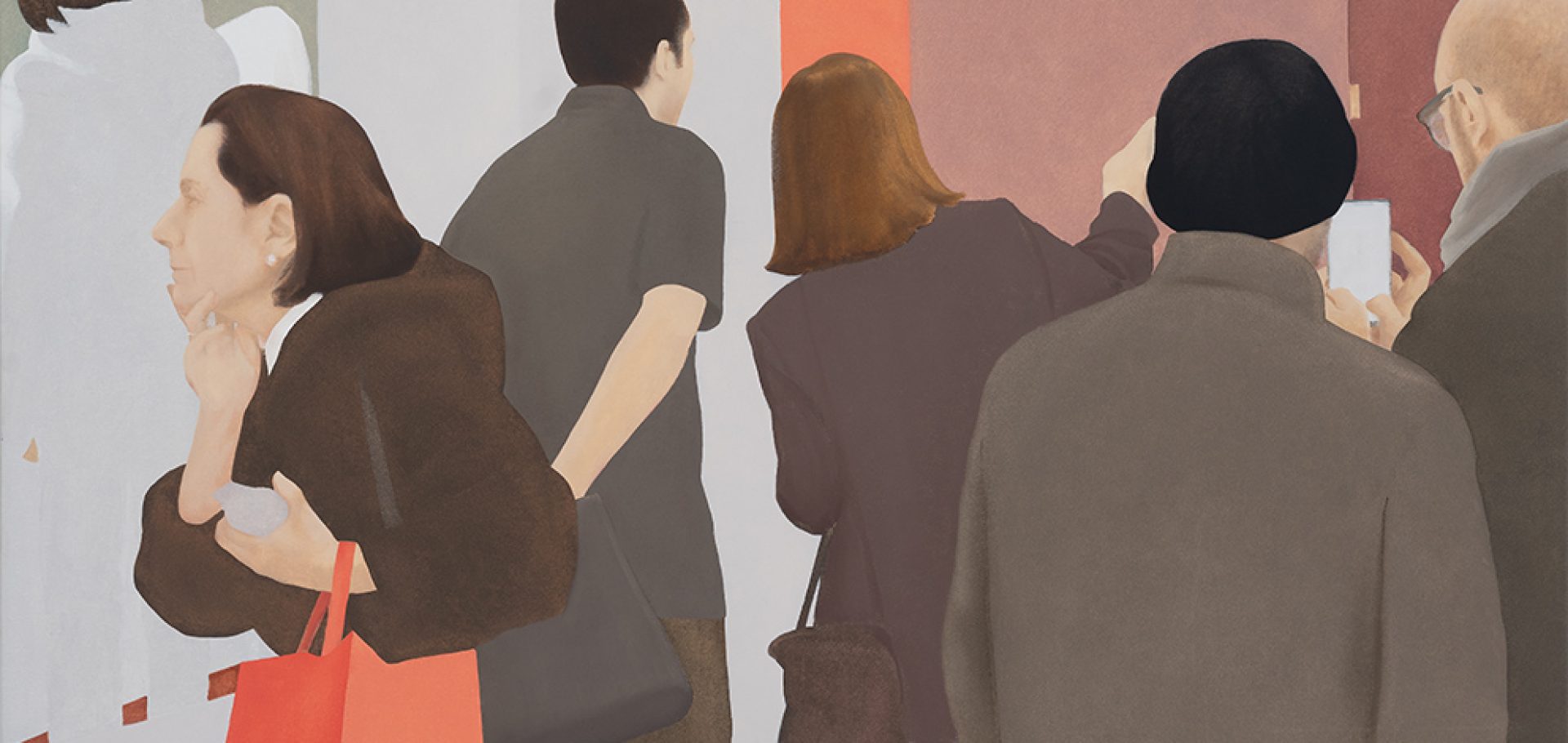
The paintings on display are inspired by people and places close to the artist. Goñi appears in some of the paintings; she paints people from her circle and uses her own studio as a setting. The figures are not the result of chance encounters: the artist arranges their positions and decides in advance how they will occupy the space within the painting.
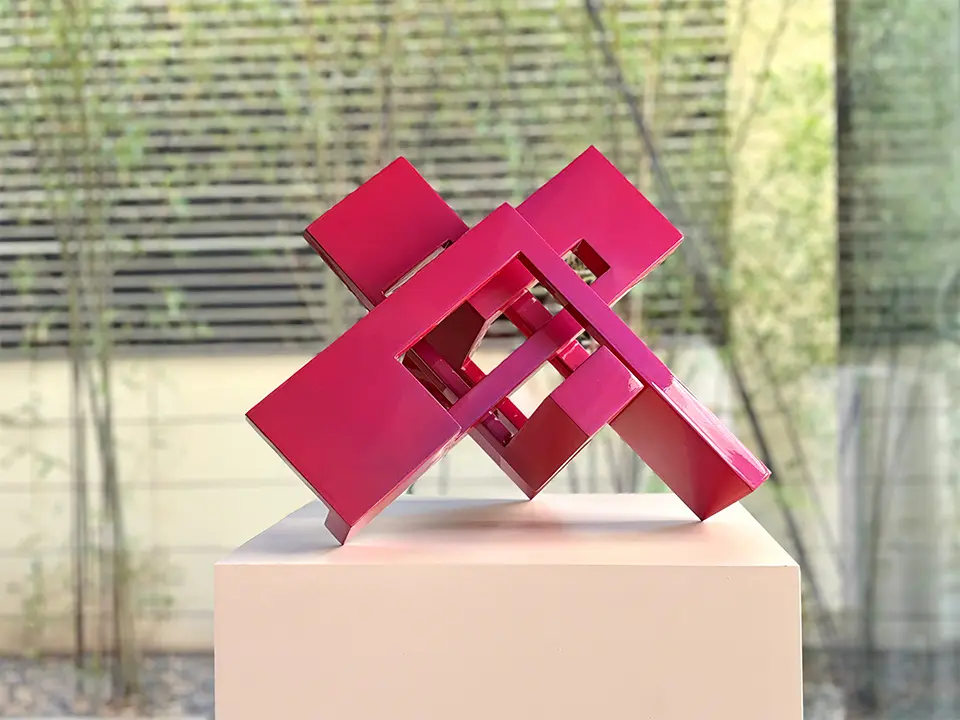
The catalog text was written by Estrella de Diego (Madrid, 1958), a professor of art history at the Complutense University of Madrid, art critic, writer, and member of the Royal Academy of Fine Arts of San Fernando. Two paintings in this exhibition have just received the 2026 Apertura Prize from the Community of Madrid: Self-Portrait with Beatriz (2026) and Earrings (2025). The prize, worth 15,000 euros, entails the acquisition of the works for the collection of the Museo Centro de Arte Dos de Mayo (CA2M), the Community of Madrid’s contemporary art museum located in Móstoles.
Represented Artists
What to Do Nearby
In Plaza de Colón stands “Julia,” the 12-meter-tall head that Jaume Plensa (Barcelona, 1955) created in 2018 on commission from the María Cristina Masaveu Peterson Foundation. The sculpture is made of polyester resin and white marble dust, based on a scan of a girl’s face from San Sebastián. It was designed specifically for the plaza’s pedestal and will remain there at least until December 2026.
Another option is the Juan March Foundation, located at Castelló 77. The headquarters was inaugurated in 1975 in a building designed by architect José Luis Picardo. Its temporary exhibitions are accompanied by concerts and lectures, and the institution maintains a specialized library that includes collections on contemporary art, music, and theater, as well as the personal libraries of Fernando Zóbel and Julio Cortázar. Admission is free.
Starting October 7, the María Cristina Masaveu Peterson Foundation, located at Alcalá Galiano 6, will be open to visitors. The center will remain closed until October 6 and will reopen with *Masaveu Collections: Textile Art*, an exhibition featuring more than eighty works dating from the 15th century to the present. The selection includes works by Sonia Delaunay, Magdalena Abakanowicz, Sheila Hicks, Joan Miró, Josep Grau-Garriga, and Aurèlia Muñoz. Admission is free.
For a meal, La Bien Aparecida is located at 8 Jorge Juan, just a few minutes from Fernández-Braso. Paco Quirós’s restaurant takes its name from the patron saint of Cantabria, and much of the menu features Cantabrian cuisine: anchovies from the Cantabrian Sea, squid rings, stewed monkfish in its own ink, and other dishes made with fish and shellfish. It is listed with one Sun in the 2026 Repsol Guide.


