
<p>Galería Fernando Pradilla opened in Madrid in September 2001, building on the experience that Colombian gallery owner Luis Fernando Pradilla had gained in Bogotá with Galería El Museo. From its location at Claudio Coello 20, the gallery has maintained a consistent presence of Latin American artists in Madrid, alongside Spanish and Portuguese artists, with exhibitions spanning different generations of contemporary art. </p>
Gallery Profile
Luis Fernando Pradilla opened his Madrid gallery on September 20, 2001. The project was built on a career that had begun much earlier in Colombia. Pradilla had studied law, lived in Europe, and worked at a gallery in New York before returning to Bogotá. In 1987, together with Byron López, he founded Galería El Museo, which over the years would represent Colombian artists such as Fernando Botero (Medellín, 1932–Monaco, 2023), Alejandro Obregón (Barcelona, 1920–Cartagena de Indias, 1992), Débora Arango (Medellín, 1907–Envigado, 2005), Luis Caballero (Bogotá, 1943–1995), Carlos Rojas (Facatativá, 1933–Bogotá, 1997), and Nadín Ospina (Bogotá, 1960).
When he decided to open a second gallery in Madrid, Pradilla had a specific goal in mind. In September 2001, he explained to the Colombian newspaper *El Tiempo* that he had chosen Spain to expand the Latin American art market in Europe. The inaugural exhibition, *Ahora Iberoamérica*, made it clear from the outset that the project would not be limited to Colombia.
Among the participants were Guillermo Kuitca (Buenos Aires, 1961), an Argentine painter known for incorporating maps, architectural plans, and domestic spaces into his paintings; Kcho (Nueva Gerona, Cuba, 1970), a Cuban artist who has used boats, oars, and other objects associated with travel; and Julio Galán (Múzquiz, Mexico, 1958–Monterrey, 2006), a Mexican painter whose autobiographical work gained wide international recognition during the 1980s and 1990s.
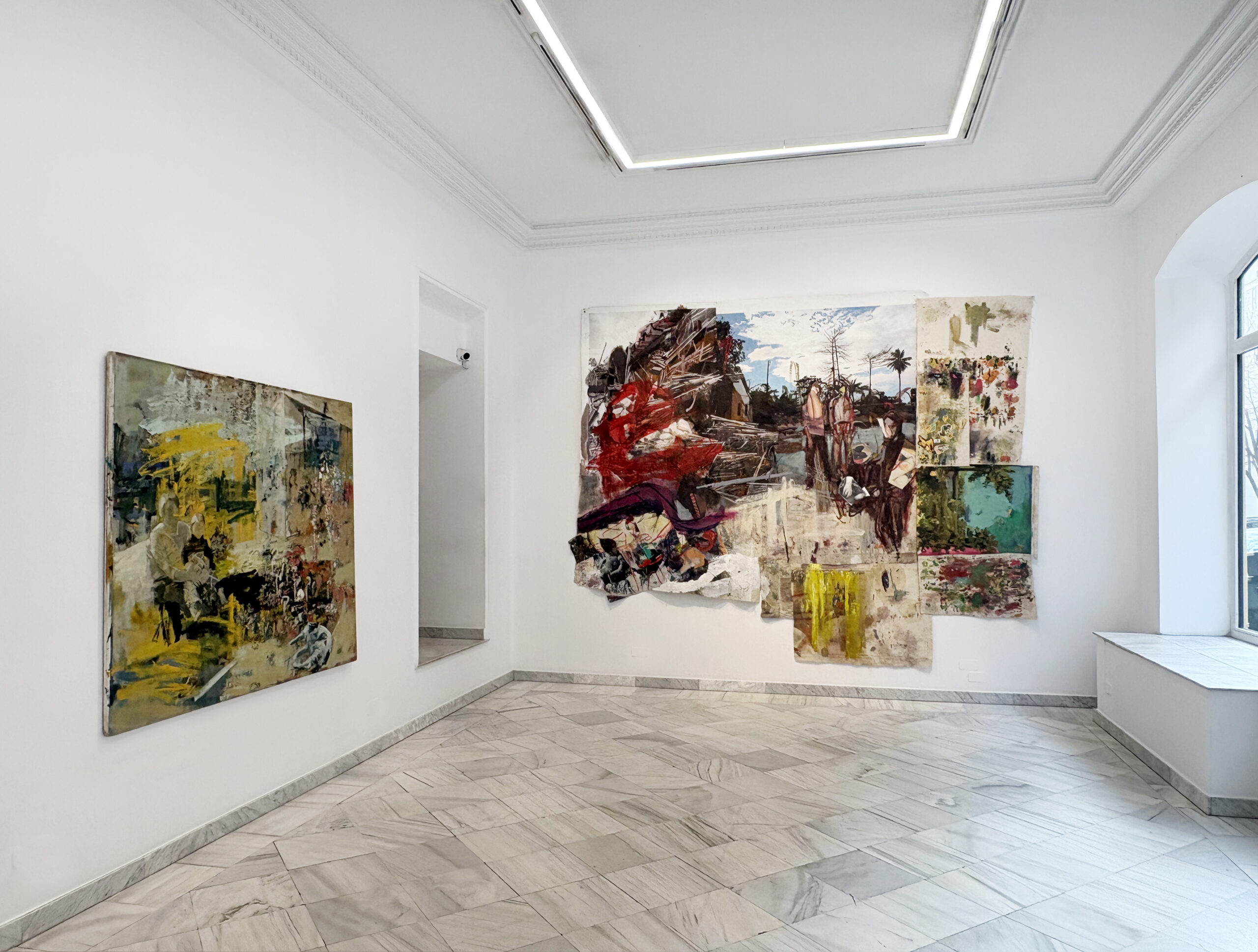
Colombia was represented by several generations. Bernardo Salcedo (Bogotá, 1939–2007), an architect by training and one of the artists associated with the early development of Colombian conceptual art, shared the exhibition with Nadín Ospina (Bogotá, 1960)—who had already begun combining forms from pre-Columbian sculpture with figures drawn from popular culture—and with younger artists such as Lucas Ospina (Bogotá, 1971).
The next major group exhibition confirmed this direction. *Colombia Visible and Invisible* brought together Colombian artists with very different career paths in Madrid. Among them were Óscar Muñoz (Popayán, 1951), based in Cali and known for using photography, drawing, water, dust, and other materials that alter the permanence of the image; Miguel Ángel Rojas (Bogotá, 1946), whose work since the 1970s has addressed issues related to sexuality, violence, drug trafficking, and Colombian society; and María Fernanda Cardoso (Bogotá, 1963), an artist based in Australia who has worked with animals, natural specimens, and techniques drawn from the biological sciences.
The relationship with Bogotá continued after the opening. Galería El Museo and Galería Fernando Pradilla have maintained related programs, featuring artists who have exhibited in Colombia, Spain, and at international art fairs. At the same time, the Madrid location developed its own group of Spanish, Portuguese, and Latin American artists.
In 2007, the Fernando Pradilla Projects Space was added. It was designed for installations, video, site-specific works, and proposals from artists or curators who required conditions different from those of the main galleries. This openness to other formats expanded a program that had begun with a significant focus on painting, photography, and sculpture.
Program
Why Go
One of Fernando Pradilla’s distinctive features is the continuity of his relationship with Colombian art. His connection with Galería El Museo in Bogotá has led to the exhibition in Madrid’s galleries of artists representing very different periods in the country’s recent history.
Álvaro Barrios (Barranquilla, 1945) is one of them. A conceptual artist and draftsman, he began his *Grabados populares* series in 1972. Instead of producing small editions on paper intended for collectors, he published the images in widely circulated newspapers and magazines. The print run of the work could match that of the newspaper itself, and Barrios would sign, free of charge, the copies that the public brought to him during a specific period. In 2005, the Museum of Modern Art in New York acquired a collection of 76 of these prints, and the Banco de la República de Colombia preserves and has extensively studied the series.
In 2025, Fernando Pradilla presented *La multiplicación de los cuadros*, Barrios’s second solo exhibition at the gallery. The works, created between 2013 and 2025, revisited themes that had been present in his body of work for decades: copying, the reproduction of images, comic strips, and Marcel Duchamp. His inclusion in the gallery’s program connects the gallery to the development of Colombian conceptual art since the 1970s.
Nadín Ospina (Bogotá, 1960) takes a different approach. Since the late 1980s, he has created sculptures that take on the appearance of archaeological objects and recognizable figures from mass culture. Mickey Mouse, Bart Simpson, and other characters may appear transformed into objects reminiscent of pre-Columbian artifacts. In 2020, the National Museum of Anthropology in Madrid presented *Yo soy otro tú*, an exhibition dedicated to his work. Fernando Pradilla exhibited his work again in Madrid in 2023 with *La persistencia del deseo*.
Photography brings another geographical perspective. Marcos López (Santa Fe, Argentina, 1958) began his career working in documentary photography and later developed staged scenes featuring restaurants, swimming pools, advertisements, food, furniture, and people from various Latin American cities. His images use color and staging to capture highly recognizable elements of urban life and consumer culture in the region. In 2024, PHotoESPAÑA included the exhibition (Sud) América at Fernando Pradilla in its program.
The connection to Latin America is evident in the work of Spanish and Portuguese artists. Juan Francisco Casas (La Carolina, Jaén, 1976) first gained recognition for his large-format drawings created with blue ballpoint pen and has since expanded that work to other materials. Pedro Calapez (Lisbon, 1953) works primarily with painting on wooden and aluminum surfaces, as well as structures that alter the conventional format of the painting. José Ramón Amondarain (San Sebastián, 1964), who recently joined the program, has spent decades examining the construction and reproduction of images through painting, drawing, and objects.
Fernando Pradilla’s collection thus brings together works created at very different times and in very different contexts. A visit can begin with the temporary exhibition and continue by exploring the artists who have been part of the gallery’s twenty-five-year history in Madrid.
What to Expect
"Más que vivir" is the first solo exhibition by José Ramón Amondarain (San Sebastián, 1964) at Galería Fernando Pradilla. Opened during Apertura Madrid Gallery Weekend, it brings together recent works in which painting is no longer confined to a flat surface.
Amondarain studied Fine Arts at the University of the Basque Country and has been exhibiting since the late 1980s. His body of work includes numerous pieces on the reproduction of images and the processes used to create them. One of the most notable examples of this was presented at Artium, the Museum of Contemporary Art of the Basque Country, in 2012.
*Time and Urgency (Guernica)* was based on the photographs Dora Maar took to document the creation of Pablo Picasso’s *Guernica* in 1937. Amondarain reproduced eight of those photographs in gouache at a 1:1 scale. To these, he added Urgency, an installation consisting of eight large canvases that successively reconstructed different stages of the painting. Rather than working solely with the finished image of *Guernica*, he used the photographic record to revisit the decisions Picasso had made during its creation.
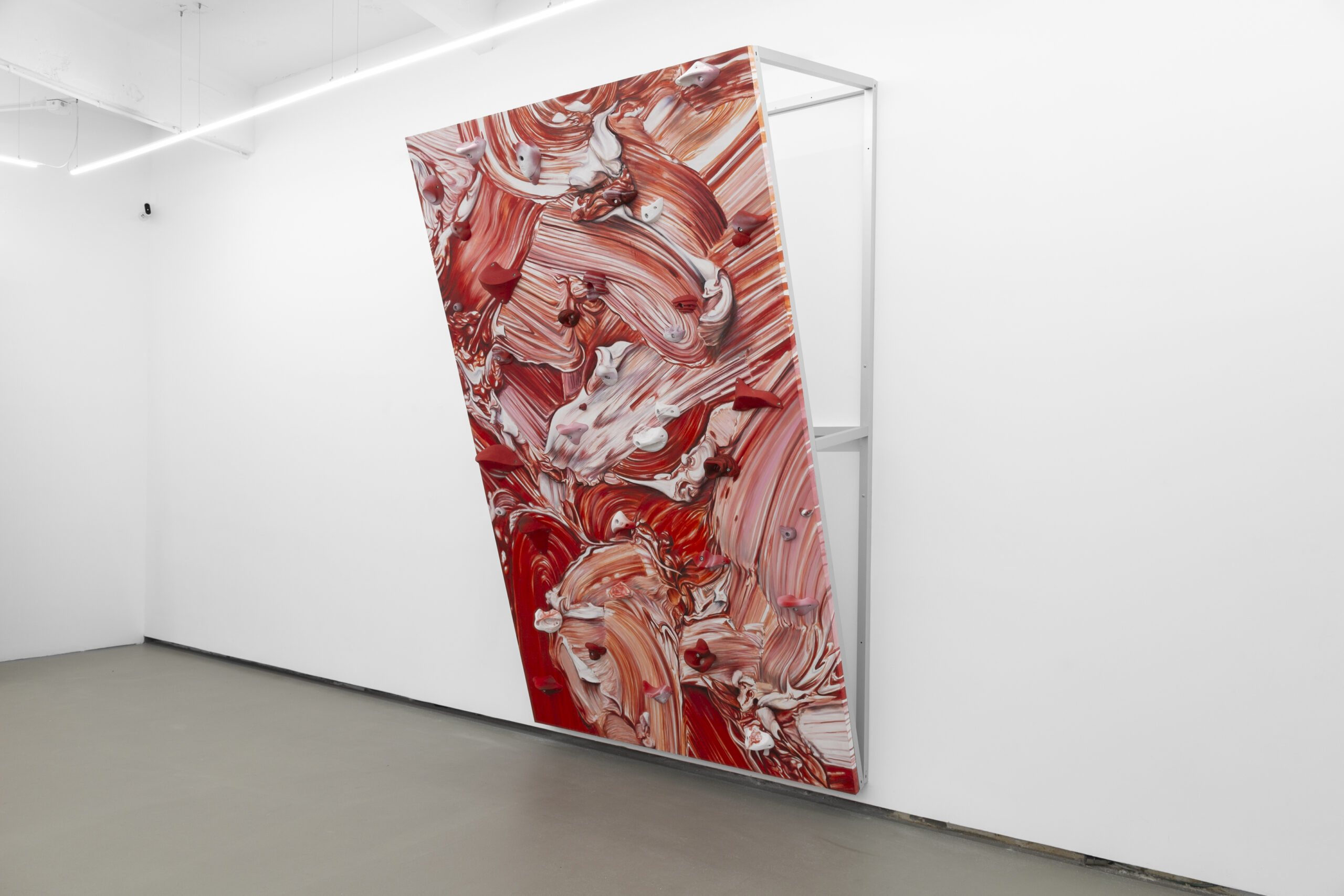
In *Más que vivir*, painting reappears as a physical object. *Lava Ósea*, created in 2026, measures more than two meters and combines oil on wood, aluminum, spray paint, and climbing holds. The climbing holds protrude from the surface, transforming the painting into a structure that also occupies the space in front of it.
Climbing holds reappear as a reference to the way a person plans a route before climbing it. Amondarain has linked this process to memory and the ability to anticipate an action based on past experiences. Rather than limiting this idea to the title alone, he physically incorporates it into the work through objects designed to help determine where to place a hand or foot.
The exhibition includes other recent paintings such as *Sinsia* and *Señuelo*. In the second room, there are sculptures on pedestals, including *Toscana*, *Tarte*, *Tente*, and *Lorada*, as well as eight acrylic works on paper grouped under the title *A Literary Thought for a Process in Progress*.
The variety of media helps contextualize an issue that Amondarain has been exploring for years. A painting can appear as an image, as a surface, or become a three-dimensional object. In *Más que vivir*, there are oil paintings, wood, aluminum, acrylic, paper, bronze, and objects originally made for other purposes. The exhibition will remain open through October 17, 2026.
Represented Artists
What to Do Nearby
The Fernando Pradilla Gallery is located at Claudio Coello 20, just a few minutes from the National Archaeological Museum. Its collection offers a complete shift in perspective after a visit to the gallery. The galleries cover Prehistory, the pre-Roman cultures of the Iberian Peninsula, Greece, Egypt, Rome, and the Middle Ages. Among the best-known pieces is the Lady of Elche, an Iberian sculpture discovered in La Alcudia in 1897, later transferred to the Louvre, and housed at the National Archaeological Museum since 1971.
The National Library of Spain is located across the block. Philip V approved its establishment in late 1711, and it opened to the public in March 1712 as the Royal Public Library. The institution has occupied its current building on Paseo de Recoletos since 1896. In addition to its research rooms, it hosts a program of exhibitions featuring manuscripts, photographs, drawings, maps, engravings, sheet music, and books from its collections.
A little further down is the Fundación MAPFRE’s Sala Recoletos, housed in the former palace of the Duchess of Medina de las Torres. The institution dedicates its approximately 1,000 square meters of exhibition space to photography and the visual arts. Beginning September 24, 2026, it will present three new exhibitions: one dedicated to the American photographer Minor White, another on women associated with the British Pre-Raphaelite movement, and *The Other Shore of the Avant-Garde*, drawn from the collection assembled by psychiatrist and art historian Hans Prinzhorn in Heidelberg.
El Retiro begins just a few minutes from the gallery, across the street from Calle de Alcalá. From the Puerta de la Independencia, you can continue on to the pond, the Palacio de Velázquez, and the Palacio de Cristal. It’s a good idea to check the status of these last two buildings before your visit, as they have been closed or under construction at times.
For a meal, Taberna Pedraza, located at Recoletos 4, is about a ten-minute walk away. The restaurant, owned by Carmen Carro and Santiago Pedraza, has been awarded one Repsol Guide Sun and is featured in the Michelin Guide. Two of its most famous dishes are the Betanzos-style omelet and Carmen’s Cocido, served in three courses.
Another option is located at Velázquez 24. Ramón Freixa Tradición opened in 2025 and earned a Repsol Guide Sun in 2026. Catalan chef Ramón Freixa serves Spanish dishes there, such as cannelloni, salpicón, menestra, and stews. At the same address is Ramón Freixa Atelier, his more intimate dining concept, centered around a single table for ten guests and a tasting menu.
Claudio Coello, Serrano, Villanueva, and Jorge Juan are also home to galleries, bookstores, shops, and restaurants. The proximity of the Archaeological Museum, the National Library, the MAPFRE Foundation, and the Retiro Park makes it possible to include a visit to Fernando Pradilla as part of a walking tour of Recoletos and the lower section of the Salamanca neighborhood.


