
Tiro Al Blanco is one of the galleries that have helped sustain Guadalajara’s contemporary art scene through an intimate, collaborative, and decentralized approach. Its program brings together local, national, and international artists, with a particular focus on production, collecting, and the ways in which an exhibition can spark conversation long before any conclusions are reached.
Gallery Profile
Tiro Al Blanco was founded in Guadalajara with an ambition that relies on the network it has successfully cultivated. Established in 2013, the gallery emerged in a city that has long grappled with its place in relation to the capital’s cultural centralism. Its significance lies in its role as a space capable of bringing together artists, collectors, guest galleries, and audiences who approach contemporary art from diverse positions and perspectives.
The gallery is defined by a philosophy of collaboration that deserves to be taken seriously. Its program seems more interested in fostering processes where the artist, the artwork, and the context of circulation matter just as much as the gallery space itself. That approach was particularly evident during Art Wknd GDL, when TAB presented projects conceived in collaboration with collectors even before the opening. The aim was not to turn the collector into an author, but to make them visible as part of the conditions of production.
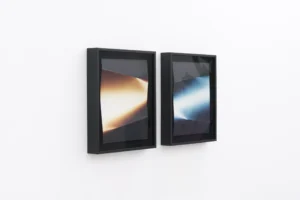
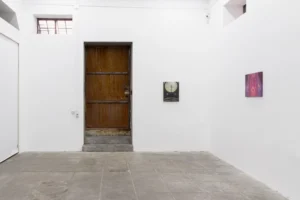
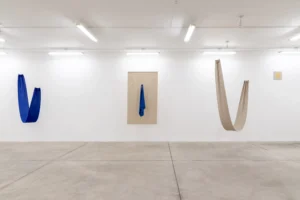
Its roster of artists offers a broad spectrum of interests and generations. Roberto Turnbull establishes a lineage rooted in painting, printmaking, sculpture, and formal freedom. Isa Carrillo, for her part, shifts the focus toward the hidden, the enigmatic, and the invisible. Iván Estrada works with industrial materials, craftsmanship, and transformation. Garth Evans brings an international history of contemporary sculpture to the table. This constellation doesn’t create an easy identity, but it does suggest a gallery attentive to practices that generate a lively dialogue of forms and discourses. The location at Juan Álvarez 833 reinforces this interpretation. TAB operates from a Guadalajara that still allows for intersections between neighborhood, scene, studio, food, and daily life. This location is crucial because it prevents the visit from becoming an encapsulated or overly proper experience. The gallery does not need to feign isolation. Its power emerges when it is understood as part of an urban circuit that is still taking shape, negotiating its audiences, and testing its own scales.
TAB matters because it helps us understand Guadalajara as a scene that generates its own forms of connection. Its value lies both in its exhibition program and in the conversation it sparks. And it raises questions about how to support an artist, how a collector enters the scene, how a gallery is sustained, and how a city builds its own identity without copying the model of another center. The gallery functions best when it allows those questions to remain open—even uncomfortable ones.
"Collectors inspire you."— Rodrigo Hernández, in an interview with AD Magazine
To keep exploring this thread, visit contemporary artists and galleries; you can also continue through contemporary art galleries in Latin America.
Program
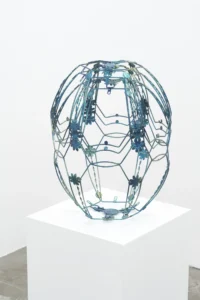
“To Live in a State of Desire (and Falling Again)” by Majo Crespo, an exhibition in which desire, the body, and falling are interpreted as material and emotional states.
Why Go
Tiro Al Blanco is worth visiting because it sees itself as a gallery that is an integral part of the ecosystem that sustains it. Its strength lies in operating from Guadalajara with a broader vision of dialogue: artists, collectors, curators, other galleries, and audiences who approach contemporary art not merely as the consumption of images, but as a practice of connection.
It also matters because its program doesn’t sacrifice the local scale in an effort to appear international. TAB can work with artists from Guadalajara while simultaneously opening the space to external conversations without turning that exchange into a mere token gesture. In a scene that has gained visibility through Art Wknd, art fairs, and collaborations, the gallery helps frame Guadalajara as a city that generates discourse, not just as a business destination or a collection of clichés.
What to Expect
Arriving at Tiro Al Blanco feels a bit like crossing an unassuming threshold. Juan Álvarez doesn’t force you to suddenly shift gears, but he does steer the visit toward a Guadalajara that’s less polished than the more obvious tourist circuits. The gallery is situated in an area where homes, shops, workshops, neighborhood eateries, and new cultural layers coexist. That mix gives the space its meaning: art appears close to daily life, not separate from it, and the entrance serves as a shift in scale.
Inside, it’s worth taking your time to look around. TAB functions as an exhibition space, but also as a place where the curation can spark conversations between works, materials, and processes. Its recent exhibitions have explored painting, sculpture, installation, archives, the body, collecting, and collaboration. The experience does not depend on a single striking piece; it asks us to recognize how each room establishes relationships between artist, text, object, and context, and how light or distance alter what seemed settled at first glance, even in a small work.
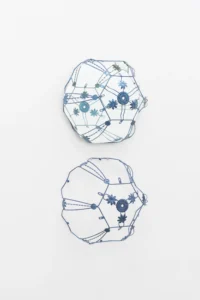
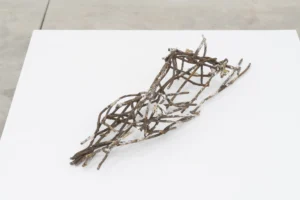
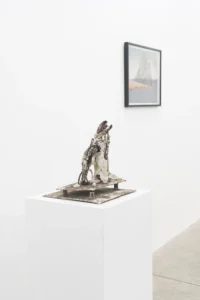
Visitors can expect a program that explores diverse contemporary practices, featuring artists from different generations and backgrounds. The presence of names such as Roberto Turnbull, Isa Carrillo, Iván Estrada, Garth Evans, and Enrique Hernández reveals a gallery interested in both established artists and emerging artists who are conducting research—whether with materials or on new conceptual approaches. What matters is not the list itself, but the way in which these practices raise questions about image, memory, form, perception, and production, without reducing the exhibition to a convenient label or an immediate interpretation.
The visit is best rounded out outside the gallery. TAB is located near the area where Santa Teresita offers a different perspective for walking, eating, and understanding the city without turning it into a postcard. After seeing the exhibition, the tour can extend to the market, a café, or a longer meal. There, the gallery finds part of its purpose as a hub within an active, porous, and dynamic Guadalajara, where art and everyday life can still influence each other.
Represented Artists
What to Do Nearby
After leaving TAB, I’d walk toward Santa Teresita without turning the route into a checklist to complete. The neighborhood works best when it’s allowed to blend different scales: food stalls, everyday shops, homes with a different rhythm, and an urban life that doesn’t seem staged for the camera. The Santa Tere Market can be a good first stop if your visit calls for something more immediate: food, noise, neighborhood vibes, and a very Guadalajara-style way to get back out on the street.
For a more thoughtful dining experience, Xokol is the natural choice: contemporary techniques in combinations such as its pumpkin dish—featuring a savory pumpkin flan with sea urchin, a pumpkin-stuffed fritter, fried pumpkin blossoms stuffed with pumpkin seed emulsion, and candied pumpkin. If you’re in the mood for something lighter, stick around Juan Álvarez. Right at number 833, you’ll find Inherente, a bar, café, and restaurant where you can wrap up your visit without going too far. The key is not to separate art, food, and walking too much. In this area, the experience is best understood when those three elements blend together.


