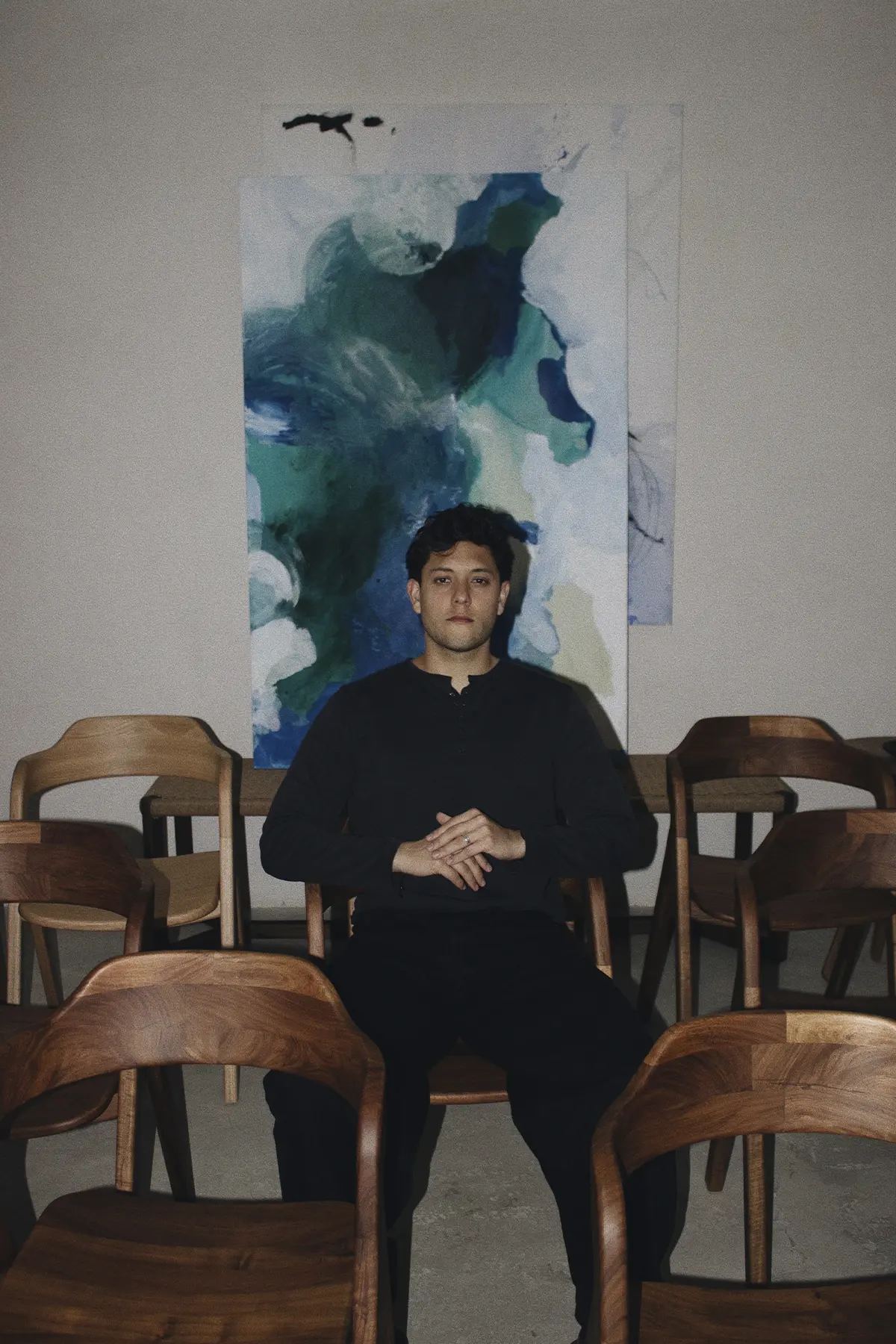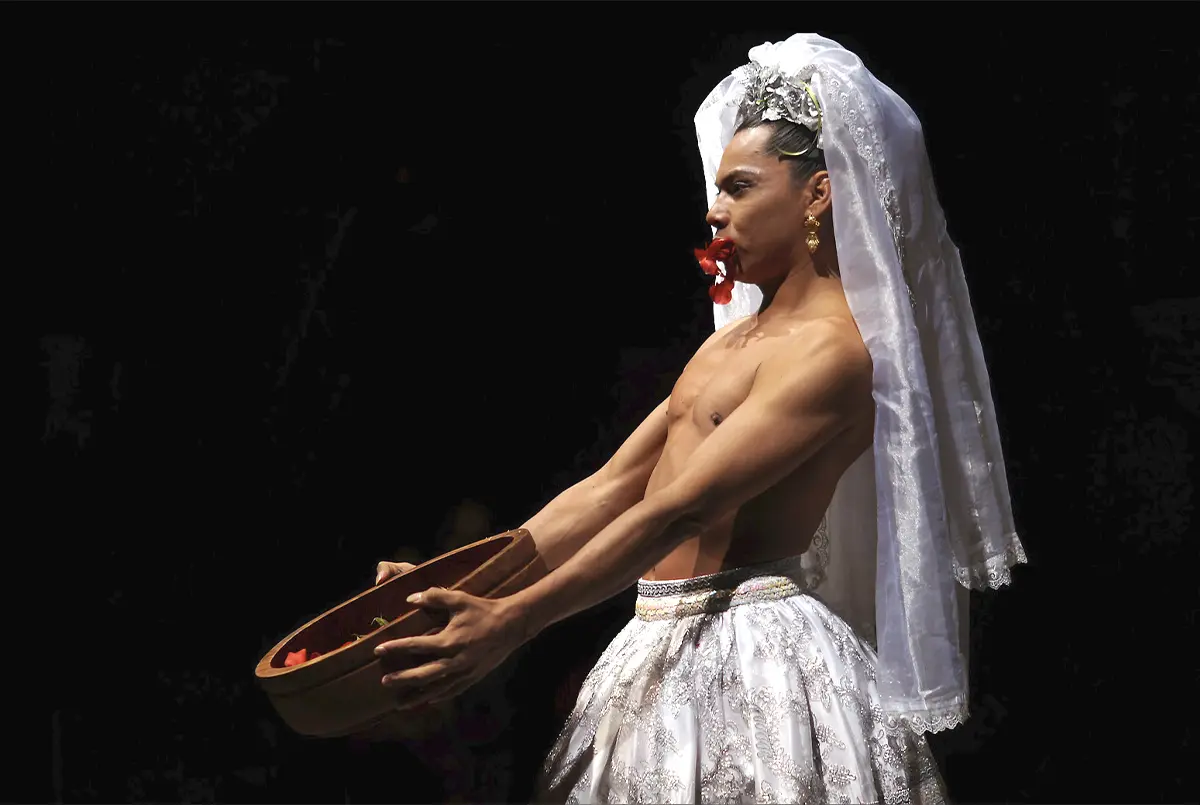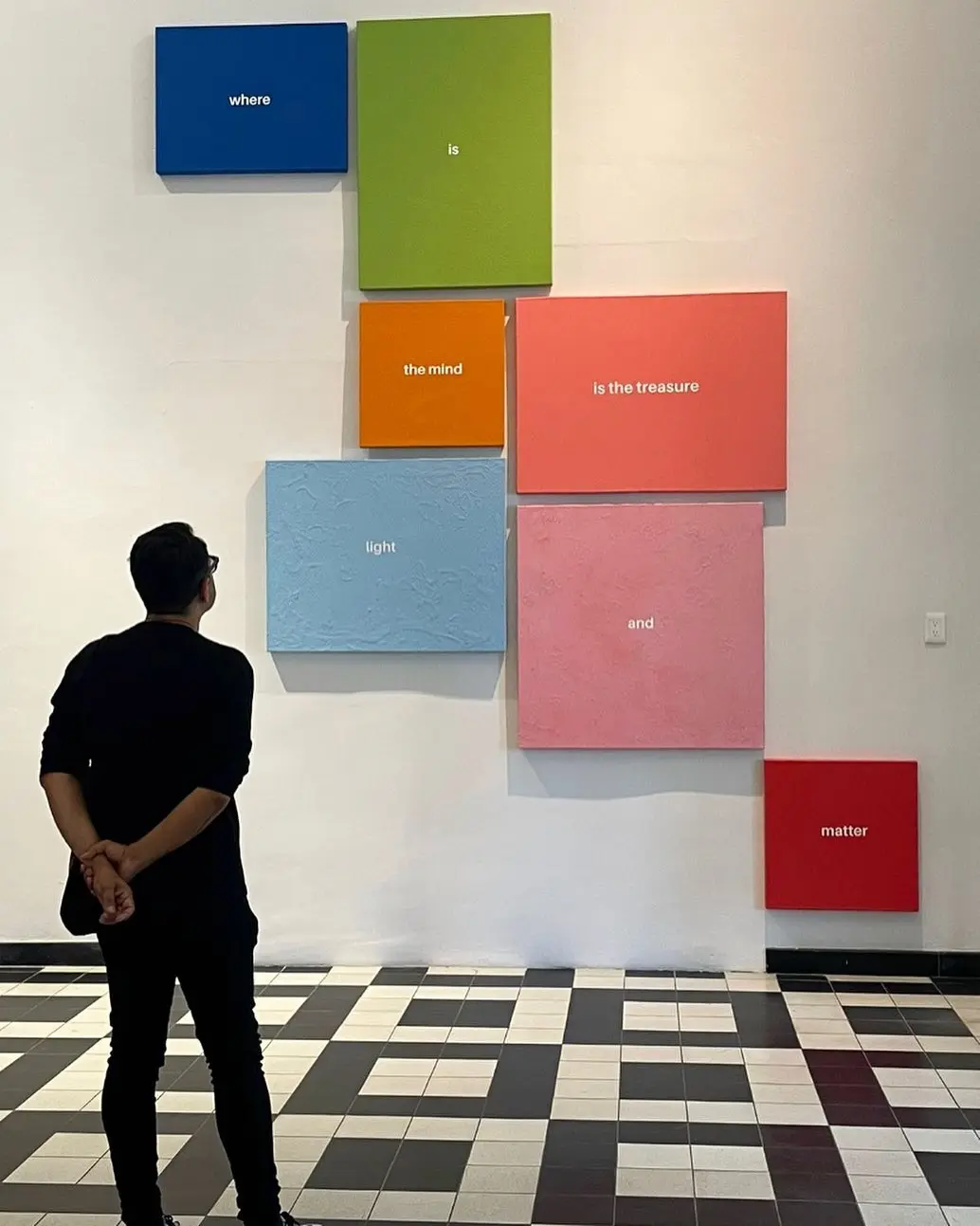

Some have turned their backs on music; others inhabit both worlds. These musician-artists (or artist-musicians), past and present, have made the leap from alternative music (whatever that means in 2026) to contemporary art—or vice versa. In art, anything goes, and they prove it: just as skilled with the guitar, synthesizers, or drums as they are with paintbrushes and installations. Because it’s just one step from the stage to the gallery, we’d like to introduce you to some figures who have made the crossover.
José Fors: irreverent in music and serious in painting
He found success with irreverent hard rock, filled with “pizza-faced girls” and other surreal characters. At the height of the group known as La Cuca —a band that emerged during that era when everyone was adopting very Mexican and colloquial names—he decided to step aside to devote himself fully to painting and establish a career in the visual arts. He had previously been a member of the cult band Duda Mata. A Cuban-Mexican based in Guadalajara, he has collaborated with both figures in Ibero-American rock—such as Santiago Auserón (Radio Futura / Juan Perro)—and some of the world’s most important galleries.
“Music has always been my more social side; if I didn’t make music, I’d be a hermit: I’d be shut away all day painting…,” he said in an interview published on the Mónica Saucedo Gallery’s website.
Sergio Arau and Nationalist Popular Culture
In addition to founding the legendary band Botellita de Jerez, the iconic ’80s group that pioneered guaca-rock, Sergio Arau has established himself as a solo artist, illustrator, and visual artist, with a series of works that pay homage to Mexican pop culture. Wrestlers, angels of the periphery, and other characters from the Mexican underworld populate an original body of work rich in local details. He is also a filmmaker—his movie *Un día sin mexicanos* is almost prophetic of the times we live in.
“The point of art is to make the invisible visible,” he told the Los Angeles magazine *La Banda Elástica* in 2024.

Eunice Guerrero, Valsian’s indie-pop, and contemporary art
Originally from Morelos, Eunice Guerrero is the youngest on the list. She combines her work as the lead singer of the indie band Valsian with her training in visual arts. “I went through more than one crisis trying to translate my feelings about music into images, but it has always been very inspiring,” she says. Some of her art exhibitions have names like concept albums, such as The Zenith and Descent of the Idols from Cereal Boxes. She also creates performance art and is part of the production Gruta.
“What I don’t want to lose is that little bit of fear that keeps me aware that I’m vulnerable and that I have to defend my experimentation and the uncomfortable forms that result from it, because that’s my most important gain,” she told AW Magazine.

Quique Rangel, Between Café Tacvba and the Museums
Quique Rangel, the double bassist and bassist for Café Tacvba, studied design and worked as a designer before joining the band. Today, his work bridges music and contemporary art: in addition to setting artworks to music, his project 2 Contrabajos —alongside Mike Sandoval—has developed improvisations for exhibitions in venues such as the Carrillo Gil Art Museum. It all began with an invitation from artist Abraham Cruzvillegas to intervene in his work, sparking an exploration that continues to this day beyond “La ingrata.”
“It’s a more experimental project, more of an exploratory one,” he said. “It’s improvised music where we create atmospheres and percussive textures using our instruments,” he told Proceso.
Omar Guerra: Beyond Guadalajara’s Electronic Music Scene
Based in Guadalajara, Omar Guerra has been active as an artist for several years. He is also the founder of Jalarte A.I. and began his career as part of the Corpus Callosum project led by Guillermo Santamarina; he continues to work as an artist from his studio in Jalisco.
Although in recent years he has mostly been working in his art bunker and on various projects, he has also created indie music concepts such as Buró Sputnik, Dedupléx, and Kommodor—groups ranging from electronic experimentation to an electro-pop band with a fan club, opening acts for bands like Ladytron, and shows at Mexico City’s National Auditorium with Belanova.
Gabriel Kuri: Art Without Phobias
He stopped being Fobia’s drummer in the 1990s to devote himself to art with the same (or even greater) passion with which he used to pound the snare drum in the Mexican band. This visual artist, a graduate of the National School of Plastic Arts at UNAM who now lives in Brussels and is represented by the Kurimanzutto gallery, has had a remarkable career and creates work in which sculpture engages with other disciplines.
While many of Fobia’s surreal lyrics sought an existentialist escape, as an artist, it seems that Gabriel Kuri is looking for something quite the opposite: “My practice consists of trying to understand the big picture and how things work in the real world,” he told the Autonomous Metropolitan University’s Casa del Tiempo newsletter. At Fobia’s recent performance at Vive Latino, there were rumors that he might have rejoined the band, but it all remained just a rumor.
Gustavo Mauricio “Catsup” and the club for musicians, poets, and multidisciplinary artists
In addition to founding the Happy-Fi label and being part of projects like Zurdok and Quiero Club, Monterrey native Gustavo Mauricio is a conceptual artist. As Sol Oosel, he has presented both abstract paintings and soundscapes at Mutek. In fact, he entered the world of alternative rock in the Avanzada Regia scene when he transformed the art collective format into a band format.
“I like that it’s like a proper name—a first and last name. Since I’m also involved in the art world, I wanted to use it as a proper name as well. Rather than creating a new project, it’s more like creating a new character; I think it’s wise to introduce myself this way,” the artist told the now-defunct magazine Vice in 2018.
Ugo Rodríguez: From Pop to Blue-Violet Art
The Guadalajara-based singer of the neo-psychedelic group Azul Violeta and Yoyobreakers has built a career in which his work moves between Dadaism and dreamlike imagery (and yes, he does use shades of blue and violet in his pieces).
“I always wanted to be a painter, but music took me in a different direction. I was lucky to have parents who encouraged my artistic talent. Every Sunday we would tour Guadalajara as a family, and my father, an architect by profession, would explain the history of the colonial buildings to us,” Ugo said in a supplement for the UDG.
Because in the end, rather than switching disciplines, these artists confirm that creation—whether on stage or in a gallery—stems from the same impulse: to find new ways of expressing what cannot be captured in a single language.
Cover photo: *The Energy That Moves Everything*, 2023, Omar Guerra. Acrylic on canvas, variable dimensions, as part of *INFINIDAD INTELIGENTE*
To keep exploring this thread, visit cultural perspectives from Latin America.