
Adora Calvo founded her gallery in Madrid in 1992 and in 2004 moved the project to Salamanca, where she remained for more than a decade before returning to the Community of Madrid. It currently occupies a space in Las Rozas and maintains relationships with artists from various generations, some of which began during its time in Salamanca. The 2026 season begins with *Eros and Thanatos*, a group exhibition curated by Ana M. Gallinal and Lidia Benavides.
Gallery Profile
The Adora Calvo Gallery opened in Madrid in 1992. Twelve years later, in 2004, it moved to Salamanca. During that period, it was located at various addresses in the city, including San Pablo 66 and later Arco 11, and regularly participated in Spanish and international art fairs.
Salamanca was also the place where the gallery forged some of the relationships that have continued since its return to Madrid. Ignacio Llamas presented several solo exhibitions there. In *Gritos del silencio*, his second exhibition at the gallery, he brought together photographs from the series Cercar al silencio and three-dimensional works. The collaboration continued thereafter, and Llamas has since exhibited again with Adora Calvo in Las Rozas.
Diego del Pozo also began working with the gallery during those years. His career had previously taken him to Generaciones de Caja Madrid, La Casa Encendida, MUSAC, and Tabacalera. His relationship with Adora Calvo has continued since then with exhibitions such as *Sin levedad*.
Another strand comes from artists whose careers began decades before the gallery itself was founded. Jordi Teixidor (Valencia, 1941), winner of the 2014 National Prize for Visual Arts and one of the leading figures in Spanish abstraction since the late 1960s, presented *Latest Paintings* at Adora Calvo in 2004 and returned in 2015 with Plano y línea.
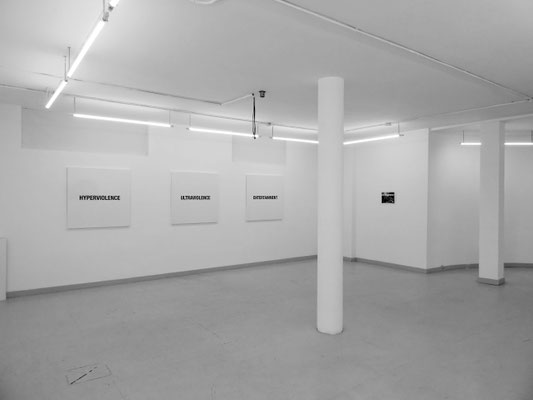
The subsequent move to Las Rozas brought the project back to the Community of Madrid. The gallery is currently located at 53 Epidauro Street, in a residential area of Monte Rozas, away from the main gallery districts in the capital’s downtown area.
Adora Calvo continues to lead the project. The programming retains artists from the Salamanca period and has incorporated younger ones. The gallery itself defines part of its work based on the connections between artists associated with Spanish conceptualism and minimalism and subsequent generations. This focus can be traced in specific exhibitions and in the continued presence of artists such as Jordi Teixidor, Ángeles San José, Juan Hidalgo, Ignacio Llamas, and Diego del Pozo throughout different periods of the gallery’s history.
Why Go
Adora Calvo's programming has, on several occasions, combined her commercial activities with projects carried out in museums and public institutions.
Javier Riera (Avilés, 1964) presented in 2014 *Configuraciones y resonancias* at the gallery in Salamanca. That same year, he presented *Luz vulnerada* to the Niemeyer Center in Avilés. His work with geometric projections onto landscapes had previously been featured at the Reina Sofía Museum, where he presented *Noche áurea* in 2008, and later to MUSAC, with an installation in the area surrounding the San Marcos Bridge in León.
Ignacio Llamas maintained a consistent presence in the gallery’s programming both before and after the move. His exhibitions in Salamanca were followed by projects at other venues, including the Museum of Contemporary Art of Castile and León and the DA2 in Salamanca. At the current location, Adora Calvo has once again presented her work with Whispers of Silence.
The gallery has also maintained a long-standing relationship with artists associated with Spanish abstraction. Jordi Teixidor exhibited there in 2004 and 2015. Ángeles San José, whose career includes exhibitions at the Antonio Machón Gallery since the late 1980s and her participation in “Monocromos: From Malevich to the Present” at the Reina Sofía Museum in 2004, is also part of Adora Calvo’s programming. In 2022, the gallery presented Kill Your Idolsby Fernando Renes. The artist had begun working with Adora Calvo years earlier in Salamanca, and the Madrid exhibition continued a relationship that began during that period.
By the end of 2025, Pausa featured small-format works by José Manuel Broto, Juan Hidalgo, Carmen Laffón, Diego del Pozo, Javier Riera, Ángeles San José, Jordi Teixidor, and other artists associated with different periods in the gallery’s history. The exhibition remained open until January 2026.
What to Expect
Eros and Thanatos is not an exhibition based on the artists typically represented by Adora Calvo. It stems from the ANDRÓMEDA research project. Myth and Representation: Theoretical and Practical Activities in Cultural Myth Criticism, carried out between 2025 and 2027 and funded by the Community of Madrid. Participating institutions include the Complutense University of Madrid, the University of Alcalá, the Autonomous University of Madrid, and Comillas Pontifical University. The principal investigator is José Manuel Losada, a professor in the School of Philology at the Complutense University of Madrid (UCM).
The exhibition is curated by Ana M. Gallinal and Lidia Benavides, researchers on the project and professors in the School of Fine Arts at the Complutense University of Madrid. Both are also participating as artists.
There are eleven artists: Jordi Aligué, Edward Jobst Andrews, Mercedes Bautista, Lidia Benavides, Carla Fajardo, Ana M. Gallinal, Pep Fajardo, Cecilia Gala, Fernando Leyra, Ramón López de Benito, and Ana Musma. Rather than focusing on a single artistic language or a specific generation, the exhibition draws on two figures from Greek mythology—Eros and Thanatos—to bring together works related to love, death, mourning, and disappearance.
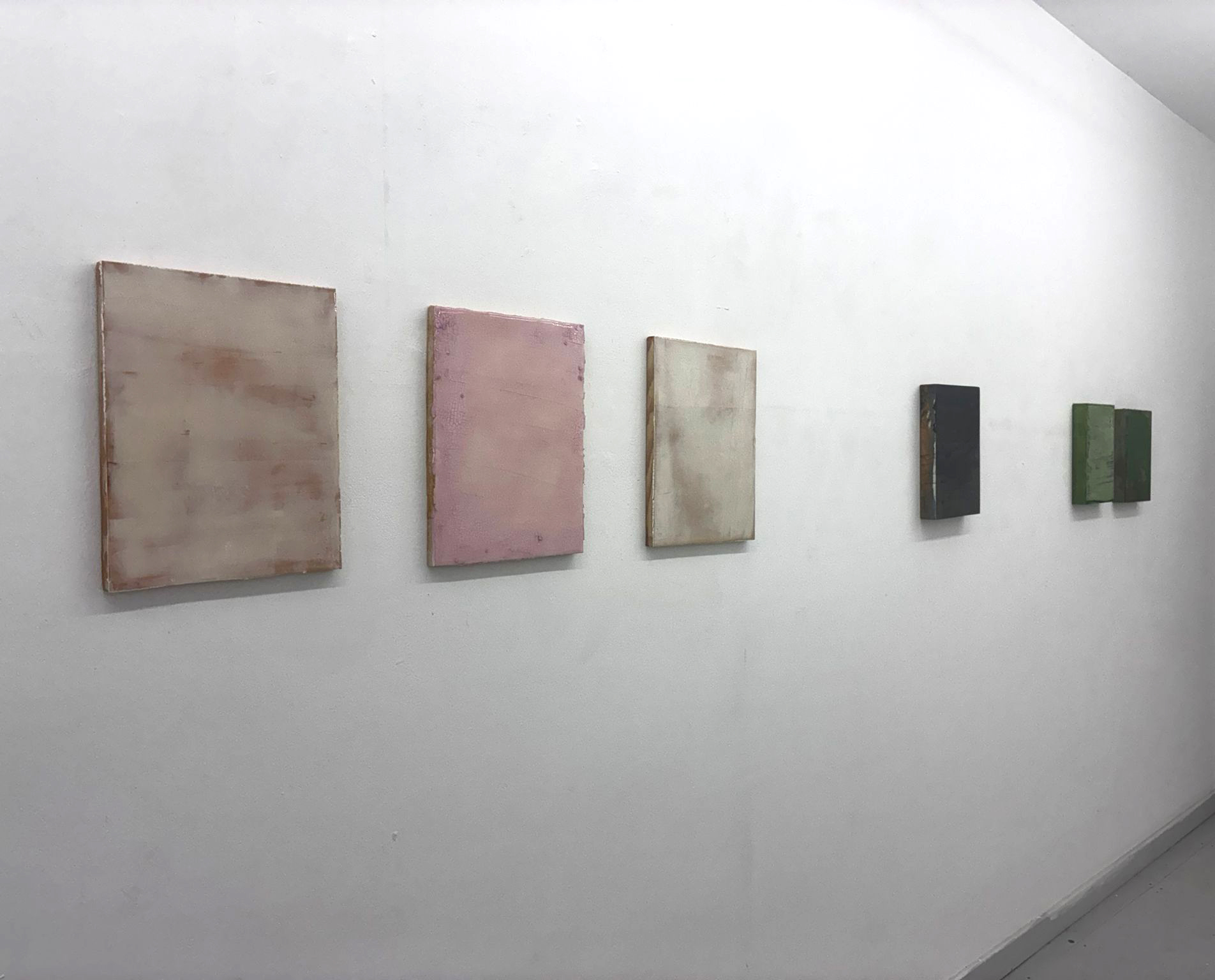
The differences between the works are quite specific. Ana Musma uses human hair to embroider household handkerchiefs in The House Weeps. Edward Jobst Andrews begins Crease Memory II from the creases that remain on a sheet of paper after it has been folded. Mercedes Bautista combines embroidery and writing in Generative meaning. Carla Fajardo contributes the poem What You Leave Behind, while Ana M. Gallinal works with everyday objects in the installation What You Fill. The two pieces are presented in relation to one another within the exhibition. Pep Fajardo creates Amort using a structure that supports a glass sphere.
Cecilia Gala presents I Used to Be a Mountain, a work that combines photography and performance and draws on elements of Japanese Butoh dance. Fernando Leyra explores in This person is not dead (vol. 1) , he explores technologies that aim to extend or alter the biological limits of life. Ramón López de Benito uses technobiotic organisms and images related to environmental degradation in Outbreaks and Collapses. The exhibition also includes Untitled, by Jordi Aligué, and Wheel of Heart Channelsby Lidia Benavides. In the latter work, Benavides draws on references from Tibetan traditions.
The variety of media stems from the selected works: there are installations, sculptures, photographs, performances, poetry, embroidery, and works related to new media. There is, therefore, no single central artist around whom the exhibition is organized. The common thread stems from the research project that gave rise to the exhibition and from the two mythological figures included in the title.
Eros and Thanatos opened on September 10 as part of Apertura Madrid Gallery Weekend and will remain open through November 10, 2026
Represented Artists
What to Do Nearby
Adora Calvo’s location requires us to approach this section differently than we would for galleries in downtown Madrid. The gallery is locatedat Epidauro 53, in Monte Rozas, a primarily residential area of Las Rozas. Near the gallery is the Entremontes Cultural Center, on Aristóteles Street. It is a municipal facility with a library and cultural programming, and one of the few cultural venues in the immediate vicinity.
For dining, one option in this part of Las Rozas is Yatai Market Las Rozas, at 3 Copenhague Street. The venue is designed as an Asian food market and brings together Japanese, Korean, and Chinese cuisine under one roof.


