
Since 2000, Alzueta Gallery has been located on Sèneca Street in Barcelona. Miquel Alzueta began a project there linked to his collection of 20th-century art and design, which over the years evolved into a gallery dedicated to contemporary art. Currently directed by Júlia Alzueta, the gallery maintains a regular exhibition schedule and the T-10 project at this original Barcelona location.
Gallery Profile
Miquel Alzueta opened the Alzueta Gallery on Sèneca Street in 2000 after a career in publishing. He had been one of the founders of Editorial Columna and had been collecting art for years. When he found the space, he initially planned to set up an office there for his collection and work from it. In later interviews, he has said that he began buying and selling artworks while he was still a publisher. The gallery’s activities gradually came to take up all of his professional time.
In its early years, Sèneca featured a significant collection of 20th-century furniture. Alzueta collected it and displayed pieces alongside works of art. Jean Prouvé and Charlotte Perriand were among the designers in his collection. As recently as 2015, Art Madrid’s documentation described Alzueta Gallery as a space where contemporary art coexisted with furniture by 20th-century architects and designers. Over the years, furniture ceased to be part of Sèneca’s regular activities.
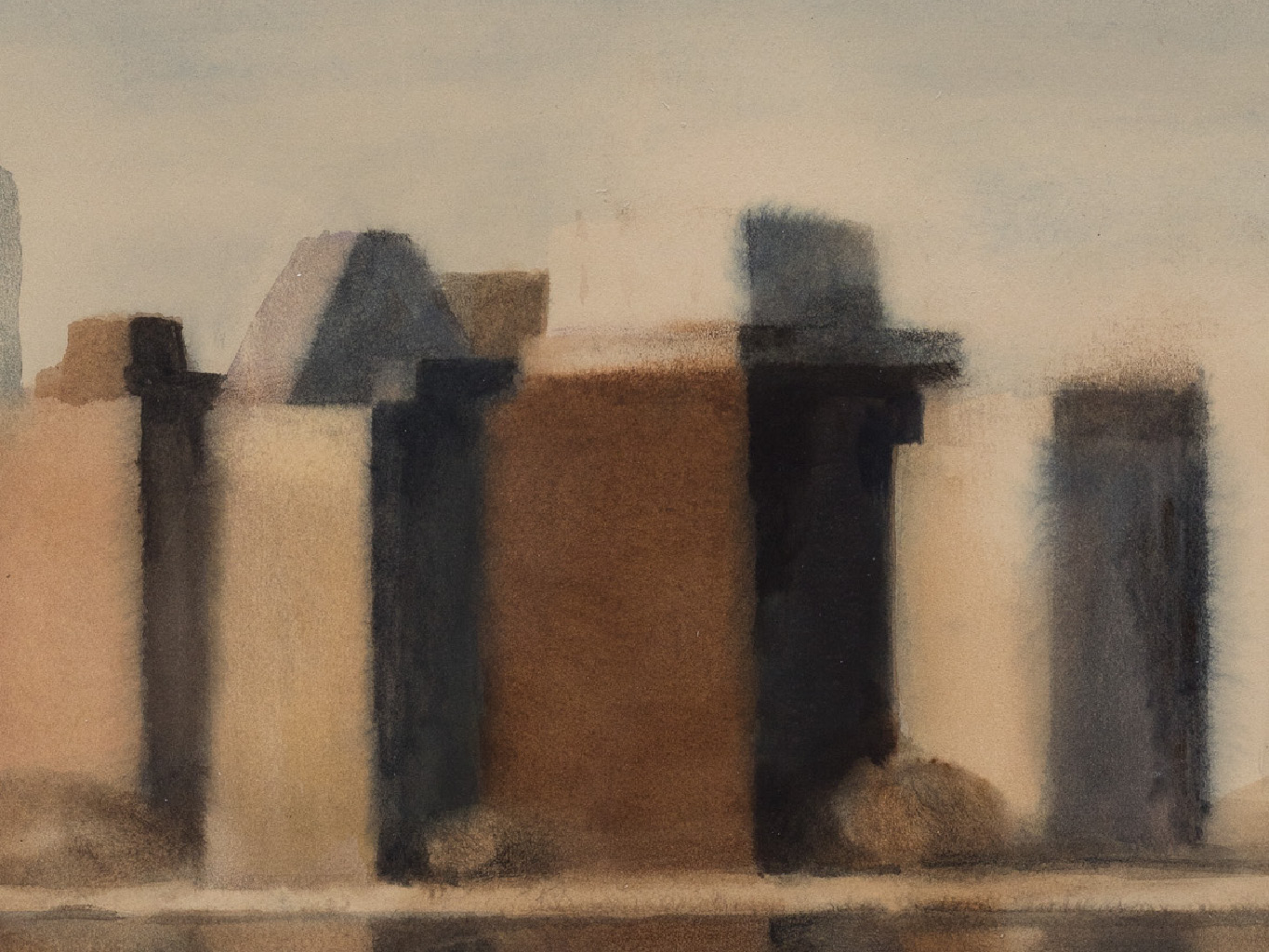
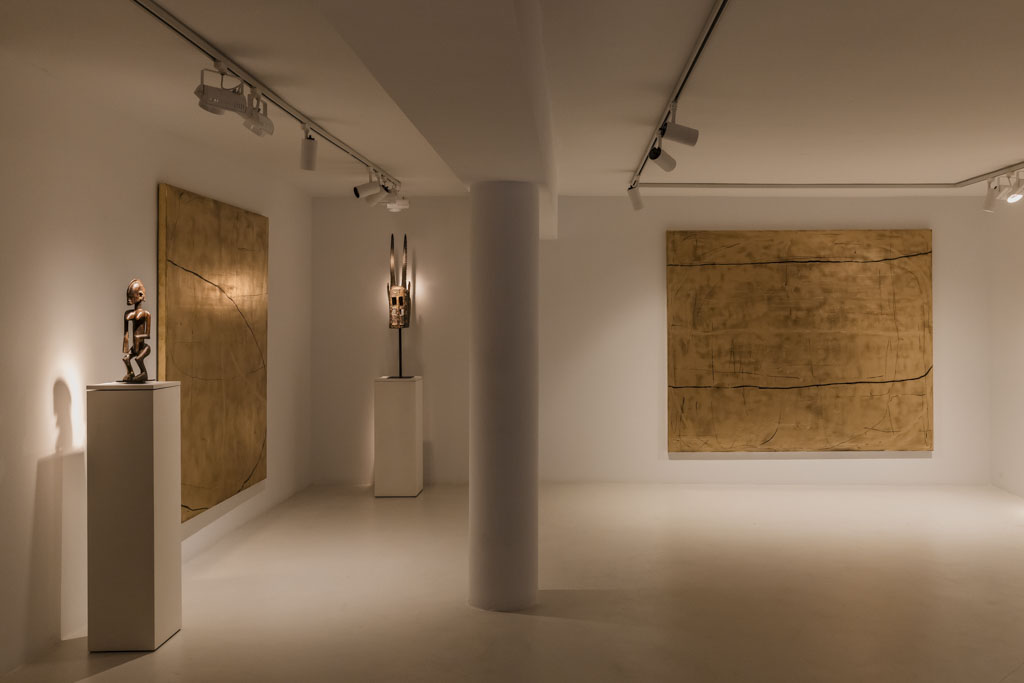
Júlia Alzueta later joined the project and gradually took over its leadership. In 2023, father and daughter spoke publicly about the transition in interviews with El País and La Vanguardia. Júlia explained at the time that the process was taking place gradually. In 2025, Miquel Alzueta told Tendencias del Mercado del Arte that his daughter was already at the helm of the gallery. Currently, Alzueta Gallery lists Miquel Alzueta as founder and Júlia Alzueta as director.
During those years, other locations were opened. In Barcelona, Alzueta also has a space on Josep Bertrand Street, next to Turó Park. The gallery also operates out of Madrid and Paris. In the Empordà region is the Palau de Casavells, housed in a historic building where works of art, furniture, and design objects are exhibited.
Alzueta also runs an artist residency in La Bisbal d’Empordà. Guest artists are given a period of time to work there, and some of the projects created during these residencies have subsequently been featured in exhibitions at the gallery. The residency program and Casavells extend part of Alzueta’s activities beyond Barcelona.
Program
Why Go
Alzueta’s programming allows visitors to follow certain artists over several years and across different projects. Sabine Finkenauer (Rockenhausen, Germany, 1961) has lived and worked in Barcelona since the late 1980s. A graduate of the Academy of Fine Arts in Munich, she works primarily in drawing and painting. Her figures, geometric shapes, and plant motifs are reduced to lines and colored surfaces. After several years of collaborating with Alzueta, in April 2024 she spent a month at the gallery’s residency in La Bisbal d’Empordà. There she prepared the works for Mailied, her first solo exhibition at the Sèneca gallery, which opened the following month.
Andrea Torres Balaguer (Barcelona, 1990) arrived at T-10 in May 2026 with a project she had begun ten years earlier. The photographer uses self-portraiture in *The Unknown*, but she then removes the element that normally allows the viewer to identify the person photographed: she covers her face with a paint splotch applied to the print. For the exhibition at Sèneca, she selected ten photographs taken over the course of a decade and prepared a limited edition to mark the series’ anniversary. Torres Balaguer had previously participated in exhibitions at Alzueta in Barcelona and Madrid; T-10 allowed her to revisit a specific project and showcase its evolution since the earliest images.
Another artist whose career can be traced within Alzueta is Hugo Alonso (Soria, 1981). His paintings often draw on images from film, photography, or visual archives, which he transfers to canvas and paper using acrylics. At Sèneca, he presented *Floralia* in 2022 and New Landscapes in 2023. In February 2025, he returned to the same venue as part of T-10. His work has also been shown at the gallery’s locations in Madrid, Turó, and Paris, so his exhibitions allow viewers to follow how an artist moves from a solo show at Sèneca to other spaces within the gallery.
T-10 offers more focused exhibitions. The format occupies the ground floor and maintains a fixed format: ten works by a single artist. In the case of Andrea Torres Balaguer, those ten pieces served to revisit a photographic series developed over the course of a decade. Other artists have used the same space to showcase works produced specifically during a recent period. The duration of these exhibitions is also shorter than that of Sèneca’s main exhibitions. The Unknown was on view from May 4 to 28, 2026.
The residency in La Bisbal is featured at various points in the program. Sabine Finkenauer created *Mailied*there. Alzueta’s documentation also records the residencies of Kottie Paloma, Violeta Maya, Liam Stevens, and Mateo Revillo, although subsequent projects did not always follow the same path. Mateo Revillo, for example, worked during his residency on an exhibition intended for the Turó location. The residency thus functions as a workspace for artists.
Sèneca's current season began on September 17 with *Elvira Amor*. The Madrid-based artist had previously participated in the residency program in La Bisbal and is now presenting Volta, coinciding with Barcelona Gallery Weekend. The exhibition runs through October 15.
What to Expect
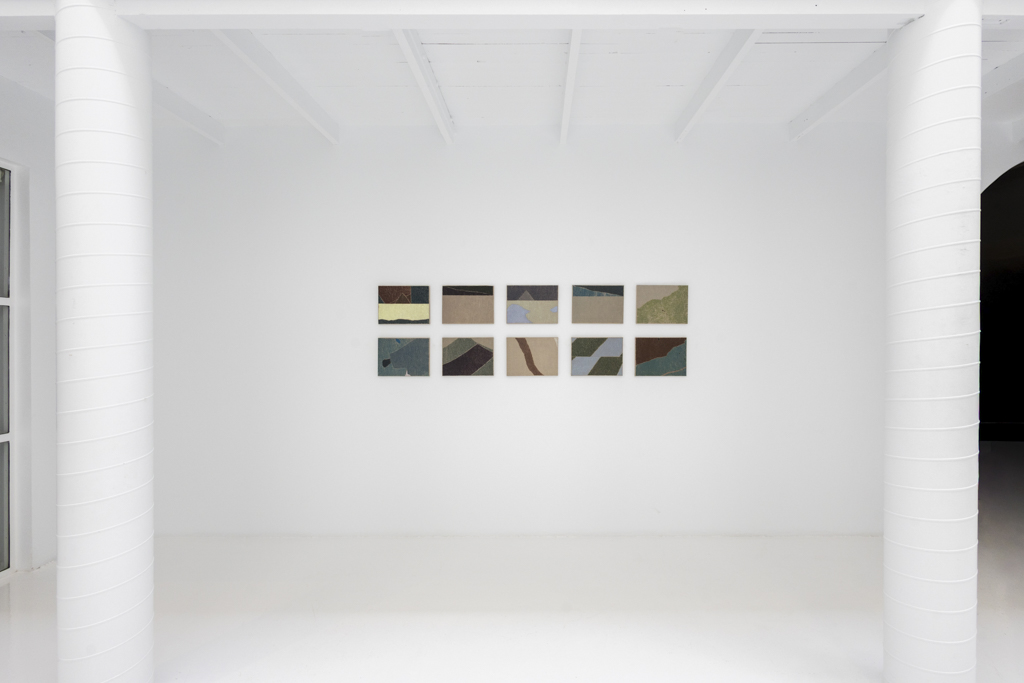
Elvira Amor (Madrid, 1982) is currently presenting Volta at Alzueta Gallery Sèneca. Her work begins with painting and has, for years, been expanding beyond the conventional format of the canvas. Color may appear on canvas or paper, continue onto the wall, or transition to pieces that depart from a flat surface. This approach was already evident in Verde llano, rosa oblicuo, the exhibition that the Caja de Burgos Art Center dedicated to her in 2022. There, she used paintings, papers, stretchers, silkscreen prints on the walls, and elements placed on the floor.
In Volta once again engages with the architecture of the gallery space. The exhibition brings together paintings on canvas and paper with pieces made of aluminum and works created directly on Sèneca. Not all the elements on view in the exhibition are, therefore, paintings hanging on the walls. Some forms extend from the pictorial surface to the wall, while others take on a physical presence through the use of aluminum.
Amor works with colored surfaces and shapes that do not represent identifiable figures or objects. His paintings feature areas with irregular contours, the shape of which also depends on the gesture with which he applies the paint. In the CAB exhibition, he had already taken some of those shapes off the canvas and incorporated them into the walls and floor. Volta continues that work in a different space with new pieces.
The exhibition also coincides with another project by Amor en Madrid. Starting September 10, the Moisés Pérez de Albéniz Gallery is presenting *Sauce Espejo*. The text written by Mariano Mayer for that exhibition focuses on an aspect that recurs in his paintings: the forms and colors stem in part from images retained in memory and reappear, modified, in the painting. Mayer also points out that a painting may begin on paper and later continue on a wall or canvas. This serves as a recent precedent for the works now on view at Sèneca, although these are two separate exhibitions.
The relationship between painting and space has a particularly clear precedent in Burgos. For *Verde llano, rosa oblicuo*, Amor worked on the walls and floor of the CAB and used canvases, paper, and stretchers alongside forms set apart from the wall. The exhibition had been conceived specifically for those galleries. Four years later, at Sèneca, we once again encounter a painting that does not necessarily end at the edges of its support.
What to Do Nearby
Just a few meters from Alzueta, at 25 Sèneca Street, is Pompa, a small restaurant serving Mediterranean cuisine. It offers a short menu that changes with the seasons and is open primarily for dinner on weekdays, in addition to lunch service on Fridays. Due to the limited number of tables, reservations are recommended.
In Gràcia, Galería H2O has been located at Verdi 152 since 1989. Joaquim Ruiz Millet founded the space, and from there he has organized exhibitions of contemporary art and photography, as well as projects related to architecture, design, and publishing. Through October 9, it is presenting *La forma en demora*, an exhibition by Bruna Ruiz Planella and Valentina Silva.
Also in Gràcia is Casa Vicens, at Carolines 20–26. Antoni Gaudí designed it between 1883 and 1885 as a summer residence for Manuel Vicens i Montaner, and it was his first major residential commission. The building opened to the public as a house museum in 2017 and is part of the collection of Gaudí’s works designated as a UNESCO World Heritage Site. The tour takes visitors through the main rooms, the dining room, the gallery, and other areas of the house, where original ceramic and woodwork elements have been preserved.
Finestres Palestina is located at Verdi 17 Finestres Palestina, a bookstore specializing in Palestinian literature and publications about Palestine. It is part of the Llibreria Finestres project, which has two other locations on Diputació Street. Its shelves feature fiction, poetry, essays, history, political thought, and children’s books, with titles published in various languages.


