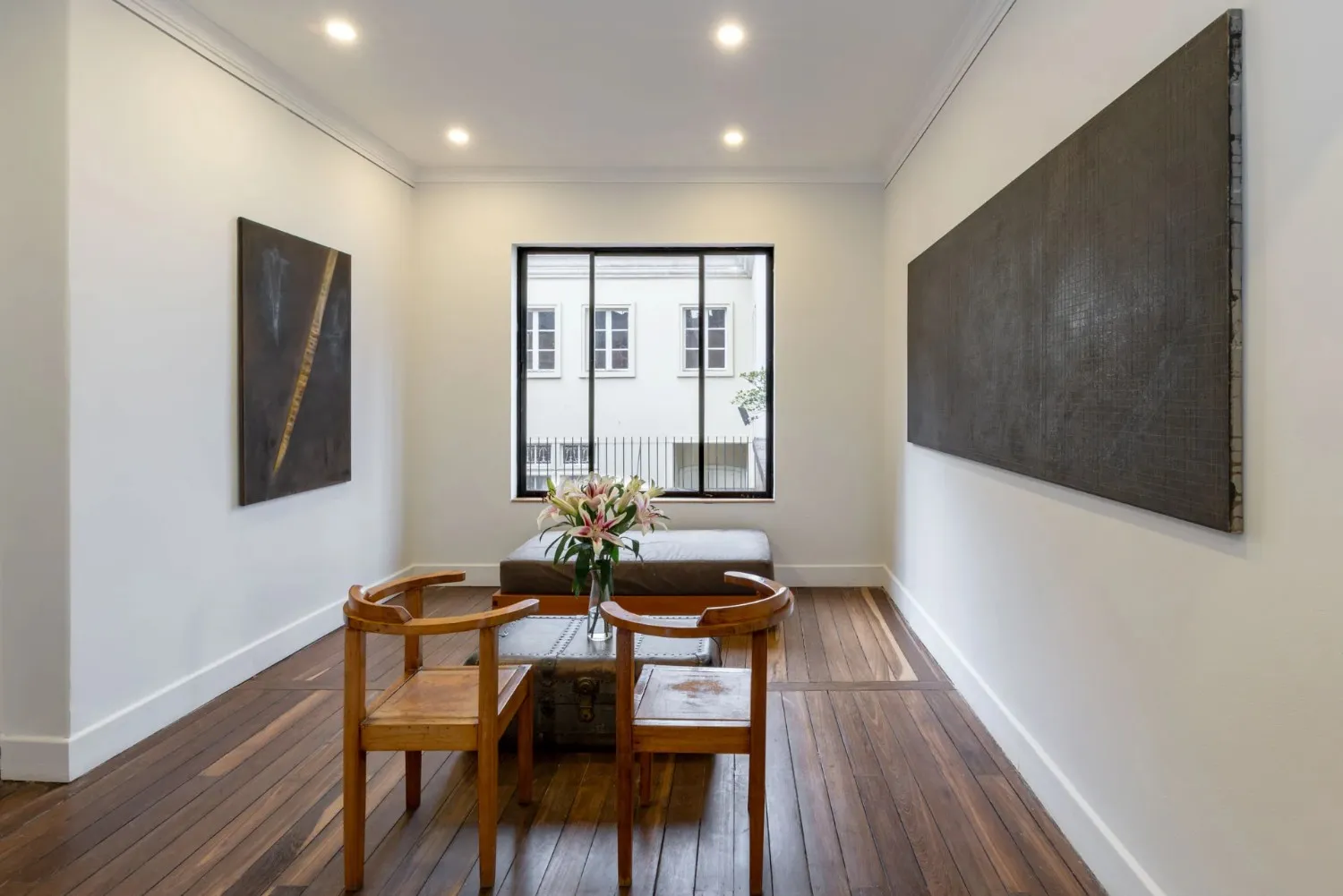
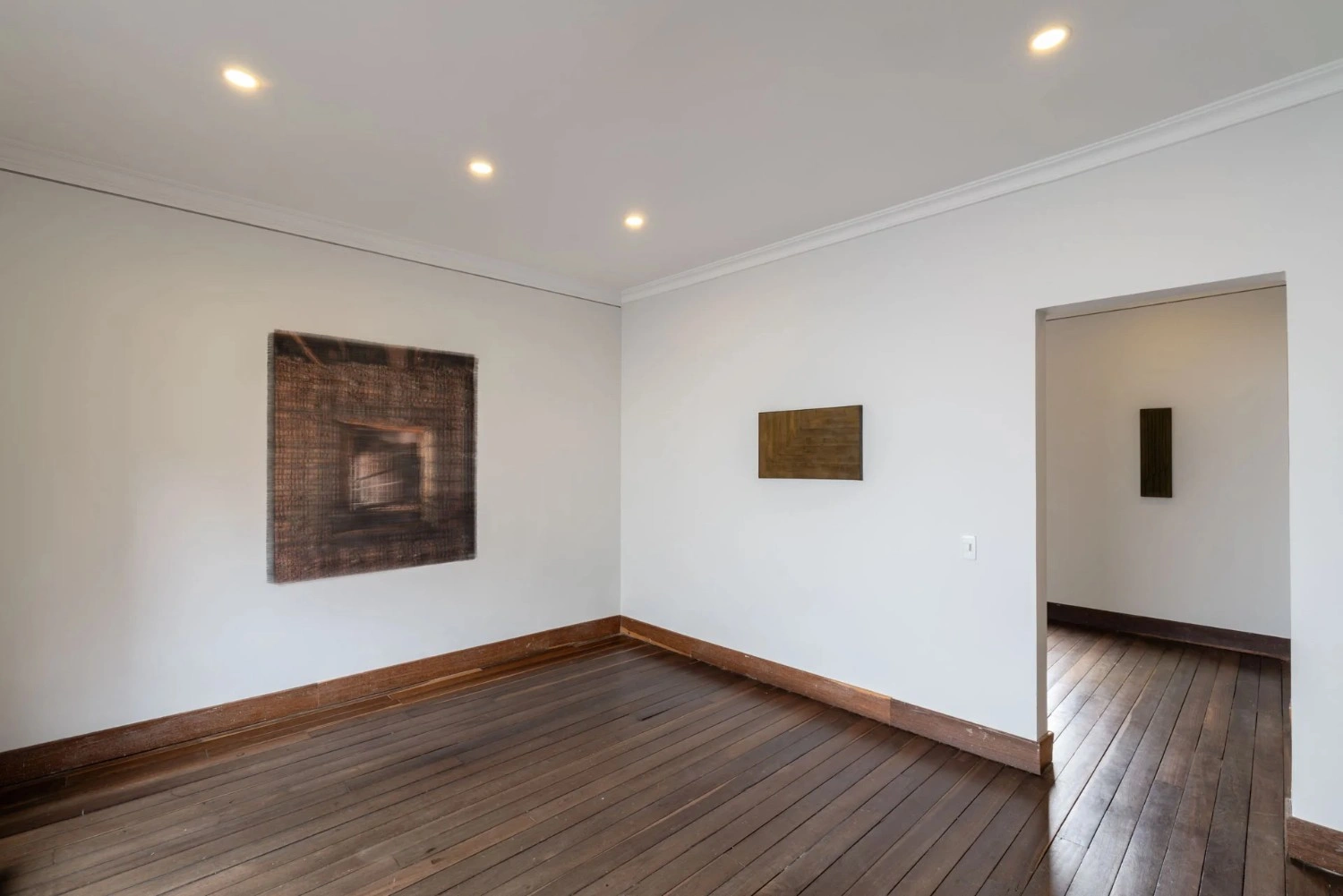
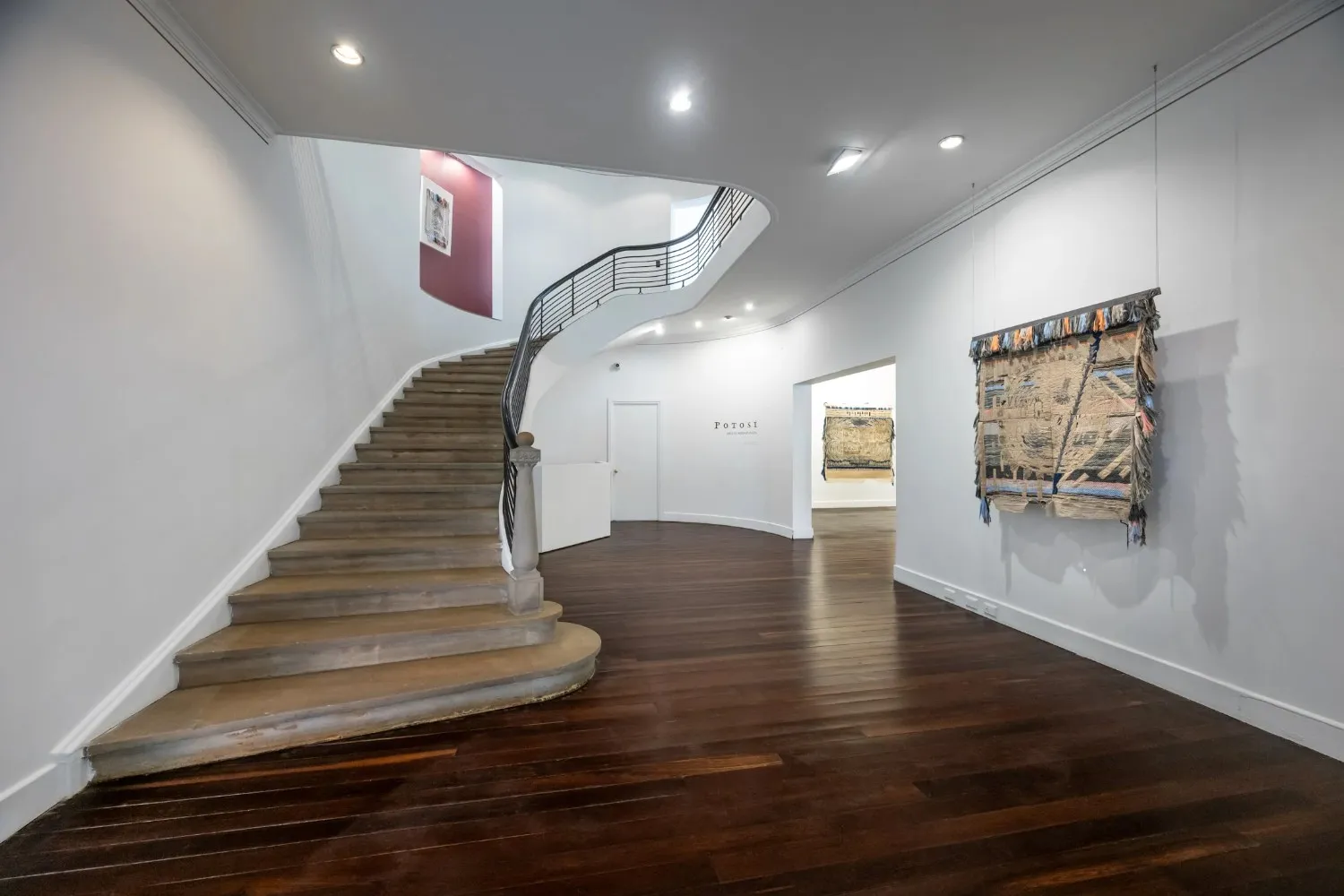
Casas Riegner began operations in Miami in 2001 and opened a location in Bogotá in March 2005. Since then, it has worked with figures such as Beatriz González, Antonio Caro, María Teresa Hincapié, and Carlos Rojas, alongside artists from later generations such as Bernardo Ortiz, Leyla Cárdenas, Carlos Alfonso, and Luz Lizarazo. The gallery regularly participates in international art fairs and opened an office in Madrid in 2026. Its current exhibition, *Abraza mis bestias que voy de paso*, features recent work by Luz Lizarazo.
Gallery Profile
Casas Riegner was founded in Miami in 2001 and moved its operations to Bogotá four years later. The gallery’s location on Calle 70A opened in March 2005. Catalina Casas, the gallery’s founder, continues to lead the project. Part of its history has been shaped by long-standing relationships with Colombian artists from different generations. Beatriz González (Bucaramanga, 1932–Bogotá, 2026) joined Casas Riegner in 2012. By then, she had been working for half a century with images derived from reproductions of artworks, photojournalism, and other printed materials. Beginning in the 1980s, news of the violence in Colombia took on an increasingly prominent role in her paintings, furniture, curtains, and public interventions.
In 2016, Casas Riegner presented *Reiteraciones (1981–2015)*, an exhibition focused precisely on the repetition and transformation of images over more than three decades of work. The relationship between González and the gallery lasted for more than ten years. In 2026, a few months after the artist’s death, the Barbican in London presented her first retrospective in the United Kingdom, featuring more than 150 works dating back to the 1960s.
Casas Riegner’s relationship with María Teresa Hincapié (Armenia, 1954–Bogotá, 2008) took on a different character. Hincapié trained in theater with the Acto Latino group, and during the 1980s she gradually shifted her work toward long-duration performances. In *Una cosa es una cosa*(One Thing Is One Thing), for which she won first prize at the National Artists’ Salon in 1990, she spent hours arranging objects from her own home in a precise sequence. In *Vitrina* (Display Case ), she had previously transformed the window of a Bogotá store into a workspace and observation point.
In 2021, Casas Riegner presented *Responses to an Era: María Teresa Hincapié 1987–2006*, the first posthumous exhibition dedicated to the artist in Colombia. Photographs, videos, and documents from her archive made it possible to reconstruct works created over a period of nineteen years. This work continued in the institutional sphere with *María Teresa Hincapié: If This Were the Beginning of Infinity*, organized by the Museum of Modern Art of Medellín and MACBA in Barcelona.
Antonio Caro (Bogotá, 1950–2021) began his career in 1970 and turned words, brand names, and simple materials into tools for his work. *Colombia*, first created in 1977 using the Coca-Cola typeface, became one of his best-known works. His relationship with Casas Riegner began around 2010, when the gallery published *Antes de Cuiabá*, a book dedicated to his work from 1970 to 1980.
Bernardo Ortiz (Bogotá, 1972) began working in the 1990s with drawing, writing, printed fragments, and the physical properties of paper itself. One of his works, *Untitled Diptych* (I Am Never Awake. September 24–26), from 2010, was on view at Casas Riegner until 2011, then passed to the Patricia Phelps de Cisneros Collection, and entered MoMA in 2017 as part of that collection’s donation to the museum.
In 2017, the gallery looked back on its own history with *Timeline*, a series of six short exhibitions drawn from its archive and featuring works created at different points in its artists’ careers. Participants included, among others, Beatriz González, Antonio Caro, Carlos Rojas, Rosemberg Sandoval, Bernardo Ortiz, Leyla Cárdenas, and Mateo López.
Why Go
Luz Lizarazo (Bogotá, 1966) has been working for more than three decades with drawing, painting, sculpture, embroidery, and installation. The body appears repeatedly in her work: skin, organs, eyes, hair, bones, and anatomical fragments have served as a means to address women’s physical experience, sexuality, motherhood, and various forms of violence inflicted upon the female body. Between 2017 and 2021, she created *Piel*, a series made from sheer stockings that were cut and sewn together. The material retains its immediate association with the body and can be stretched across walls and architectural spaces. A work from that series, *Piel extendida*, was acquired by the Reina Sofía Museum in 2025.
Her first major institutional retrospective was *Cicatrices*, curated by Eugenio Viola at the Museum of Modern Art in Bogotá from 2021 to 2022. The exhibition brought together approximately fifteen years of work, including pieces created specifically for the museum. It was subsequently presented at the La Tertulia Museum in Cali. In 2023, Casas Riegner presented *En el ojo nace la rosa*. Paintings, drawings, ceramics, and sculptures were arranged across three sections titled *Day*, *Night*, and *Eclipse*. The body, the eyes, animals, the bed, and plants reappeared in various works.
In 2024, she represented Colombia at the first Malta Art Biennial with *Mi cuerpo dice la verdad*(My Body Tells the Truth), a work inspired by Saint Agatha and the mutilation of her breasts. The project revisited a theme present in Lizarazo’s earlier works: the female breast as a part of the body subject to interpretations related to sexuality, motherhood, and violence. At ARCOmadrid 2025, Casas Riegner presented *Extended Skin*. The Reina Sofía Museum acquired the installation during the fair, as part of a group of four works purchased with the museum’s own funds.
*Abraza mis bestias que voy de paso* follows those exhibitions and Lizarazo’s inclusion in the Reina Sofía collection. The works from 2026 introduce a new group of characters within a body of work in which the body had already appeared fragmented, covered, observed from within, or transformed into a surface.
What to Expect
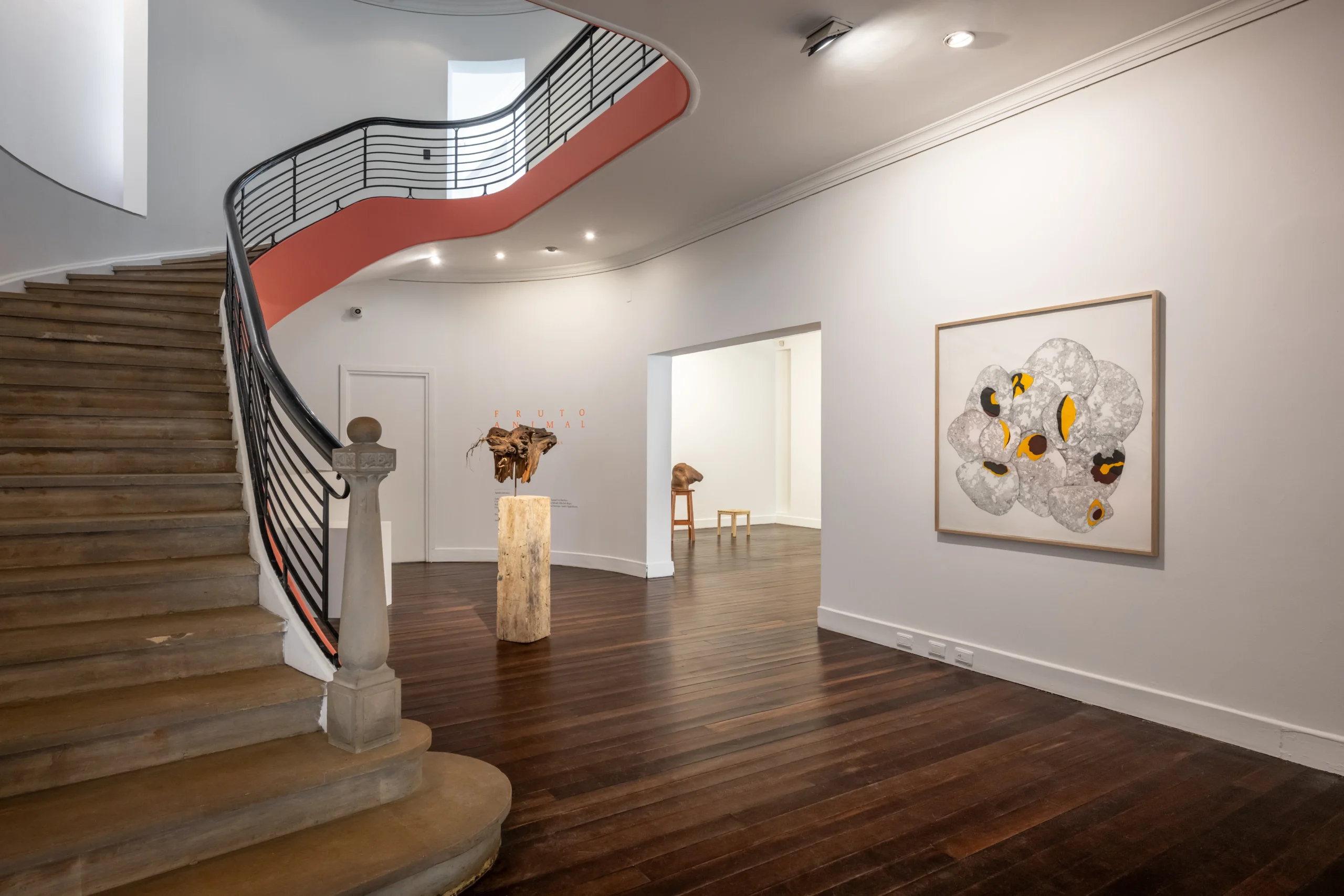
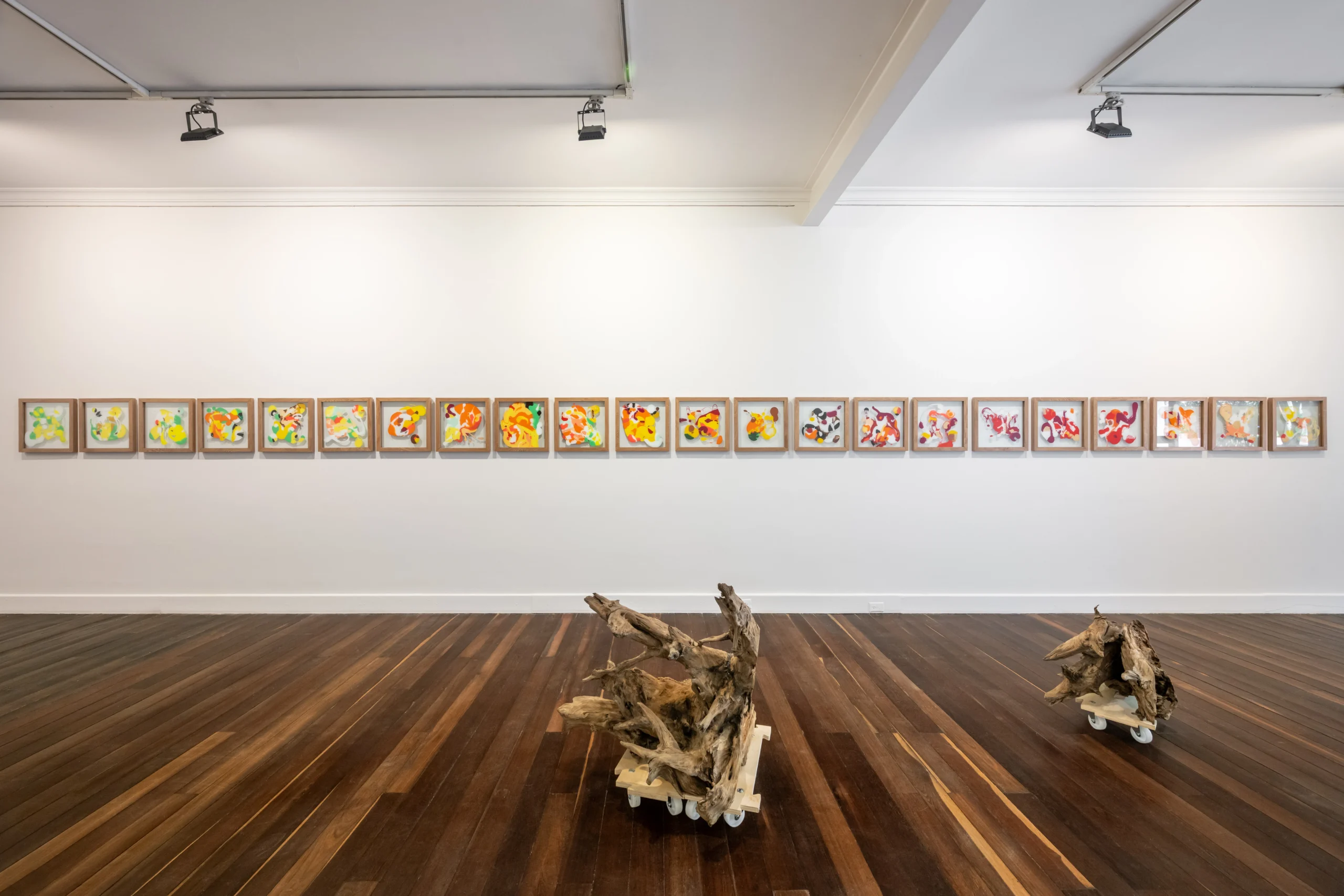
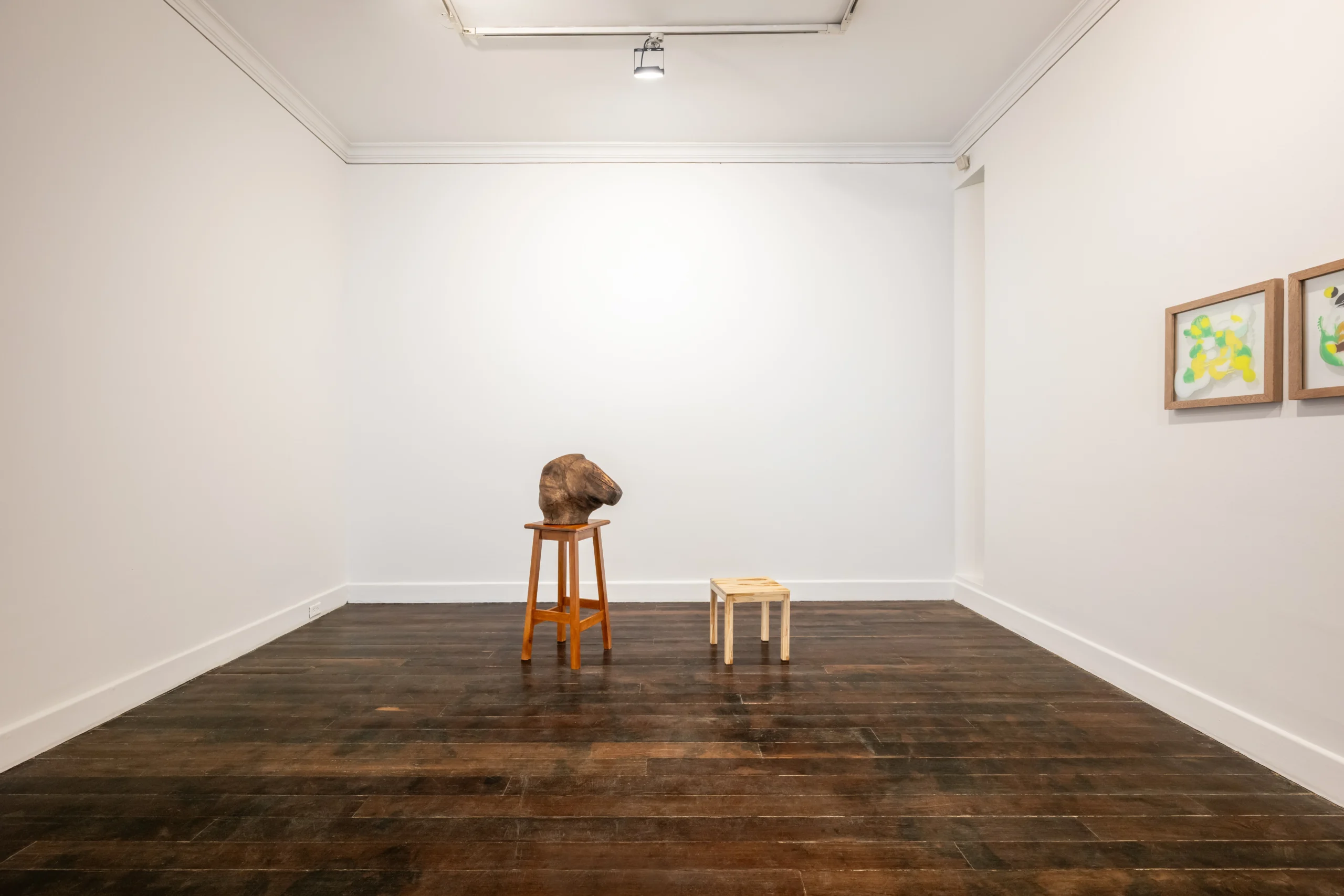
"Embrace My Beasts—I'm Just Passing Through" opened on September 18, 2026. The exhibition features a recent series of figures that Luz Lizarazo calls " beasts." The figures blend human and animal anatomies. In the works published by the gallery, bodies appear with snouts, animal heads, altered limbs, and forms in which it is difficult to determine where one species ends and another begins. Lizarazo associates each “beast” with a specific emotional state. She has explained that these characters arrive, remain for a time, and are then replaced by another. Metamorphosis thus manifests itself in the figures’ own bodies.
Among the recent works that Casas Riegner associates with this period are *Encuentro de todas mis bestias, invitación a la danza*, *La danza del abrazo*, *La profecía *, and *Corazón no te pares*. The body continues to occupy the center of the works. The difference lies in its configuration. The sewn-together stockings in *Piel extendida* transformed the skin into a surface capable of occupying the architectural space. In these pieces, the transformation occurs within the figure: a human anatomy acquires animal parts and becomes one of the artist’s characters. The exhibition remains open through November 7, 2026.
What to Do Nearby
Casa Hoffmann is located at Carrera 2A #70-25, just a few minutes’ walk toward the hills. The gallery focuses on contemporary art and has paid special attention to projects related to technology, sound, and new media. Its proximity to Casas Riegner makes it possible to visit both during the same outing.
If you have more time, you can walk north to Galería El Museo, at Calle 80 #11-42. Founded in 1987, it belongs to an earlier generation of Bogotá galleries and features modern and contemporary Colombian and Latin American art. The route from Casas Riegner allows you to walk through this part of Chapinero before reaching Calle 80.
For a meal, Harry Sasson is located at Carrera 9 #75-70, also along the route heading north. The restaurant is housed in a brick building and is one of Colombian chef Harry Sasson’s longest-running ventures.