
Galería La Cometa is a Colombian platform founded in Bogotá in 1986 by Esteban Jaramillo. Its program connects Latin American artists through its locations in Bogotá, Medellín, Madrid, and Miami, and brings together established artists, mid-career artists, and contemporary practices.
Gallery Profile
Galería La Cometa was founded in Bogotá in 1986 by Esteban Jaramillo. Its history reflects an important aspect of the recent development of the Colombian gallery scene: the transition from a local exhibition project to a platform with four locations and a presence at international art fairs. The gallery operates from a Latin American base and has maintained Bogotá as its hub. Its history began before the region’s recent global expansion in the art world and has evolved alongside the growth of the market, collectors, and institutions.
The project’s growth is organized by locations. Medellín opened in 2019 with Jim and Olga de Amaral and established a second presence in Colombia. Madrid opened in February 2019 to expand the presence of Latin American artists in Europe. Miami opened in November 2023 with an inaugural exhibition dedicated to Miguel Ángel Rojas, Camilo Restrepo, and Ricardo Cárdenas. The network allows us to showcase artists in cities with diverse audiences and maintain an ongoing dialogue between Colombia, Spain, and the United States.
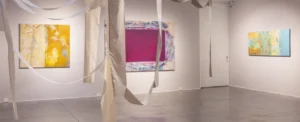
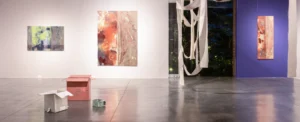
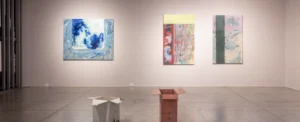
That expansion defines the program. La Cometa works with artists from various generations and media. Miguel Ángel Rojas contributes conceptual work linked to sexuality, marginalized culture, violence, and territory. Camilo Restrepo develops counter-narratives about truth, fiction, and popular culture. Ricardo Cárdenas incorporates engineering, volume, and materials into his sculptural practice. Verónica Lehner explores fabric, waste, and process. Maria Fernanda Cardoso works with nature, the body, science, and form, maintaining a sustained interest in species, organic structures, and systems of perception.
The Madrid venue broadens the scope of the exhibition. Paloma Jaramillo has presented the gallery as a gateway for Colombian artists in Europe and has highlighted the inclusion of local artists in the program. Juan Baraja is featured as a Spanish artist represented by La Cometa in Bogotá and at Zona Maco. Ana González is featured as a Colombian artist with an institutional presence in Spain. This intersection adds a clear dimension: the program does not function solely as a national representation; it also fosters exchanges between art scenes.
The Bogotá location offers the most comprehensive view of the project. Chicó Norte, its cosmopolitan neighborhood, brings together housing, offices, restaurants, bookstores, and cultural spaces with a different rhythm. La Cometa fits into this context as a gallery focused on continuity, more closely aligned with collecting and sustained collaboration with artists than with the logic of quick discovery. This approach explains part of its stability: a private institution capable of supporting artists’ careers and fostering connections between artworks, audiences, and markets.
“We see La Cometa Gallery as a gateway for Colombian artists in Europe.” — Paloma Jaramillo
La Cometa’s focus lies in this dual mission: maintaining a Colombian base and fostering international visibility for artists from diverse backgrounds. Its program brings together historic figures, established artists, and contemporary practices through a broad Latin American lens. The gallery has established itself as a network of venues, a marketplace, and a context for works that move between cities and maintain a direct relationship with their materials, histories, and places of production.
Why Go
It’s worth visiting to understand how a Colombian gallery has maintained a network of artists, collectors, and international venues for nearly four decades. La Cometa works with a clearly defined Latin American focus and has taken that program to Madrid and Miami as part of a broad platform for artists from Colombia and other parts of the region.
Their focus is on the continuity of the project and the variety of artistic languages. The program features artists working in painting, sculpture, installation, textiles, photography, video, and archival work. Miguel Ángel Rojas, Camilo Restrepo, Ricardo Cárdenas, Ana González, Juan Baraja, Verónica Lehner, and Maria Fernanda Cardoso offer a gallery that spans several generations and media.
It is also noteworthy for its network of locations. Bogotá preserves the project’s origins and legacy; Medellín strengthens its presence in Colombia; Madrid opens a dialogue with Europe; and Miami positions the gallery at a frequent point of contact between Latin America and the United States.
What to Expect
The Bogotá location is in Chicó Norte, near Parque de la 93, within an area featuring offices, residential buildings, restaurants, and retail spaces. A visit works best as a specific stop, with a confirmed appointment or schedule and enough time to view the exhibition. The main location preserves the project’s historical significance and helps visitors understand the gallery’s Colombian origins, prior to its expansion to Medellín, Madrid, and Miami.
La Cometa can feature painting, installation, sculpture, textile art, photography, video, and archival projects. Clear thematic threads emerge in recent exhibitions: Verónica Lehner works with textile scraps and production processes; Maria Fernanda Cardoso explores themes of animals, nature, and form; Camilo Restrepo addresses violence, fiction, and popular culture through highly graphic imagery. It is best to view each exhibition through the lens of the artist, their materials, and the context created by the gallery.
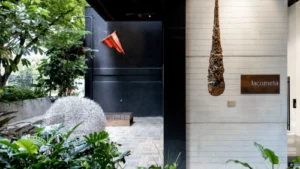
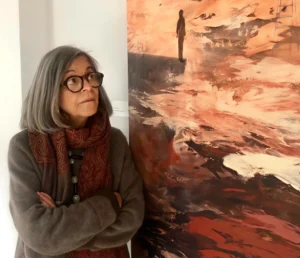

The program features Colombian and Latin American artists, as well as some Spanish artists affiliated with the Madrid branch. This structure allows for a direct understanding of the exchange between art scenes. Juan Baraja has been featured by the gallery in Bogotá and at Zona Maco; Ana González is among the Colombian artists with institutional recognition in Spain; Miguel Ángel Rojas carries historical significance for his work related to the body, politics, marginality, and territory. The visit gains depth when these names are viewed as part of a network of venues.
This outing allows you to plan a short route through Chicó and Parque de la 93. The El Chicó Museum Park adds a local historical and architectural dimension; the Lerner Bookstore on Calle 93 serves as a useful cultural stop; and the Parque de la 93 area is home to a concentration of cafes and restaurants to round out the visit. La Cometa is a natural focal point for an afternoon centered on Colombian and Latin American contemporary art, with a schedule worth checking before heading out to its other venues.
Represented Artists
What to Do Nearby
After leaving La Cometa, I would head to the El Chicó Museum Park before moving on to another area. The house and its gardens offer a historical perspective on northern Bogotá and provide a nice balance to a visit to an art gallery. The museum preserves the legacy of Mercedes Sierra de Pérez and serves as an architectural respite near the gallery.
For reading, the Lerner Bookstore on Calle 93 is the most logical stop. The northern branch caters to the cultural crowd in this part of Bogotá and allows you to continue your journey with books on art, essays, Colombian literature, and contemporary publications. For dining, the area around Parque de la 93 offers a convenient option along the same route. For a more sophisticated meal, Harry Sasson serves as a standout culinary finale, with a distinct connection to Bogotá’s tradition of converted homes, signature cuisine, and long after-dinner conversations.

