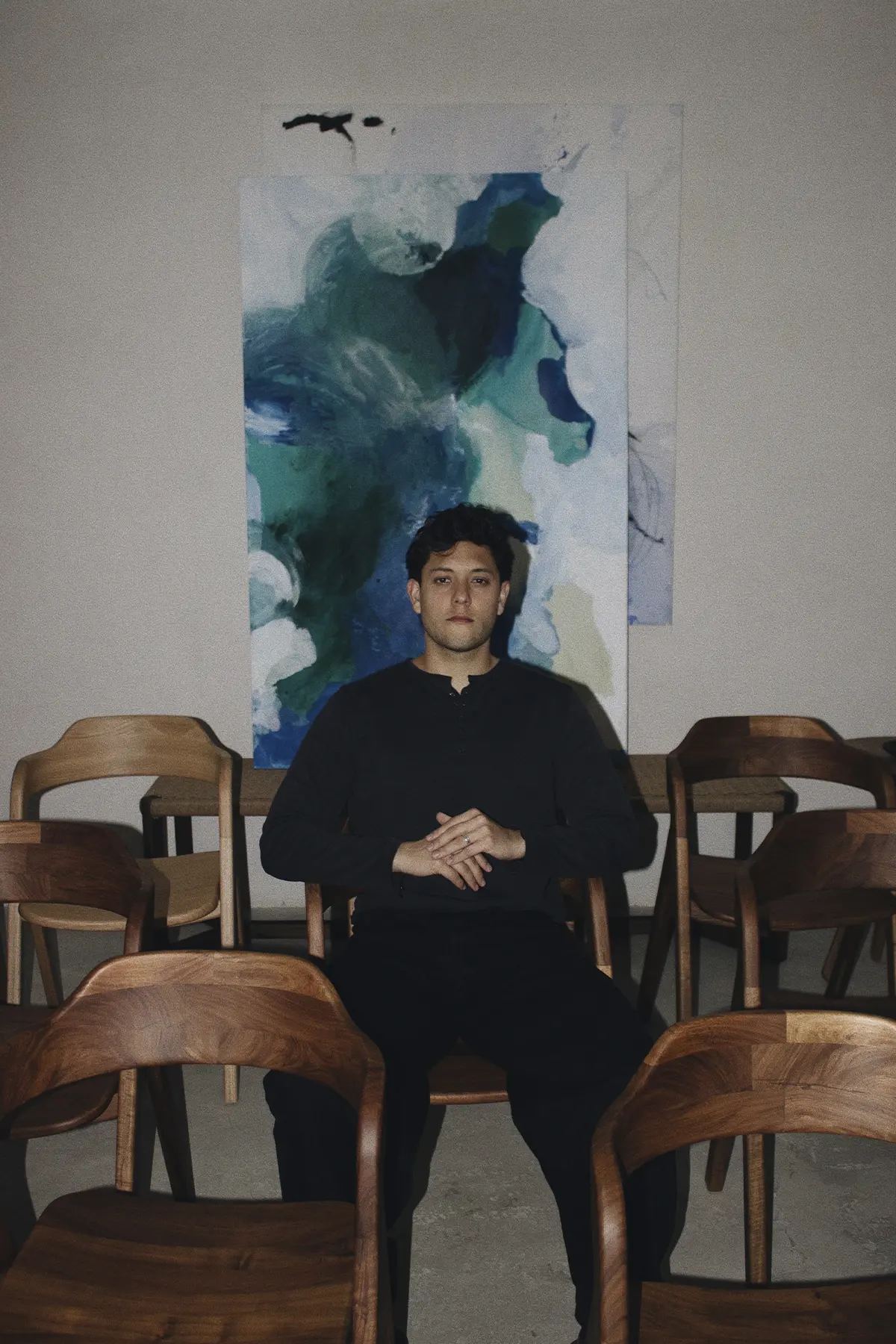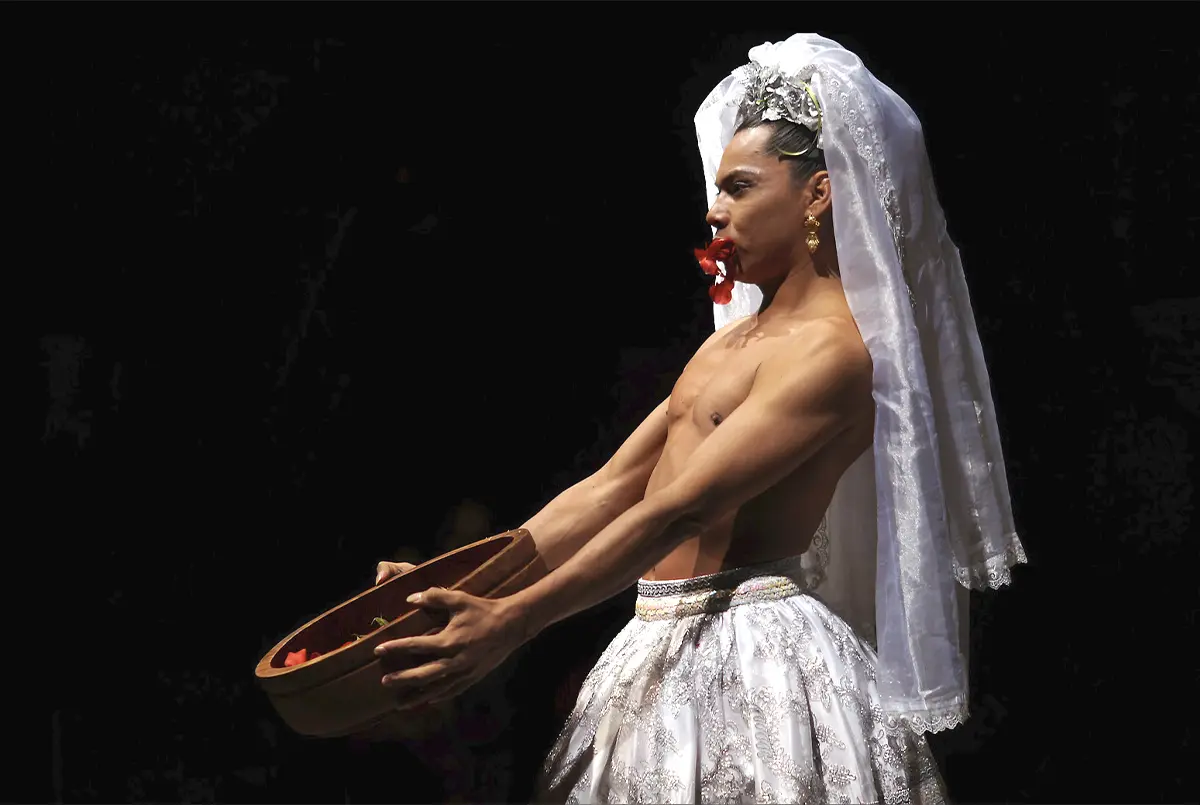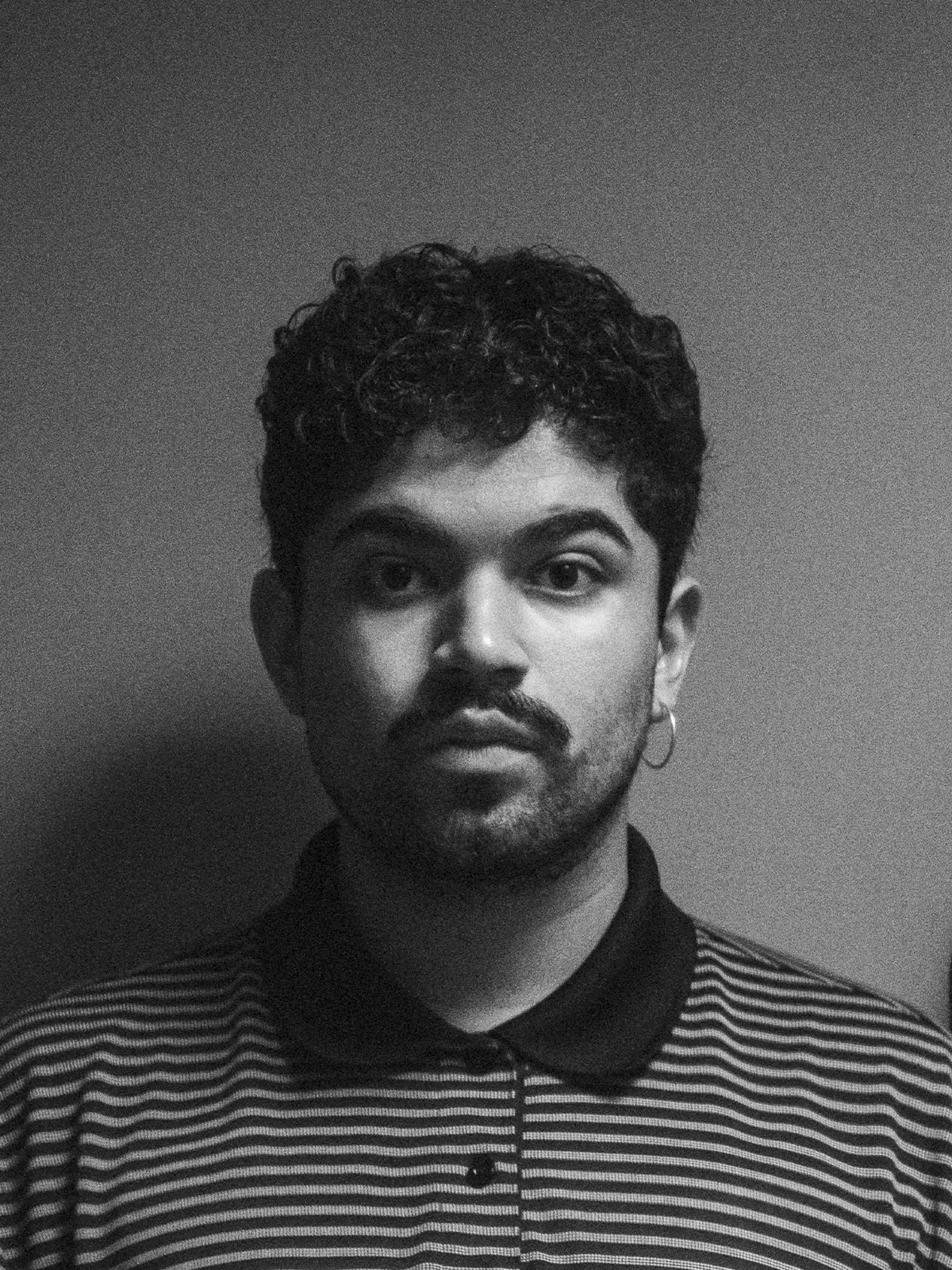

“I was introduced to cinema through my mother, a DVD player, and occasional trips to the movies,” he recalls. He attended a school in downtown Santiago that was closely tied to the student protests. During one of the many periods when he couldn’t attend classes, he watched Martin Scorsese’s classic *Taxi Driver* in his living room.
He clearly remembers that, when the movie ended, the first thing that crossed his mind was, “I need to know how they did this!”

Reimagining Eduardo Miño’s Last Day
That’s how clearly the path unfolded for José Manuel Parraguez, a young Chilean filmmaker who recently premiered *Cuerpo al aire*, a short film inspired by the story of Eduardo Miño. Miño was a Chilean laborer who, in 2001, set himself on fire in front of the Palacio de La Moneda to protest his unemployment and to draw attention to the victims of asbestosis.
“I was just over a year old when it happened, so I had to thoroughly research the case. When I read the news, I always thought I would eventually include it in one of my own works. What he did—and what he gave his life for—is something that cannot be confined solely to that November of 2001, but rather is part of the ongoing struggle for the right to live in a place free from pollution, especially given the advance of climate change and the deterioration of our ecosystem.”

Characters grappling with everyday contradictions
The film director and screenwriter, a graduate of the University of Chile’s Film and Television Production program, has focused primarily on characters and settings shaped by the contradictions of everyday life. He has directed the short films *Perraje* (2021), a documentary screened at Teatro a Mil; and *Galgo* (2023), which was selected for the Clermont-Ferrand Short Film Market. He now presents *Cuerpo al aire* (2025), which premiered at FICVIÑA2025 as an international short film and at FICIC2026, and is currently available worldwide on the Ondamedia platform.
Body in the Air is a drama that uses imagery to convey tragedy, despair, and also how symbols are born. However, unlike much of today’s art-house cinema, which tends to be more contemplative, the story features a great deal of dialogue: “I feel it stems from something that is very characteristic of us Chileans—the ability to talk at length without needing to directly mention the very things we’re trying to discuss,” he acknowledges.
Hidden Stories Behind the Form
Throughout the film, you always get the sense that things aren’t right—not in the city, not at work, not in the family, or in the air. “And that’s a quality I look for in cinema: what lies hidden behind the way we speak or act in the world. The way I understand dialogue is that it’s a way of revealing our behavior in some way, of implicitly defining who we are—how we feel and act through our words.”
In this way, Ricardo (the central character) embodies that idea: a man living out his last day, saying goodbye to his loved ones without actually saying goodbye. Although deep down his family knows what’s going on, they prefer not to bring it up at the dinner table and instead talk about topics that may seem more mundane but that mask their anxieties and sorrows.
A Relationship with Space
In addition, the filmmaker has a personal connection to the location in Chile where the story takes place. “Loncura is a small town located between the Ventanas Industrial Complex and Quintero, right in the so-called ‘sacrifice zone.’ It was a vacation spot for me and my family for years, so going to the beach to play with my siblings and watching those gigantic smokestacks billowing smoke all day long were part of our daily routine in the summer. So we never really gave much thought to the damage emanating from the place and that the local residents had to endure every day. That’s why I decided to portray this environmental issue through fiction,” he explains.

Art, Film, and Social Engagement
Social commitment is something that permeates his work. It is a premise that, in his view, must be inherent to the practice of making art: “That inevitably ends up revealing the good, the bad, and the contradictions that we have—or that the system in which we live has.” In the case of Latin America, I feel that these contradictions are somewhat more pronounced due to our cultural and economic distance from First World cinema, which tends to deal with different kinds of realities or problems in varying ways. In my case, I try to bring to light stories with an identity deeply rooted in Chilean culture and Latin American identity—experiences that are hard to find elsewhere,” he acknowledges.
“I don’t know if it’s a commitment, but I feel that from the moment the script is conceived, the art of storytelling in film compels us to view the world from the perspective of an observer—almost as if we were studying it.”
The story opens with Ricardo casually chatting with some local youths: “It was the first scene I wrote for the film; clearly, it’s not just a group of students asking an old man for cigarettes—it shows how past generations pass on their hardships to future ones. “As a foundry worker, Ricardo was part of the pollution in the air there, at the cost of his own health,” he says.
The feeling that there isn’t much of a future
It’s a clash of generational responsibilities that is epitomized by that cigar being passed from one generation to the next. With Ricardo, there’s a generation that feels the need to provide stability and young people from a generation that feels there isn’t much of a future.”

Although the film is inspired by that tragic and rebellious moment in Chile’s contemporary history, the director wisely chose not to explicitly show the moment of self-immolation: “I always intended not to show Ricardo’s death—partly out of respect for his memory and that of the family that inspired me to make the film,” he adds.
This is not the first time his story has been portrayed, and the family did not approve of the previous works for a variety of reasons. We didn’t want to tarnish the memory of Eduardo Miño by depicting his death in a way that resorted to sensationalism or the spectacle of the event itself; rather, I sought to have the viewer create the final image of this sick worker’s death in their mind, just as the news story was etched into the national collective imagination in 2001,” he concludes.
Find more interviews about film and art in AW Magazine.